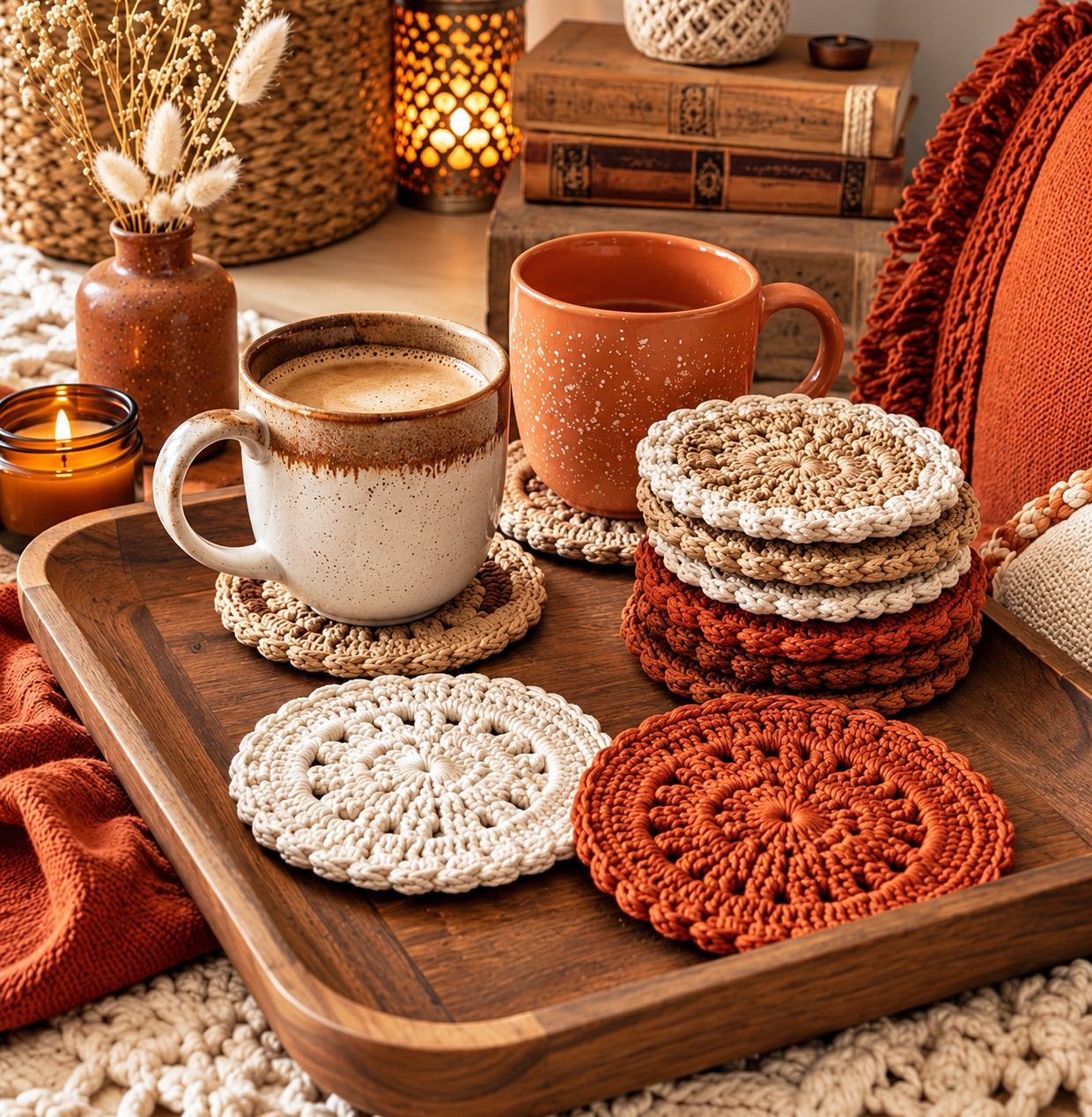
Yarn crochet coasters are one of those small crochet projects that are actually useful. They don’t take much yarn, you can make them in different colors and patterns, and they add a handmade touch to an everyday coffee or tea table.
If you have leftover yarn sitting in your craft basket, crochet coasters are also a great way to use it. You can keep the design simple with basic stitches or make something more decorative with textured centers, flower patterns, or scalloped edges.
Whether you’re making your first set or looking for fresh ideas for your next crochet project, here are some practical ways to make, style, and customize yarn crochet coasters.
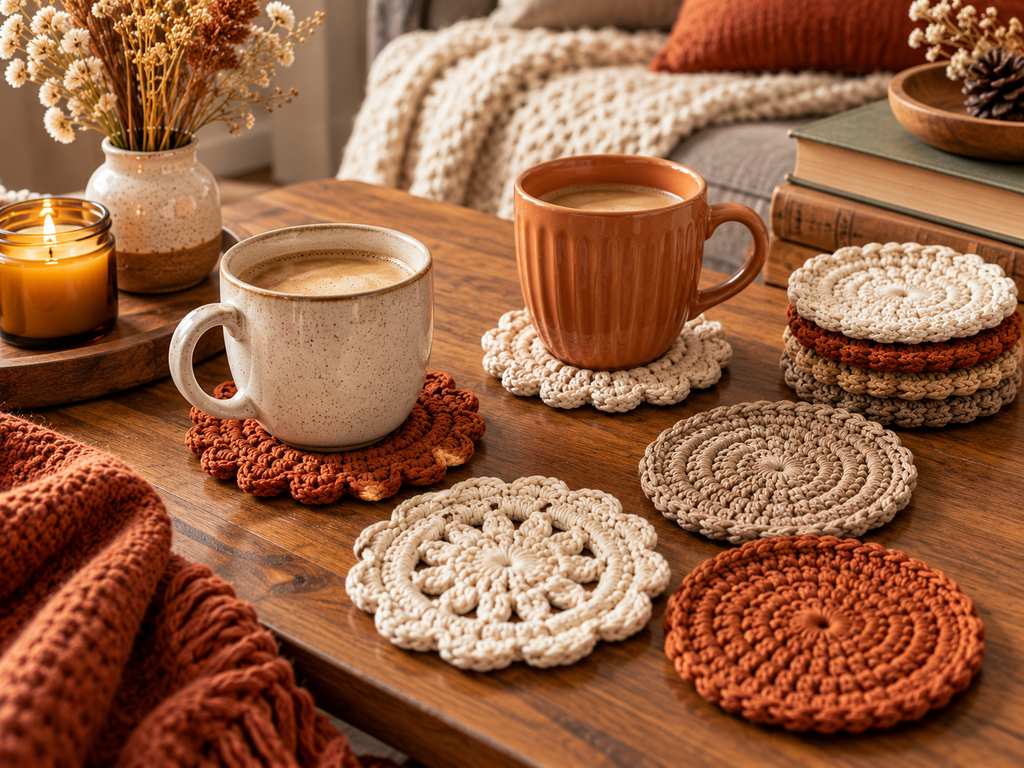
Why Make Yarn Crochet Coasters?
Crochet coasters are quick projects compared with larger items such as blankets, sweaters, or home décor pieces. A single coaster can often be completed in a short sitting, depending on the pattern and your crochet speed.
They are also easy to customize.
You can change:
- Yarn color
- Coaster size
- Border style
- Stitch pattern
- Number of rounds
- Center design
- Overall shape
This makes coasters a nice project for both beginners and experienced crocheters.
Another advantage is that you can create a matching set without making every coaster exactly the same. For example, you could use the same color palette while giving each coaster a slightly different center or border.
What Yarn Works Best for Crochet Coasters?
The yarn you choose makes a noticeable difference in how your coasters look and perform.
For everyday coasters, cotton yarn is usually a practical choice because it has a firm structure and is suitable for items that may need regular cleaning.
Good Yarn Choices
Cotton yarn:
A popular option for crochet coasters because it creates clear stitches and has a neat, structured appearance.
Cotton blend:
Can work well when you want a slightly different texture or feel.
Acrylic yarn:
Useful for decorative coasters, although it may not be the first choice if your main goal is handling heat or moisture.
For a neat coaster, choose yarn that gives you good stitch definition. Very fuzzy yarn can hide the details of your crochet pattern.
How Much Yarn Do You Need?
One of the best things about yarn crochet coasters is that they usually don’t require much yarn.
A small amount can be enough for a single coaster, particularly when working with a basic round design. The exact amount depends on the yarn weight, hook size, coaster diameter, stitch pattern, and number of rounds.
This is why coasters are especially useful for leftover yarn.
Instead of throwing away small amounts of cream, brown, rust, beige, or other colors, keep them together and turn them into a coordinated set.
Simple Crochet Coaster Design Ideas
You don’t need a complicated pattern to make a coaster look interesting. Small changes to the stitches or edging can completely change the finished piece.
1. Simple Round Coasters
A basic circular coaster is a good starting point.
Work several rounds in one stitch and finish with a clean border. This style looks especially nice when made in neutral colors such as cream, oatmeal, taupe, or beige.
2. Scalloped-Edge Coasters
A scalloped border gives a simple coaster a softer decorative finish.
The center can remain very basic while the final round creates small rounded sections around the outside.
3. Floral-Inspired Coasters
If you enjoy decorative crochet, try building a flower-like center into the design.
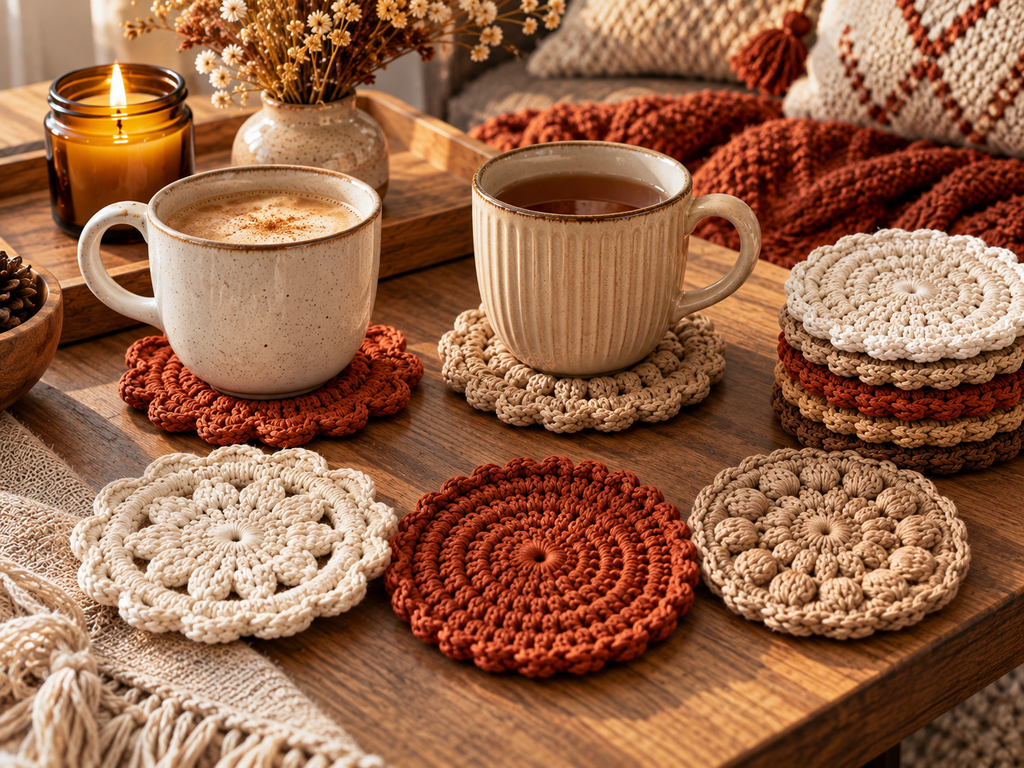
You can use clusters or carefully spaced stitches to create the appearance of petals. A cream or beige flower-inspired coaster can look especially pretty on a wooden table.
4. Textured Coasters
Texture is another easy way to make a coaster stand out.
Raised stitches, alternating stitch patterns, or thicker rounds can create a more dimensional surface. This works particularly well with solid-color yarn because the texture becomes the main feature.
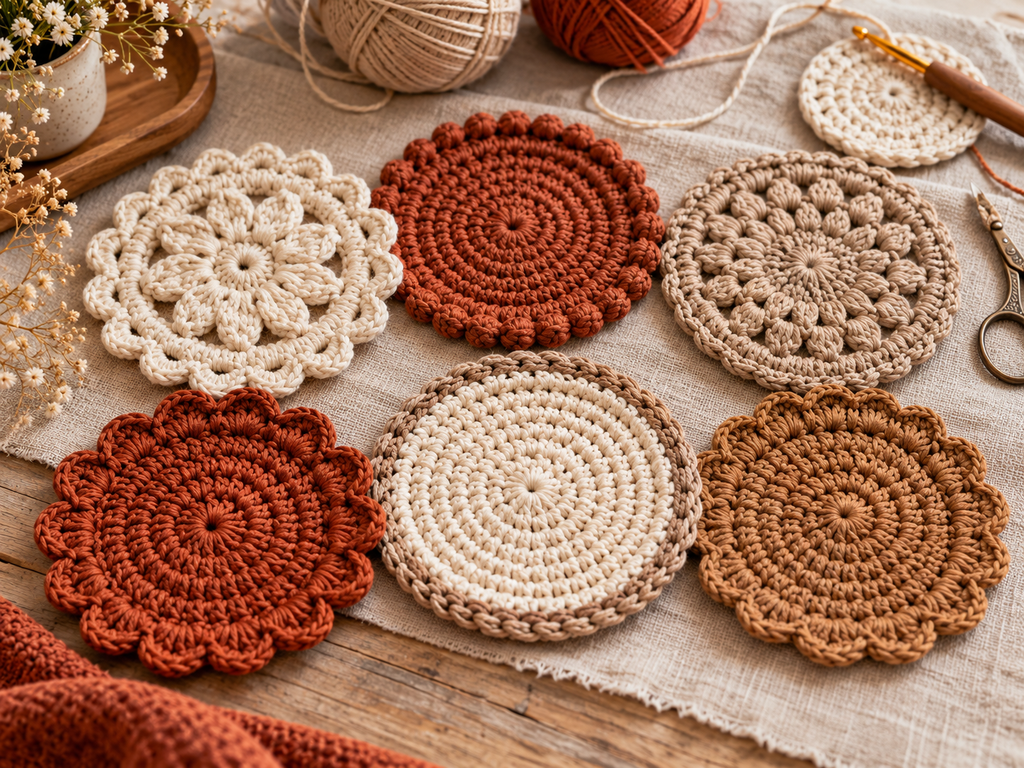
Choosing Colors for a Crochet Coaster Set
Color is one of the easiest ways to make a collection of handmade coasters look intentional.
Instead of choosing completely unrelated colors, try creating a small palette.
For a warm home décor style, you could combine:
- Cream
- Oatmeal
- Taupe
- Warm beige
- Rust
- Cinnamon
- Deep brown
For a lighter look, combine white, cream, pale beige, and soft gray.
For something more colorful, choose one neutral shade and add two or three stronger colors around it.
You can also make every coaster slightly different while keeping the same main colors. This gives the set a handmade feel without making it look mismatched.
How to Make Yarn Crochet Coasters Look Neat
Small projects can actually make uneven tension more noticeable, so a few simple habits can improve the finished result.
Keep Your Tension Consistent
Try not to crochet one round very tightly and the next one loosely. Uneven tension can make the coaster curl, ripple, or lose its shape.
Count Your Stitches
When working in rounds, keep an eye on your stitch count. Accidental increases or skipped stitches can cause the coaster to become wavy or uneven.
Check the Shape as You Work
Don’t wait until the final round to check the coaster.
Lay it flat occasionally. If it starts curling upward, the tension or stitch increases may need attention. If the edge becomes too wavy, there may be too many increases.
Finish the Edge Carefully
The final round can make a big difference.
A simple single-crochet edge can give the coaster a clean finish, while a scalloped or decorative border can make it more eye-catching.
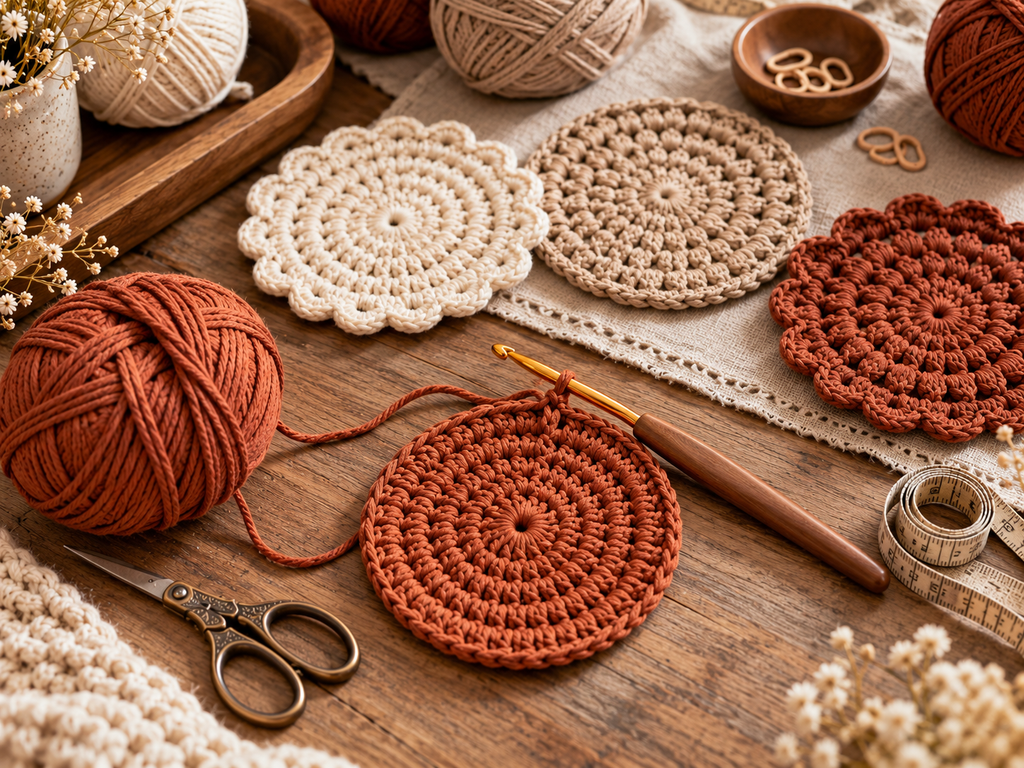
A Simple Crochet Coaster Making Setup
You don’t need a large collection of supplies to get started.
A basic setup can include:
- Cotton yarn
- A suitable crochet hook
- Small scissors
- Measuring tape or ruler
- Yarn needle
- Your chosen coaster pattern
Keep your supplies together in a small basket or container if you make crochet projects regularly. It makes short projects much easier to pick up whenever you have a little free time.
How Big Should a Crochet Coaster Be?
There isn’t one universal coaster size that works for everyone.
The important thing is that the finished piece is large enough to comfortably support the base of the cup or mug you plan to use.
Before finishing your pattern, place your mug over the coaster and check the coverage.
If the coaster looks too small, continue adding rounds. If it is already large enough, you can finish the border.
Remember that different yarn weights and crochet stitches can produce very different sizes, even when the same number of rounds is used.
How to Stop Crochet Coasters From Curling
Curling is a common problem when making round crochet projects.
The first thing to check is your stitch count. If you’re not adding enough stitches as the circle grows, the fabric can start pulling upward.
Your tension can also affect the shape.
If you crochet very tightly, try using a slightly larger hook. If your stitches are loose and the coaster isn’t holding its shape, a smaller hook may help.
Blocking can also improve the final shape for some crochet designs. After finishing, gently shape the coaster and allow it to dry according to the yarn’s care requirements.
How to Make a Matching Set
A set of four or six coasters can look much more polished when there is a clear connection between the pieces.
You could make:
Option 1: Same pattern, different colors
Use one pattern and rotate through your chosen colors.
Option 2: Same colors, different patterns
Make each coaster with a different stitch design while keeping the same palette.
Option 3: One main color with contrasting borders
Use cream or beige for the centers and add rust, brown, or cinnamon borders.
Option 4: Mixed neutral set
Combine oatmeal, taupe, cream, and brown for a simple natural look.
This last option works particularly well with rustic, farmhouse, boho, and cozy home décor.
Styling Yarn Crochet Coasters at Home
Your coasters don’t have to stay hidden in a drawer.
Place a few on a wooden tray with coffee mugs, a small candle, and a vase of dried flowers. A small stack of extra coasters can sit beside the cups when they’re not being used.
You can also keep a set on:
- A coffee table
- Dining table
- Kitchen counter
- Side table
- Breakfast nook
- Home office desk
A handmade coaster can become part of the room’s décor while still having a practical purpose.
Caring for Handmade Crochet Coasters
Crochet coasters can collect coffee marks, crumbs, and other everyday messes, so check the care instructions for your particular yarn.
For many cotton projects, gentle washing is an option, but the exact method depends on the yarn label.
A few simple habits can help:
- Don’t use harsh cleaning products unless the yarn label allows them.
- Avoid excessive heat when drying.
- Reshape the coaster while it is damp if it has lost its shape.
- Let it dry completely before stacking it away.
- Keep finished coasters somewhere clean and dry.
If you’re giving handmade coasters as a gift, including a small care note is a thoughtful extra touch.
Can You Use Crochet Coasters for Hot Drinks?
That depends on the yarn and construction.
Crochet coasters are commonly used underneath cups and mugs to help protect a surface from moisture and minor temperature differences. However, they should not automatically be treated as heat-resistant trivets.
If you want something specifically designed for very hot cookware, choose an appropriate heat-resistant material and pattern rather than assuming any crochet coaster will provide enough protection.
Frequently Asked Questions
What is the best yarn for crochet coasters?
Cotton yarn is a popular choice because it generally gives coasters a firm structure and clear stitch definition. Always check the yarn’s care and heat-related guidance for your intended use.
How many crochet coasters should I make?
Four is a practical starting point for a small set. Six or eight can be useful if you regularly have several people using the table.
Can beginners make yarn crochet coasters?
Yes. Simple round coaster patterns can be excellent beginner projects because they use relatively small amounts of yarn and allow you to practice basic crochet stitches and working in rounds.
Why is my crochet coaster curling?
The stitch count and tension are two common things to check. A circle may curl when there aren’t enough increases, while too many increases can make the edge ripple.
Can I use leftover yarn for crochet coasters?
Absolutely. Coasters are a great small project for using leftover yarn, especially when you have several colors that work well together.
How do I make my crochet coasters lie flat?
Keep your stitch count consistent, maintain even tension, and check the shape during the project rather than only at the end. Blocking may also help depending on the yarn and pattern.
Final Thoughts
Yarn crochet coasters are simple, useful, and easy to personalize. You can make a basic round design in one color, experiment with textured stitches, or create a whole set using warm coordinating shades.
The best part is that you don’t need a huge amount of yarn or a complicated setup. With a hook, some suitable yarn, and a little time, you can turn leftover materials into something you’ll actually use around the house.
Start with a simple design, focus on keeping your rounds even, and then experiment with different borders and color combinations once you’re comfortable. A small coaster project can quickly turn into a beautiful handmade set for your own home or a thoughtful gift.