Want to add more greenery to your home without taking up valuable floor or shelf space? A free crochet hanging planter is a simple way to bring plants into empty corners while adding a soft, handmade touch to your décor.
This project combines crochet with natural greenery, making it especially nice for bedrooms, living rooms, reading corners, balconies, and small apartments. You can keep the colors neutral or customize the yarn to match your room.
Whether you’re new to crochet or already enjoy making home décor, a hanging planter is a fun project that can be adjusted to fit different pot sizes and styles.
Why Make a Crochet Hanging Planter?
Hanging plants are useful when you want more greenery but don’t have much surface space. Instead of placing another pot on a table or shelf, you can use vertical space.
A crochet planter also gives you plenty of room for customization.
You can change:
- Yarn color
- Basket size
- Hanging cord length
- Stitch pattern
- Tassel or decorative details
- Pot size
- Number of hanging strands
For a soft bohemian look, cream, oatmeal, blush, terracotta, and muted green work particularly well together.
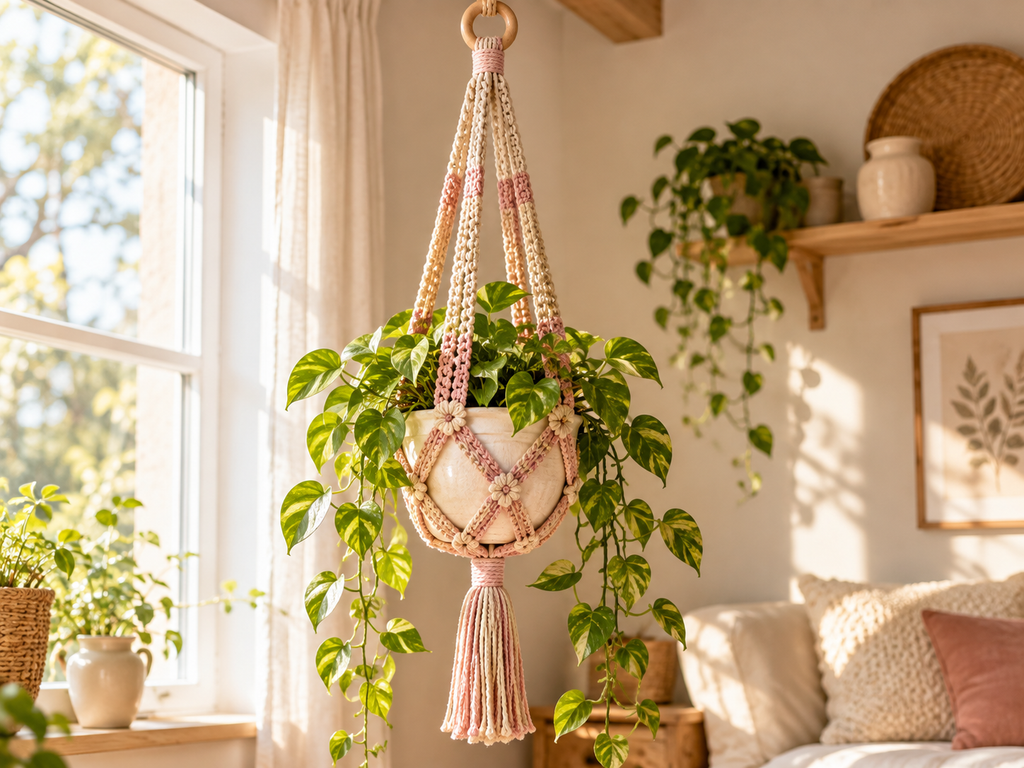
What You Need for a Crochet Hanging Planter
The exact supplies will depend on the pattern you choose, but a basic project can be made with relatively simple materials.
Basic supplies
- Cotton or cotton-blend yarn
- Crochet hook appropriate for your yarn
- Scissors
- Measuring tape
- Stitch marker
- Wooden or metal hanging ring
- A small plant pot
- Healthy houseplant
- Optional wooden bead or decorative elements
Cotton yarn is particularly useful for home décor projects because it has a firm structure and gives crochet stitches a clean appearance.
For the plant itself, choose a pot that fits comfortably inside the crochet basket. A lightweight plastic nursery pot placed inside a decorative cover can also work well.
Choosing the Right Yarn
The yarn makes a noticeable difference to the final appearance.
For a structured hanging planter, choose yarn that isn’t excessively soft or stretchy. A medium-weight cotton yarn is a practical starting point because the stitches remain relatively easy to see.
Color ideas
Natural look:
Cream + oatmeal + beige
Soft feminine look:
Ivory + dusty blush + pale pink
Earthy look:
Terracotta + warm beige + sage
Minimalist look:
One shade of cream or natural cotton
You can also use two colors to create stripes, contrasting suspension cords, or small decorative sections.
Understanding the Main Parts
Before starting, it helps to think of the planter as several separate sections rather than one complicated project.
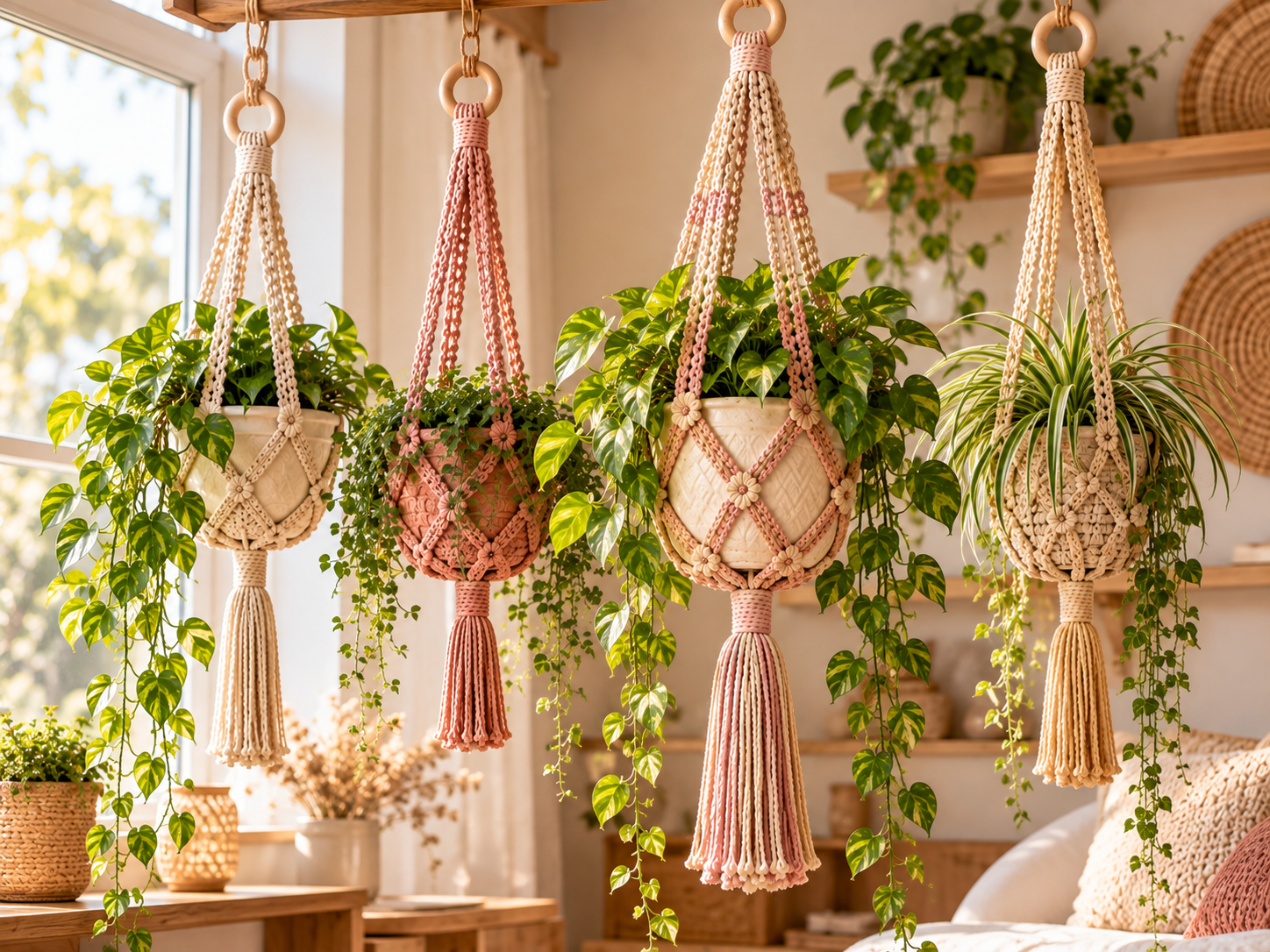
A typical crochet hanging planter can include:
- Main basket or pot holder — supports the plant pot.
- Suspension cords — extend upward from the basket.
- Joining section — brings the cords together.
- Hanging ring or loop — connects the planter to a hook.
- Decorative bottom section — optional tassels, fringe, or crochet details.
Breaking the project into these sections makes it easier to measure and assemble.
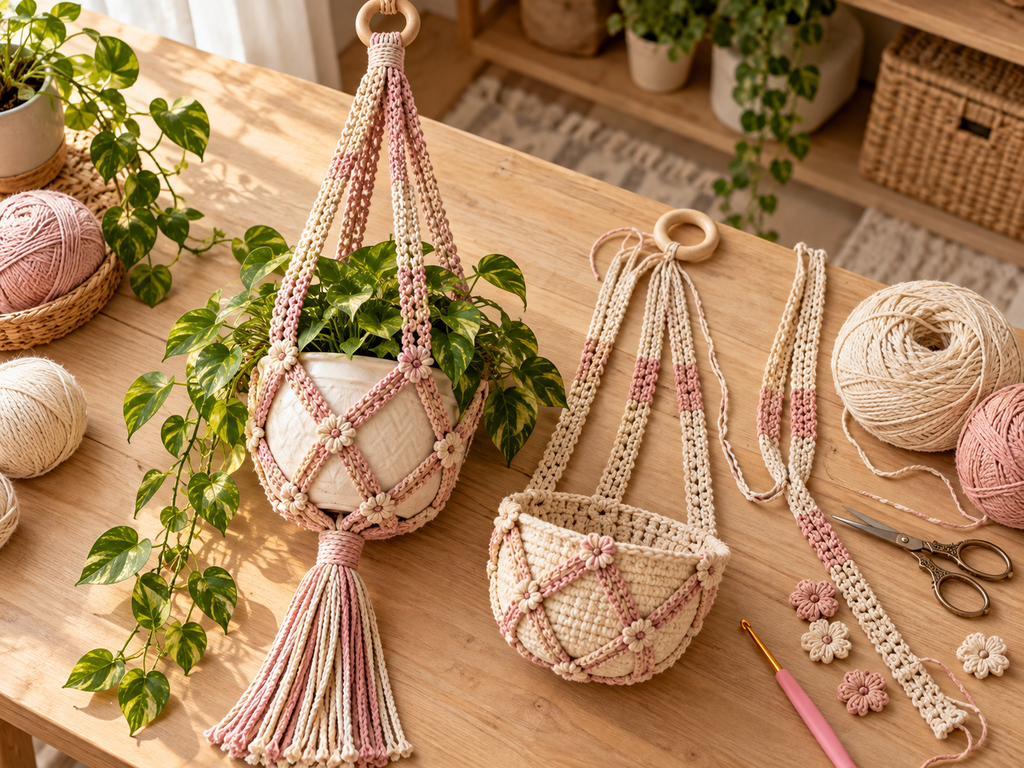
How to Make a Crochet Hanging Planter
The exact stitch counts will depend on the size of your pot and the pattern you are following, but the construction can generally be approached in a few stages.
1. Measure the plant pot
Start by measuring the diameter and height of the pot you want to use.
The crochet holder should be large enough to accommodate the pot without forcing it into place. It should also provide enough support underneath the pot.
Don’t rely only on the label size of the plant pot. Measuring the actual pot gives you a more reliable starting point.
2. Crochet the base
Begin with the bottom of the holder.
The base needs to be strong enough to support the pot, so keep your stitches relatively firm and consistent.
As you increase outward, periodically compare the crochet piece with the bottom of your pot.
The goal is a snug fit rather than an extremely loose basket.
3. Build the sides
Once the base reaches the desired size, continue working upward to form the sides.
This is where you can introduce decorative stitches or color changes.
A simple texture can be enough to make the planter interesting. You don’t necessarily need a complicated stitch pattern.
4. Create the suspension points
The upper part of the basket needs several attachment points for the hanging cords.
For a balanced design, distribute the attachment points evenly around the basket.
Four suspension points are particularly useful for a small-to-medium planter because they help distribute the weight.
5. Add the hanging cords
Attach the crochet cords to the basket and bring them upward toward the central joining point.
Try to keep the cords approximately the same length.
Uneven cords can cause the basket to tilt once a plant is added.
6. Join the cords
Bring the suspension cords together near the top and attach them securely to a wooden ring, metal ring, or strong crocheted loop.
This is an important structural area, so make sure the connection is firm.
7. Add decorative details
Now you can personalize your planter.
Consider adding:
- Crochet flowers
- Small beads
- Braided sections
- Contrasting yarn
- Fringe
- Tassels
- Simple color blocks
Decorative details should complement the planter without making the structure unnecessarily heavy.
Choosing a Plant for Your Hanging Planter
The plant can completely change the appearance of your finished project.
Trailing plants are especially effective because their leaves naturally fall around the crochet basket.
Pothos
Pothos is a popular visual choice for hanging displays because its vines can cascade around the planter.
Spider plant
Spider plants work well when you want long, arching leaves that create movement around the holder.
Ferns
A compact fern gives the planter a fuller, softer appearance.
Other options
You can also consider plants such as:
- String-of-hearts
- Heartleaf philodendron
- Tradescantia
- Small ivy varieties
- Compact trailing plants
Always consider the plant’s mature size and watering needs before placing it in a hanging container.
Three Ways to Style a Crochet Hanging Planter
One of the best things about making your own planter is that you aren’t limited to one decorating style.
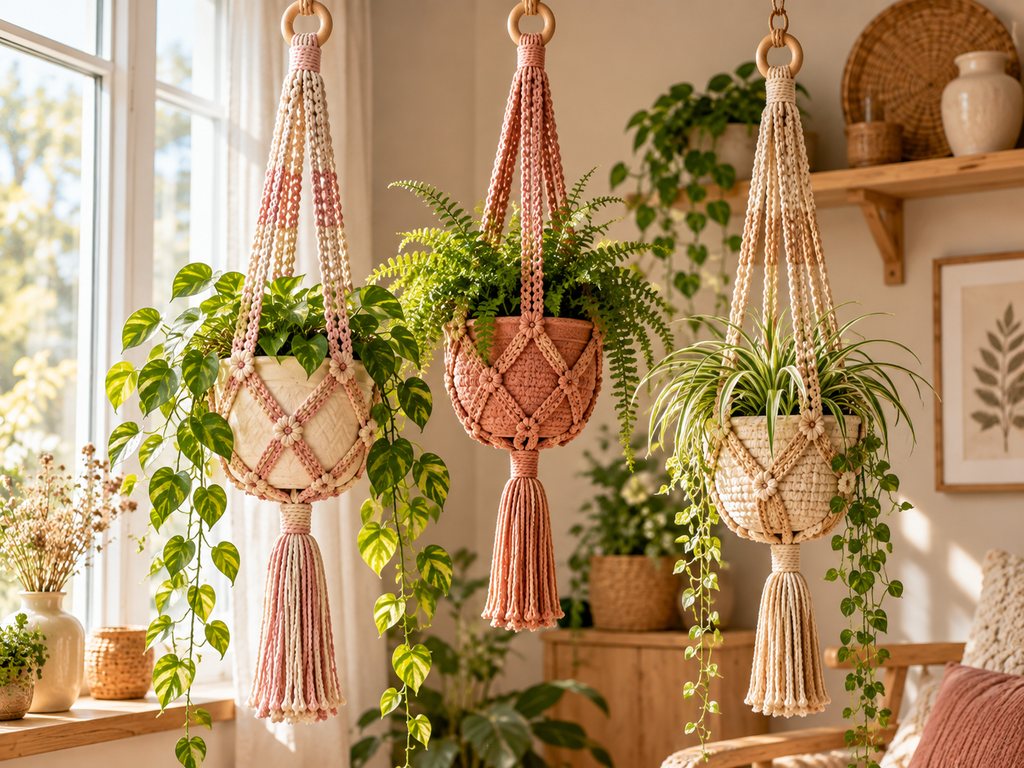
1. Soft neutral style
Use cream or oatmeal yarn with a white or beige pot.
Pair it with a trailing pothos and light wood furniture for a calm, natural look.
This works particularly well with Scandinavian, minimalist, or neutral interiors.
2. Warm bohemian style
Try dusty blush, terracotta, or warm brown yarn.
Add a fern or cascading plant and combine it with woven baskets, natural wood, linen, and handmade décor.
This creates a relaxed boho atmosphere without requiring a lot of additional decoration.
3. Fresh green corner
Use a neutral crochet holder and let the plant provide most of the color.
A spider plant, pothos, or another trailing houseplant can create a striking contrast against cream walls.
This is especially useful for bright windows, reading corners, and small balconies.
Where to Hang Your Crochet Planter
You don’t need a large room to use a hanging planter.
Consider:
- Beside a bright window
- Above an empty reading corner
- Near a bookshelf
- In a bedroom corner
- Beside a balcony door
- In a covered outdoor area
- Above a small plant stand
- Near a home office window
Leave enough space around the planter so the leaves and hanging cords don’t interfere with doors, walkways, curtains, or furniture.
If you’re hanging a real plant, also consider watering. A location that is easy to reach will make plant care much simpler.
Make the Planter Match Your Home
A handmade planter doesn’t have to look like a traditional crochet project.
You can make small changes to give it a completely different personality.
For a modern look, use one neutral yarn color and a simple geometric stitch.
For a cottage-inspired look, add small crochet flowers.
For a boho design, use multiple neutral tones, braided cords, and a long tassel.
For a colorful room, choose yarn that picks up one of the existing accent colors in your cushions, curtains, artwork, or rugs.
Tips for a Strong and Balanced Hanging Planter
A few details can make the finished project much easier to use.
Check the weight
A wet plant can be considerably heavier than an empty pot. Don’t design the holder only around the dry weight.
Keep the cords even
Measure your suspension cords carefully before attaching them.
Test the balance
Before placing your favorite plant inside, test the empty holder from the hanging point.
It should sit reasonably level rather than pulling strongly to one side.
Reinforce attachment points
The points where the cords connect to the basket experience repeated tension. Make these joins secure.
Choose a suitable hook
Use a hanging point appropriate for the combined weight of the planter, pot, soil, water, and plant.
Keep water under control
Avoid allowing excess water to collect in the hanging planter. A waterproof inner pot or suitable saucer can help protect furniture and floors.
Turn It Into a Complete Plant Display
You don’t have to stop with one planter.
A group of two or three hanging planters can create a small vertical garden. Use different heights and complementary yarn colors while keeping the overall palette consistent.
For example, combine:
- One cream planter with pothos
- One blush planter with a fern
- One beige planter with a spider plant
Different plant shapes add more visual interest than simply using identical plants.
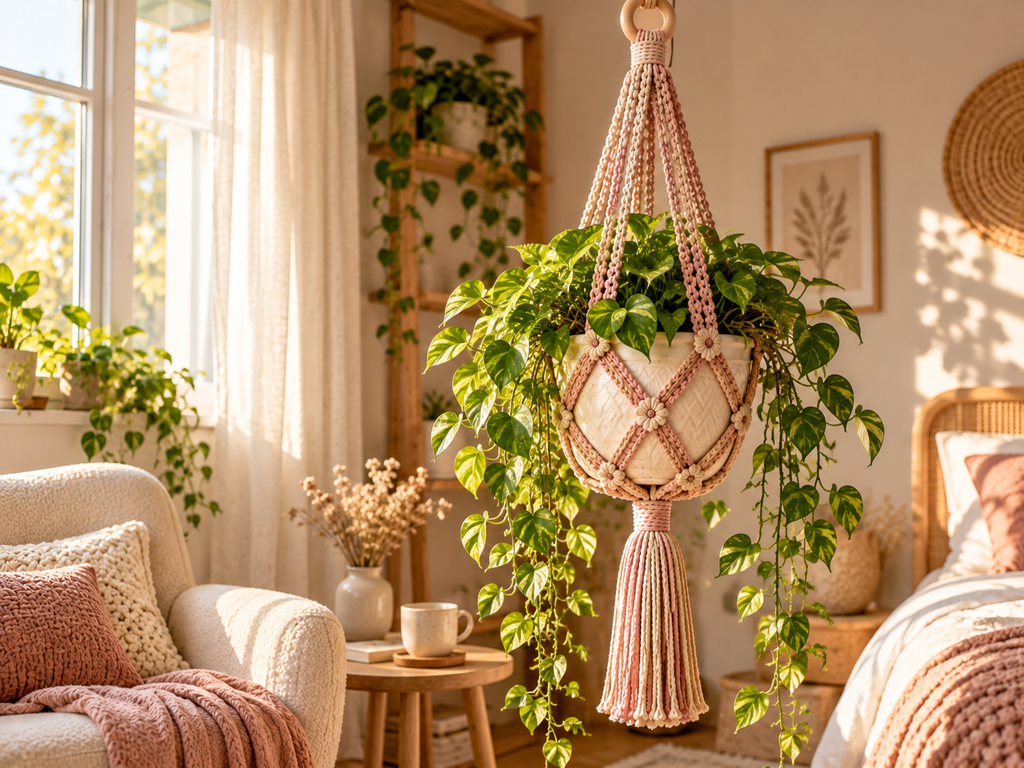
Frequently Asked Questions
Is a crochet hanging planter difficult to make?
It depends on the pattern and stitch techniques used. A simple basket with basic suspension cords can be approachable for beginners, while decorative versions with multiple stitch patterns may require more experience.
What yarn is best for a crochet hanging planter?
Cotton or cotton-blend yarn is a practical choice for a structured holder. Choose yarn with enough strength and structure to maintain the shape of the basket.
Can I make the planter in different sizes?
Yes. The basket can generally be adjusted to accommodate different pot dimensions, although the stitch count, base size, and cord arrangement need to be adjusted together.
How many hanging cords should I use?
Four cords are a common arrangement for a balanced small or medium planter. Larger or heavier designs may require a different structural approach.
Can I use a real plant?
Yes, but the complete weight of the plant, pot, soil, and water should be considered. Make sure the crochet construction and hanging hardware are appropriate for the total load.
Can I use this idea for artificial plants?
Absolutely. Artificial plants are an easy option if you want the decorative appearance without watering or moisture concerns.
Final Thoughts
A free crochet hanging planter is more than a way to display a houseplant. It can become a handmade accent that adds texture, color, and greenery to an otherwise unused area of your home.
Start with a simple basket shape, choose a sturdy yarn, keep the suspension cords balanced, and then personalize the design with colors and decorative details that suit your space.
Whether you make one neutral planter for a small reading corner or create a collection of colorful hanging plants, this project gives you plenty of room to make the finished décor your own.