A human-size crochet turtle is not your average weekend crochet project. It is a large, attention-grabbing plush that can become a cozy floor cushion, decorative statement piece, reading-room companion, or simply a fun project for anyone who loves oversized crochet.
But before starting a project this large, there are several things worth considering. How does the design look? Is the construction practical? How difficult might the shaping be? How much space will a finished turtle need? And most importantly, does a jumbo crochet turtle pattern look manageable enough to justify the time and yarn involved?
This review takes a closer look at the crochet jumbo turtle pattern human size concept, focusing on the design, construction, scale, materials, appearance, and practical considerations.
What Makes a Human-Size Crochet Turtle Different?
The first thing that stands out is the scale.
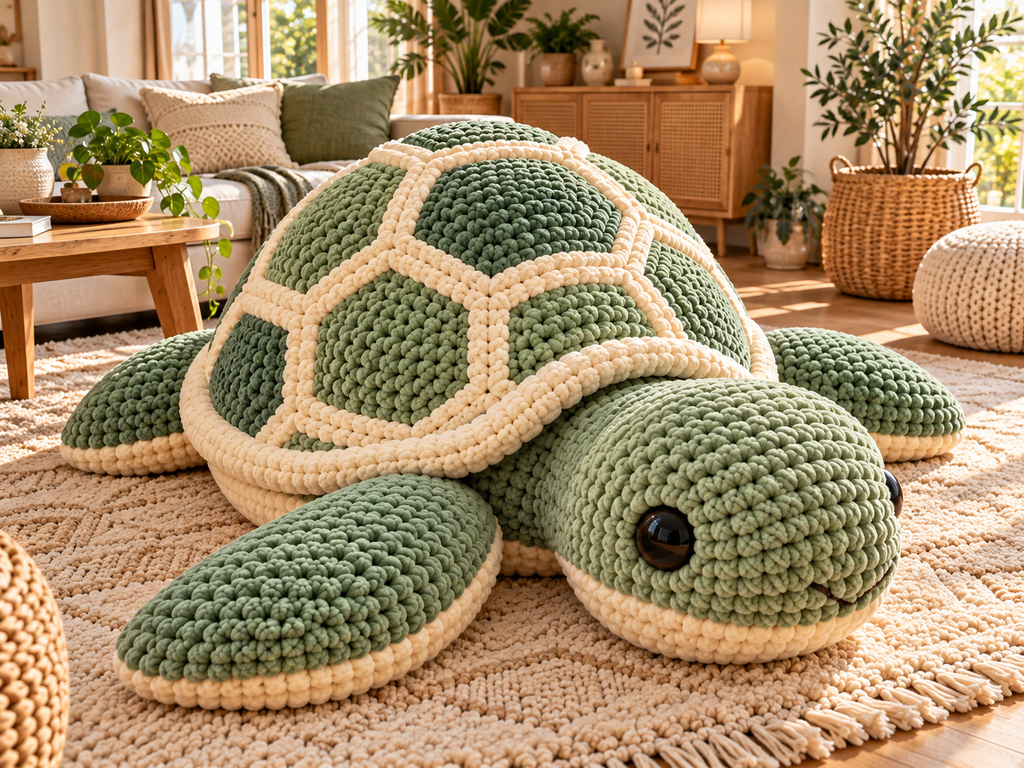
Traditional crochet turtles are usually small enough to hold in one hand. A human-size version changes the entire experience. Instead of being a small amigurumi project, the turtle becomes a substantial piece of handmade décor.
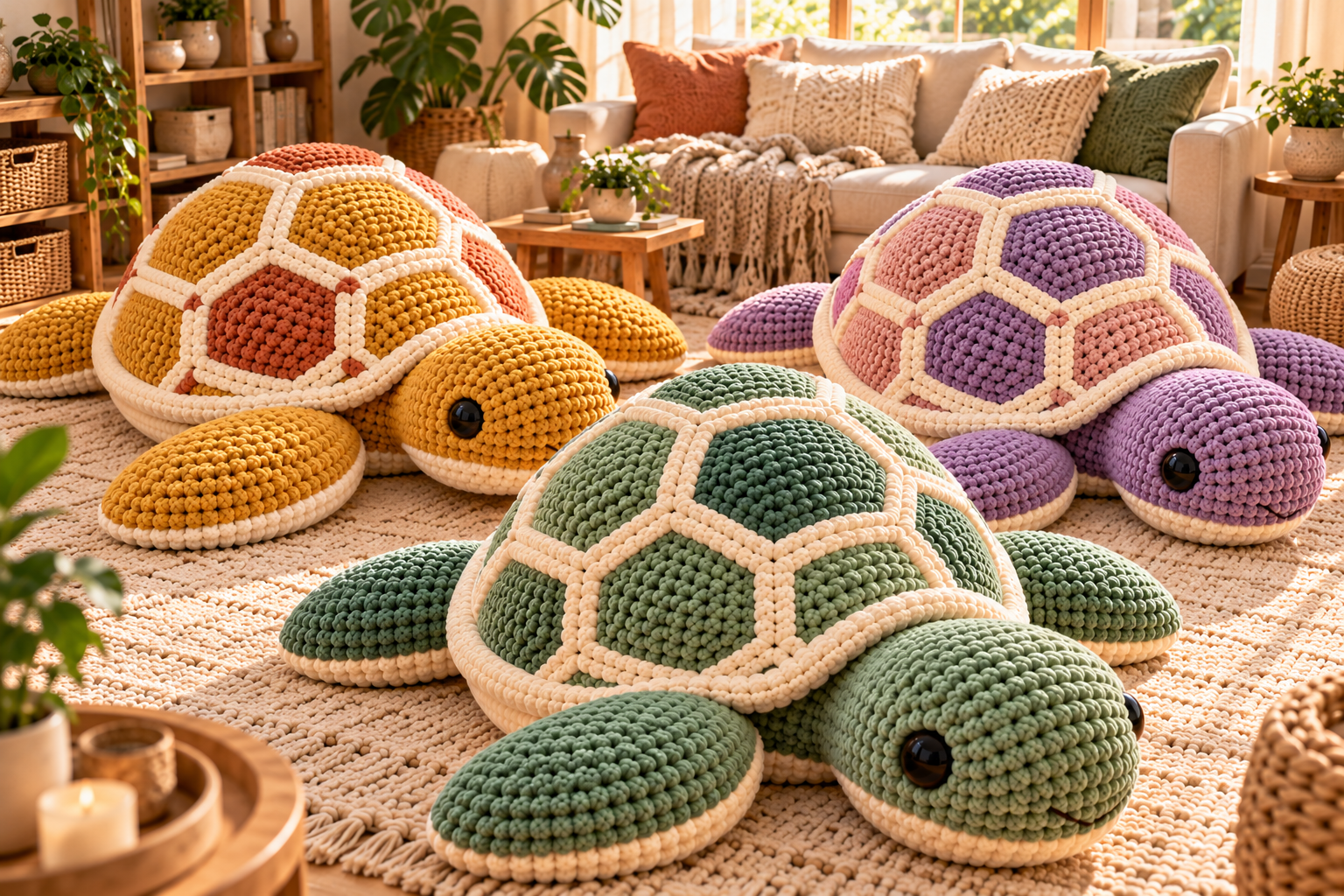
The main visual features to look for include:
- An oversized rounded shell
- Four broad, padded flippers
- A large rounded head
- A soft, substantial body
- Clearly defined shell sections
- Thick crochet texture
- Strong contrast between the shell and body
- A plush, cuddly overall shape
The larger scale also means that shaping becomes much more important. Small inconsistencies that might barely be noticeable on a miniature turtle can become obvious when the same shape is enlarged.
The Overall Design
The design works because it combines a recognizable turtle silhouette with a much more dramatic size.
The rounded shell provides the main visual structure, while the four flippers extend outward to give the finished piece its wide profile. The head sits forward from the shell and gives the turtle its personality.
A good jumbo turtle design should look balanced from several directions rather than only from the front.
The shell should have enough structure to maintain its rounded form, while the flippers should be proportionate to the body. The head should also feel large enough to match the oversized body without making the turtle look top-heavy.
Shell Construction and Crochet Texture
The shell is arguably the most important part of a jumbo turtle.
A geometric shell design can make the finished turtle look much more interesting than a single-color rounded shell. Contrasting panels and thick borders also help emphasize the shape.
For a large crochet piece, dense stitches are especially useful because they can create a substantial fabric with less visible stretching. Thick yarn can also make the finished shell look soft and dimensional.
When reviewing a pattern, pay attention to whether the instructions clearly explain:
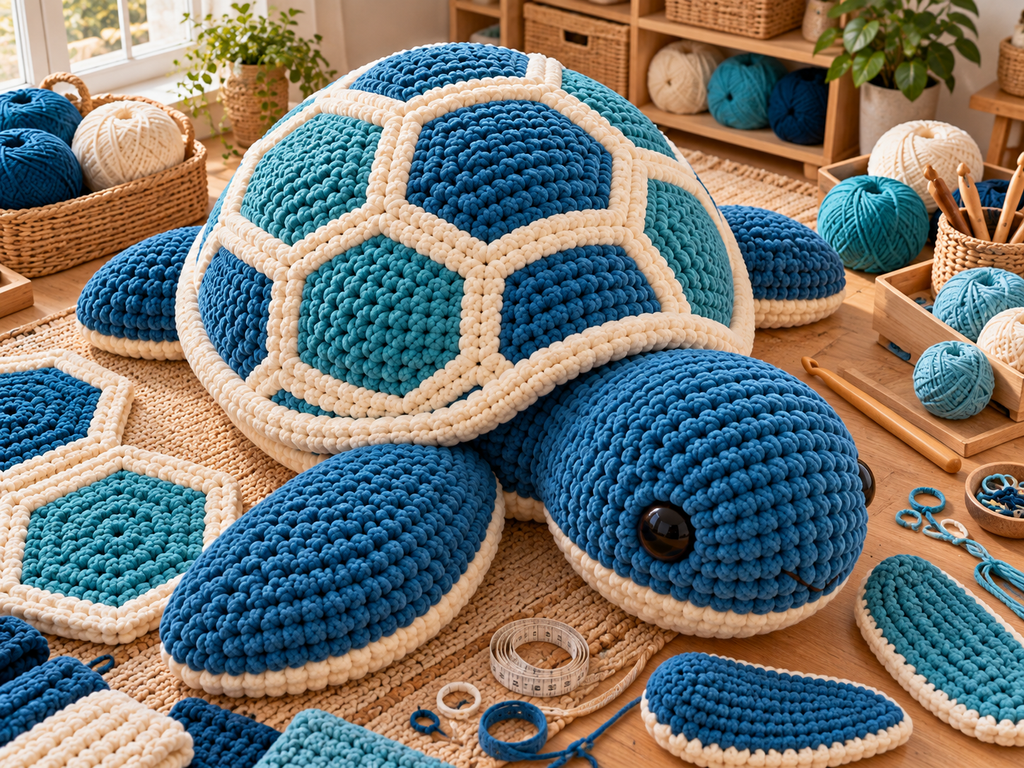
- How each shell section is made.
- How many pieces are required.
- How the pieces are joined.
- How the shell is shaped.
- Where increases and decreases occur.
- How the edging is created.
- How the shell connects to the body.
These details matter much more in an oversized project than they do in a small decorative turtle.
Is the Construction Beginner-Friendly?
The answer depends on the crocheter’s experience.
The individual techniques used in a jumbo turtle may not necessarily be advanced. A crocheter may encounter familiar techniques such as:
- Single crochet
- Increases
- Decreases
- Working in rounds
- Joining pieces
- Stuffing
- Basic shaping
- Sewing or crocheting components together
The challenge comes from the size and number of components, rather than necessarily from one complicated stitch.
A beginner who has only completed very small amigurumi projects may find the size intimidating. Someone who is already comfortable with stuffed crochet animals and joining large pieces may find the construction easier to manage.
For a pattern intended for a large project, clear organization is particularly important. Instructions should make it easy to identify which section is being made and when that section needs to be assembled.
Yarn Choice Matters More Than You Might Expect
A human-size turtle requires considerably more material than a conventional amigurumi turtle.
The choice of yarn can affect:
- Finished size
- Weight
- Stitch definition
- Softness
- Shape retention
- Amount of stuffing required
- Overall cost
Chunky or bulky yarn can create a plush appearance quickly, but it can also make the finished turtle surprisingly heavy.
If you want a softer floor-plush effect, a plush or chenille-style yarn may create a different appearance from cotton or standard acrylic yarn.
Before beginning, it is worth checking the pattern’s recommended yarn weight and comparing it with the yarn you actually intend to use.
How Big Is a Human-Size Crochet Turtle?
The phrase “human-size” gives a general impression of scale, but it should not automatically be treated as a precise finished measurement.
The final dimensions can vary depending on:
- Yarn thickness
- Crochet hook size
- Individual tension
- Stuffing density
- Stitch tightness
- Construction method
This is particularly important with oversized crochet.
A pattern can provide a target size, but your finished turtle may be somewhat different if your gauge or materials differ from the recommended specifications.
How Much Space Does a Jumbo Turtle Need?
This is one of the biggest practical differences between a regular crochet plush and a human-size version.
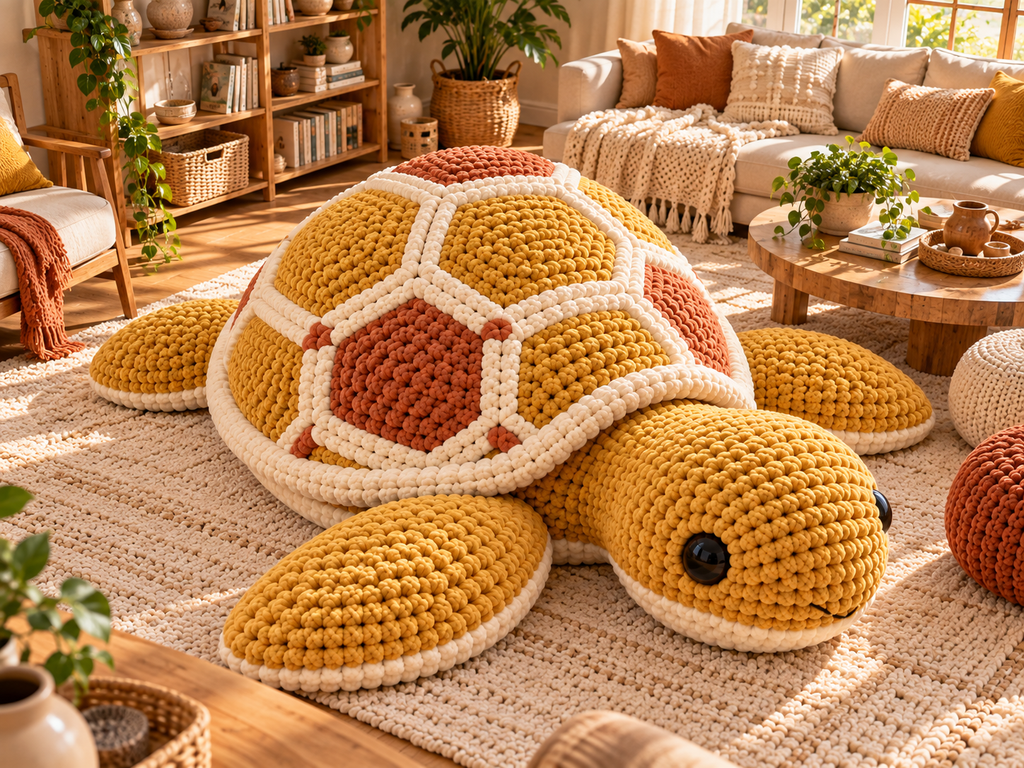
A small turtle can sit on a shelf or bed. A jumbo turtle needs floor space.
Before starting, think about where the finished piece will live.
A suitable location might be:
- A spacious bedroom
- A children’s playroom
- A reading corner
- A large living room
- A craft room
- A cozy lounge area
It is also useful to think about storage. If you are making the turtle as a gift, make sure the recipient has enough room for a very large plush.
Can You Use It as a Floor Cushion?
The shape naturally makes a jumbo turtle look suitable for lounging, but its intended use depends on the construction, stuffing, yarn, and pattern specifications.
If the pattern is designed primarily as a decorative plush, it should not automatically be treated as furniture.
For occasional sitting or lounging, consider how firmly the shell and body are constructed and whether the seams are designed to handle repeated pressure.
For children, supervision and material suitability should also be considered.
Color Ideas for a Jumbo Turtle
One of the most enjoyable parts of a large crochet turtle is choosing the color palette.
Because the finished piece is so large, color has a major visual impact.
Natural Green
Sage, olive, forest, and muted green shades create a traditional turtle-inspired appearance. Cream edging can make the shell pattern stand out while keeping the overall look soft.
Ocean Blue
Deep blue combined with ivory and turquoise gives the turtle a coastal appearance. This combination works particularly well in beach-inspired interiors.
Mustard and Terracotta
Warm mustard with cream and muted terracotta creates a playful autumn-inspired palette. It can work especially well in boho or warm neutral rooms.
Lavender and Dusty Pink
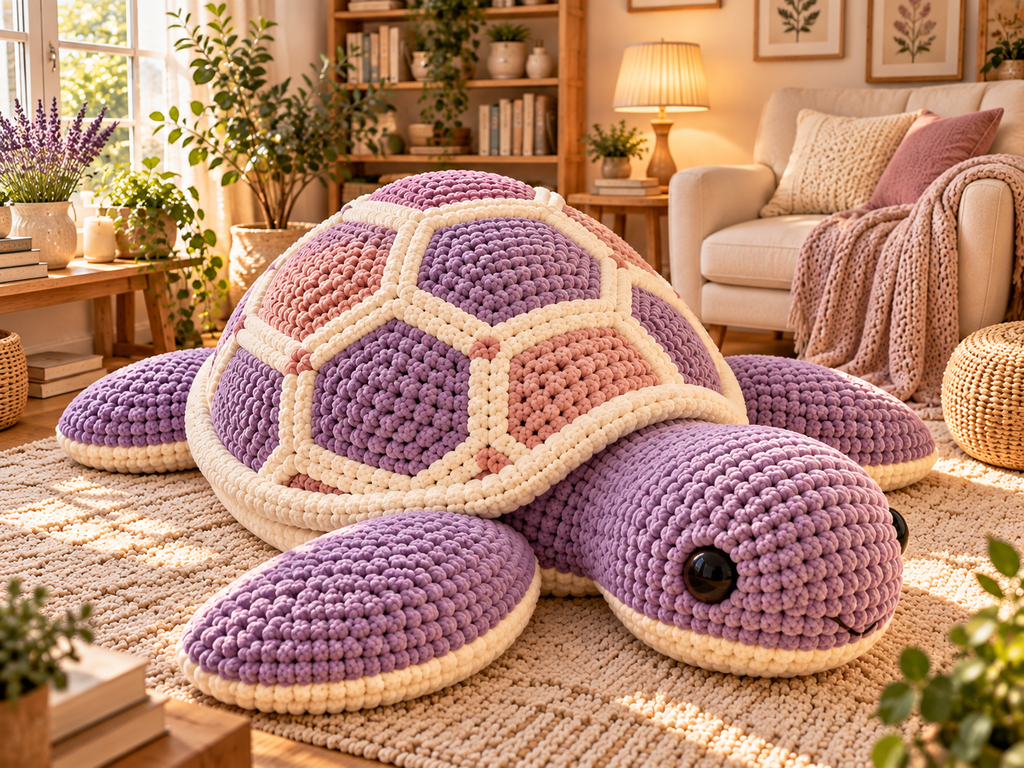
Lavender, pale cream, and dusty pink create a softer decorative version. This palette can suit bedrooms, reading corners, and pastel interiors.
For a large project, choosing colors that you genuinely like is important because the finished turtle will become a noticeable part of the room.
What I Would Check Before Buying or Starting the Pattern
A large crochet project deserves a little preparation.
Before committing to the project, check whether the pattern clearly provides:
1. Materials
Look for the recommended yarn weight, hook size, stuffing, safety eyes or alternative eye materials, and any additional supplies.
2. Finished Measurements
A clear finished-size estimate makes it easier to decide whether the project will fit your intended space.
3. Individual Components
The pattern should make it clear how many shell panels, flippers, body sections, and other pieces are required.
4. Assembly Instructions
Large crochet pieces can become difficult to assemble if the joining instructions are vague.
5. Stitch Abbreviations
A good pattern should explain unusual abbreviations and use terminology consistently.
6. Photographs or Diagrams
Visual references can be particularly useful when assembling a large three-dimensional project.
7. Gauge Information
Gauge becomes useful when finished dimensions matter. Even if the pattern is primarily plush construction, knowing how the designer achieved the stated size can help with consistency.
Pros of a Human-Size Jumbo Turtle Pattern
There are several appealing reasons to choose a project like this.
Unique finished result:
A giant crochet turtle is much more unusual than a conventional small amigurumi.
Strong decorative appeal:
The finished piece can become a major feature in a room.
Creative color options:
Large shell panels provide plenty of opportunity to experiment with color combinations.
Fun oversized project:
Crocheters who enjoy large plush designs may find the scale especially satisfying.
Gift potential:
For someone who loves turtles and handmade items, an oversized crochet turtle can make a memorable project.
Things to Consider Before Starting
There are also some practical drawbacks.
It requires space.
You need enough room to work on and store a project of this size.
It can take considerable time.
Large pieces naturally require more crochet and assembly.
Material costs can add up.
A jumbo plush may require significantly more yarn and stuffing than a normal amigurumi.
Assembly can be demanding.
Large components need to be aligned carefully.
The finished piece may be heavy.
This depends on the yarn, stuffing, and final dimensions.
These aren’t necessarily reasons to avoid the project. They are simply things worth planning for before starting.
Tips for Making a Large Crochet Turtle
If you decide to make a human-size turtle, a little preparation can make the project easier.
Keep Your Pieces Organized
Use separate bags or containers for shell panels, flippers, head pieces, and other components.
Labeling pieces can save a surprising amount of time during assembly.
Check Your Tension
Try to maintain consistent tension throughout the project. Large changes in tension can affect the final proportions.
Don’t Overstuff Automatically
Stuffing can dramatically change the shape of a large plush. Add it gradually and check the silhouette as you work.
Photograph Your Progress
Taking photographs during construction can help you remember how pieces fit together, especially if you pause the project for several days.
Plan the Workspace
A large turtle can quickly take over a small table. Give yourself enough room to lay out pieces without folding or compressing them.
Choose the Final Location Early
Knowing where the turtle will live can help you decide on the yarn color, size, and whether the project is practical for your home.
Final Thoughts on the Crochet Jumbo Turtle Pattern
A crochet jumbo turtle pattern human size is best viewed as a large creative project rather than a quick crochet make.
The oversized shell, broad flippers, rounded head, and thick crochet texture give this type of design plenty of visual impact. The finished turtle can work particularly well as a decorative plush for a spacious bedroom, reading area, playroom, or cozy living space.
The biggest considerations are not simply whether you can crochet the stitches. You also need to think about yarn requirements, finished dimensions, stuffing, assembly, workspace, and where the completed turtle will be kept.
If you enjoy oversized crochet and want something more unusual than a standard amigurumi project, a jumbo turtle can be an exciting project to take on. Just make sure the pattern provides enough information about materials, measurements, construction, and assembly before you begin.
Frequently Asked Questions
What is a human-size crochet turtle?
A human-size crochet turtle is an oversized crocheted turtle plush designed to be substantially larger than a conventional amigurumi turtle. Its exact finished dimensions depend on the pattern, yarn, hook, and crocheter’s tension.
Is a jumbo crochet turtle suitable for beginners?
It depends on the pattern and the crocheter’s experience. The individual stitches may be familiar, but the large size, multiple components, stuffing, and assembly can make the project more demanding than a small crochet turtle.
How much yarn does a jumbo turtle require?
There is no universal amount. Yarn requirements depend on the finished dimensions, yarn weight, stitch density, stuffing, and construction method. Always check the specific pattern’s materials list before purchasing supplies.
What yarn is best for a giant crochet turtle?
The appropriate yarn depends on the pattern. Chunky acrylic, cotton, chenille, and plush yarn can all produce different results. Match the yarn weight and hook size recommended by the pattern whenever possible.
Can a jumbo crochet turtle be used as a cushion?
It may be possible for some designs, but this depends on how the turtle is constructed. A decorative plush should not automatically be treated as furniture or designed for repeated weight-bearing use.
How do I make sure my turtle reaches the intended size?
Follow the recommended yarn weight, hook size, stitch instructions, and tension as closely as possible. Differences in yarn and crochet tension can change the final dimensions.
Is a jumbo crochet turtle a good gift?
It can be a memorable handmade gift for someone who enjoys turtles, crochet, oversized plushies, or unusual home décor. However, consider the recipient’s available space before making a very large plush.
Conclusion
The appeal of a human-size jumbo crochet turtle is simple: it takes a familiar crochet animal and turns it into a major handmade statement piece.
The project requires more planning than a small amigurumi, but the oversized shell, chunky texture, broad flippers, and customizable color combinations can make the finished result especially eye-catching.
If you are considering making one, focus first on the practical details—materials, dimensions, construction, stuffing, assembly, and available space. Once those are clear, you can choose your favorite color palette and enjoy creating a truly oversized crochet project.