A chunky finger crochet blanket is one of those projects that looks complicated but can actually be surprisingly simple. Instead of relying on a traditional crochet hook, you use your fingers to create large, loose loops with thick yarn.
The result is a soft, oversized blanket with a beautiful handmade texture that works especially well for cozy bedrooms, living rooms, reading corners, and autumn-inspired home décor.
Whether you’re completely new to crochet or simply want a quick weekend project, finger crochet is a fun way to make a statement blanket without complicated stitches.
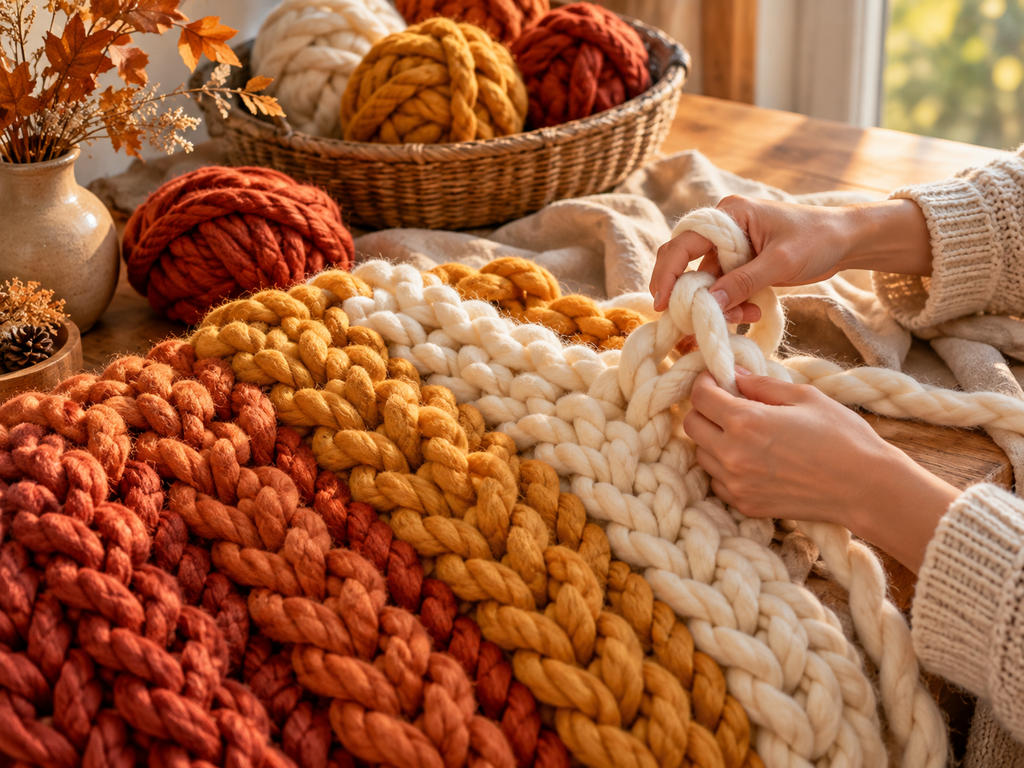
What Is a Chunky Finger Crochet Blanket?
A chunky finger crochet blanket is made by creating crochet-style loops using your fingers instead of a conventional crochet hook.
Because the yarn is very thick and the stitches are oversized, the blanket grows much faster than a traditional crochet blanket.
The finished fabric usually has:
- Large, clearly visible loops
- A thick and soft texture
- A loose, cozy drape
- A bold handmade appearance
- Fewer rows than a standard crochet blanket
- A modern, oversized look
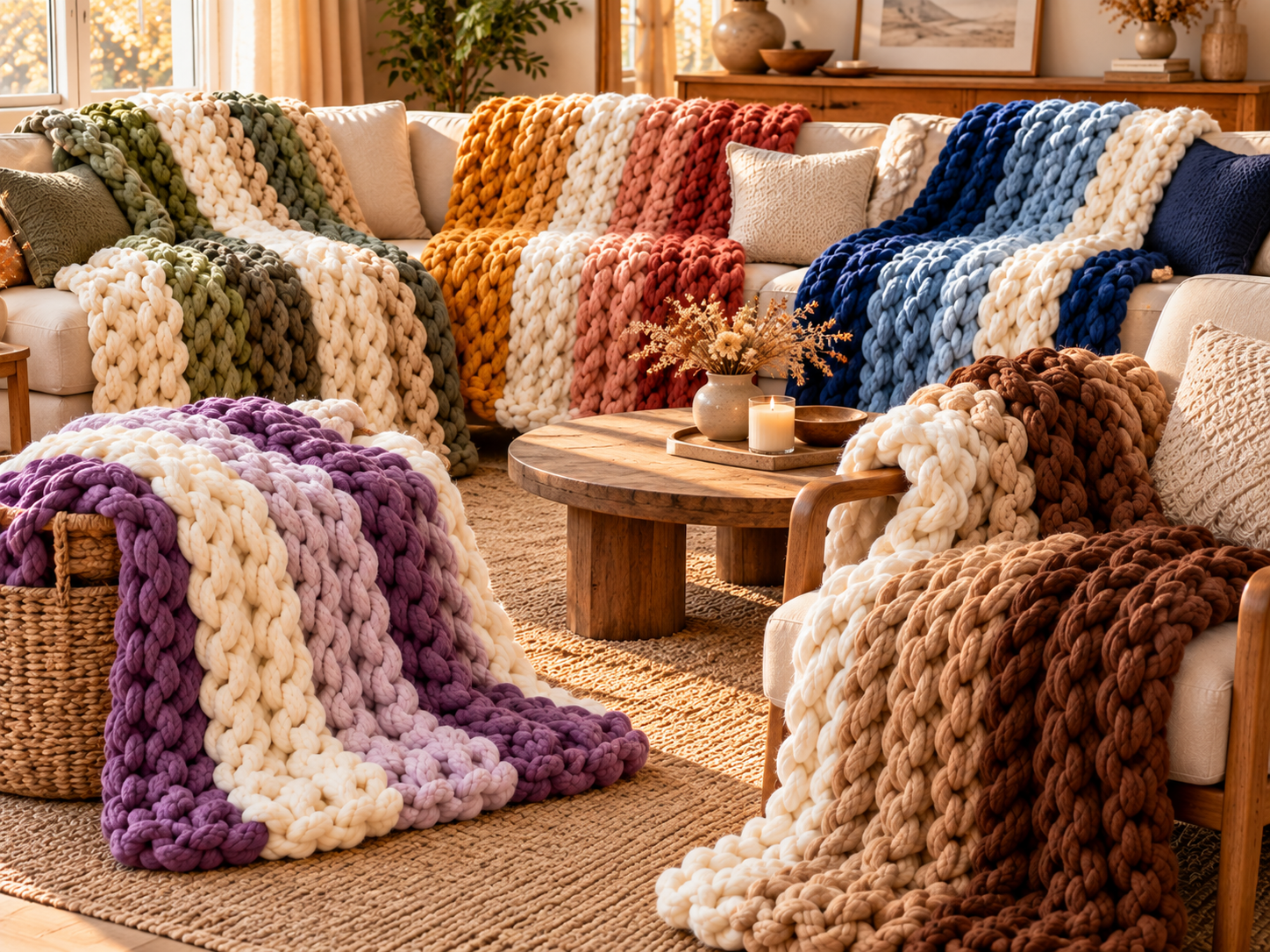
You can make one in a single color or combine several shades to create stripes and color blocks.
Why Finger Crochet Works So Well With Chunky Yarn
Traditional crochet hooks can become difficult to handle when working with extremely thick yarn. Your fingers provide a larger working space, making it easier to pull large loops through one another.
Finger crochet is also appealing because you don’t need a large collection of crochet hooks.
For a basic blanket, the main supplies are simply:
- Super bulky or jumbo yarn
- Your hands
- Scissors
- A measuring tape
- A large flat working surface
A yarn needle can also be useful for hiding the ends when your blanket is finished.
Choosing Yarn for Your Blanket
The yarn makes a huge difference in both the appearance and feel of a chunky finger crochet blanket.
Look for yarn that is:
- Thick enough to create oversized loops
- Soft against the skin
- Flexible enough to pull through your fingers
- Strong enough to handle repeated manipulation
- Consistent in thickness
For a warm autumn look, try combining colors such as:
| Color | Look |
|---|---|
| Cream | Soft and neutral |
| Honey | Warm and cheerful |
| Mustard | Rich autumn accent |
| Terracotta | Earthy and warm |
| Deep rust | Dramatic seasonal color |
| Brown | Natural and rustic |
If you want a calmer modern blanket, cream, beige, taupe, and soft gray work beautifully together.
How Much Yarn Do You Need?
The amount depends on several factors, including blanket dimensions, yarn thickness, stitch size, and how tightly you work.
Instead of relying on a single fixed amount, it is better to make a small sample first.
Create several rows using your chosen yarn and measure the resulting fabric. This gives you a better idea of how much material your particular yarn and tension will require.
For a large blanket, it is also a good idea to purchase enough yarn from the same dye lot when possible. This helps keep the color consistent throughout the project.
How to Start Finger Crocheting
Before beginning the blanket, place your yarn somewhere comfortable where it can feed freely.
Create your starting loop and gently tighten it around your finger. The loop should be secure but not so tight that you cannot pull yarn through it.
The basic process is:
- Create the starting loop.
- Insert your finger through the loop.
- Pull a section of working yarn through.
- Create the next loop.
- Continue making loops across the row.
- Turn or work back across the row according to your chosen construction.
- Keep the loops approximately the same size.
The most important thing is consistency.
If some loops are very tight while others are extremely loose, the finished blanket can develop an uneven shape.
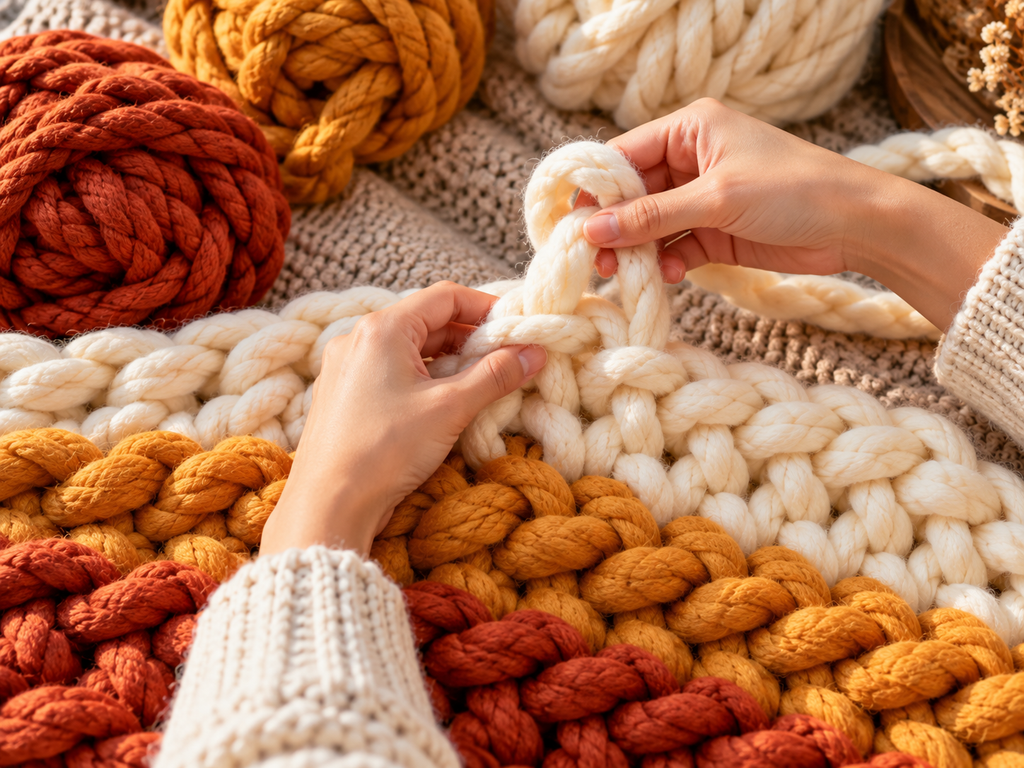
Keeping Your Stitches Consistent
One of the biggest challenges for beginners is maintaining even tension.
You don’t need every loop to be mathematically identical, but try to keep your finger placement and pulling motion consistent.
Avoid pulling too tightly
Tight stitches can make the blanket stiff and difficult to work with.
Don’t make extremely loose loops
Very loose loops may create large gaps and can make the blanket lose its structure.
Check your first few rows
After completing a few rows, place the work flat and look at the edges.
If one side is noticeably wider or narrower, adjust your tension before continuing.
Creating Colorful Stripes
One of the easiest ways to make a chunky blanket look more interesting is by changing colors between sections.
For example, you could create a repeating pattern such as:
Cream → Mustard → Terracotta → Rust → Cream
You can make each color section the same width or create intentionally different-sized stripes.
For a more contemporary appearance, try broad vertical or horizontal blocks instead of many narrow stripes.
The oversized stitches make color changes especially noticeable, so even a simple palette can produce a dramatic result.
How to Change Yarn Colors
When you reach the point where you want to introduce another color, finish the current section neatly and connect the new yarn according to your chosen technique.
Keep the join secure without creating a bulky knot.
After completing the blanket, weave the loose ends carefully into the back of the fabric.
For very thick yarn, avoid leaving long loose tails because they can become visible between the oversized stitches.
Shaping Your Blanket
A chunky finger crochet blanket doesn’t have to be perfectly rectangular, but straight edges generally create the cleanest finished appearance.
Every few rows, spread the blanket out on a flat surface and check:
- Overall width
- Edge straightness
- Stitch consistency
- Color placement
- Any unwanted gaps
- Uneven tension
Small corrections are much easier to make early than after the entire blanket is finished.
Making a Simple Beginner Blanket
For a first project, keep the design straightforward.
Choose your desired width and create your starting chain or foundation according to your chosen finger-crochet method.
Then continue working rows until you reach the desired length.
A simple three- or four-color stripe pattern is an excellent starting point because you can focus on learning the technique without having to manage a complicated color chart.
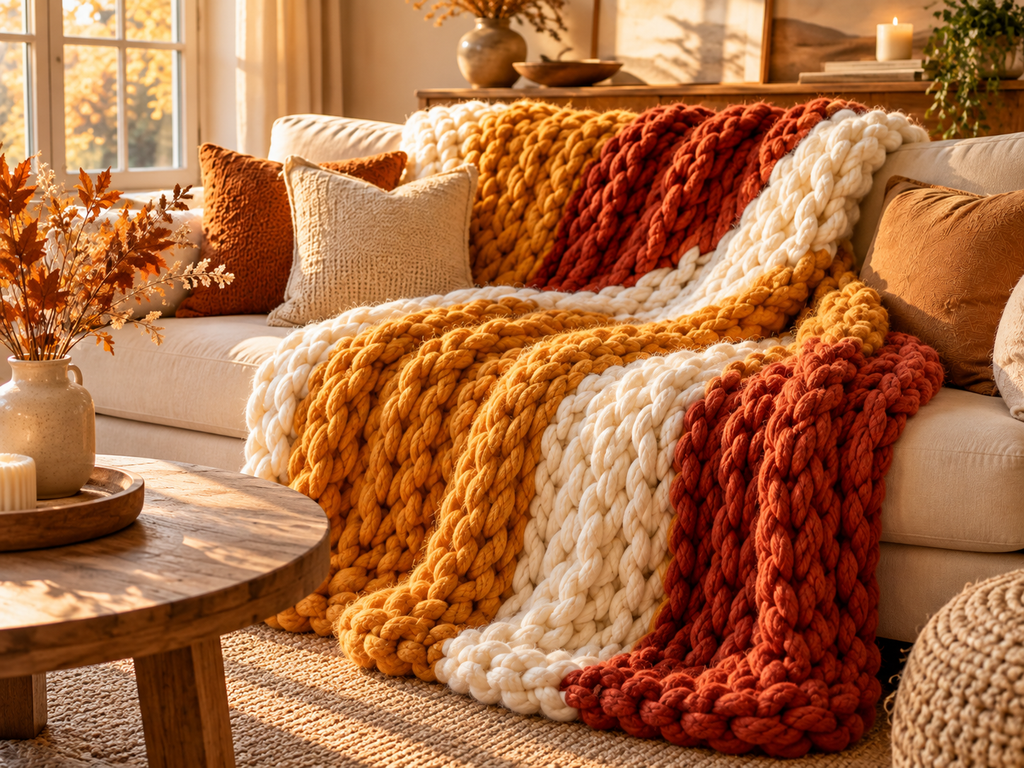
How to Finish the Blanket
Once the blanket reaches your preferred length, finish the final row carefully.
Secure the final loop so the work cannot unravel.
Cut the yarn while leaving an appropriate tail, then weave the end into the back of the blanket.
Take a few minutes to inspect the edges and gently arrange any stitches that have become distorted during the finishing process.
Because chunky yarn is so visible, neat finishing can make a noticeable difference.
Common Finger Crochet Mistakes
1. Making the loops too tight
This can make the blanket stiff and uncomfortable.
Fix: Relax your hands and pull larger loops.
2. Making every loop a different size
This can result in uneven rows.
Fix: Develop a consistent finger movement and periodically check your work.
3. Ignoring the edges
Edges can gradually become wider or narrower if you accidentally add or skip loops.
Fix: Count or visually check your loops regularly.
4. Choosing yarn that is difficult to manipulate
Some extremely thick yarns can be difficult to pull through your fingers.
Fix: Test a small section before committing to a full blanket.
5. Overcomplicating the first project
Multiple stitch patterns and frequent color changes can make your first blanket unnecessarily difficult.
Fix: Start with basic rows and a simple color sequence.
Different Ways to Style a Chunky Finger Crochet Blanket
The great thing about a chunky blanket is that it can become part of your room décor even when you’re not using it.
Drape it over a sofa
Let the blanket fall naturally over one side of the sofa. This creates an intentionally relaxed appearance while showing off the oversized texture.
Fold it over an armchair
A folded blanket placed over an armchair creates a cozy reading-corner look.
Layer it across the foot of a bed
Fold the blanket lengthwise and place it across the bottom of the bed for an easy seasonal update.
Place it in a woven basket
Roll or loosely fold the blanket into a large basket beside your sofa. This keeps it accessible while also functioning as décor.
Let it cascade onto a rug
For a relaxed editorial look, allow part of the blanket to fall naturally from a chair onto a textured rug.
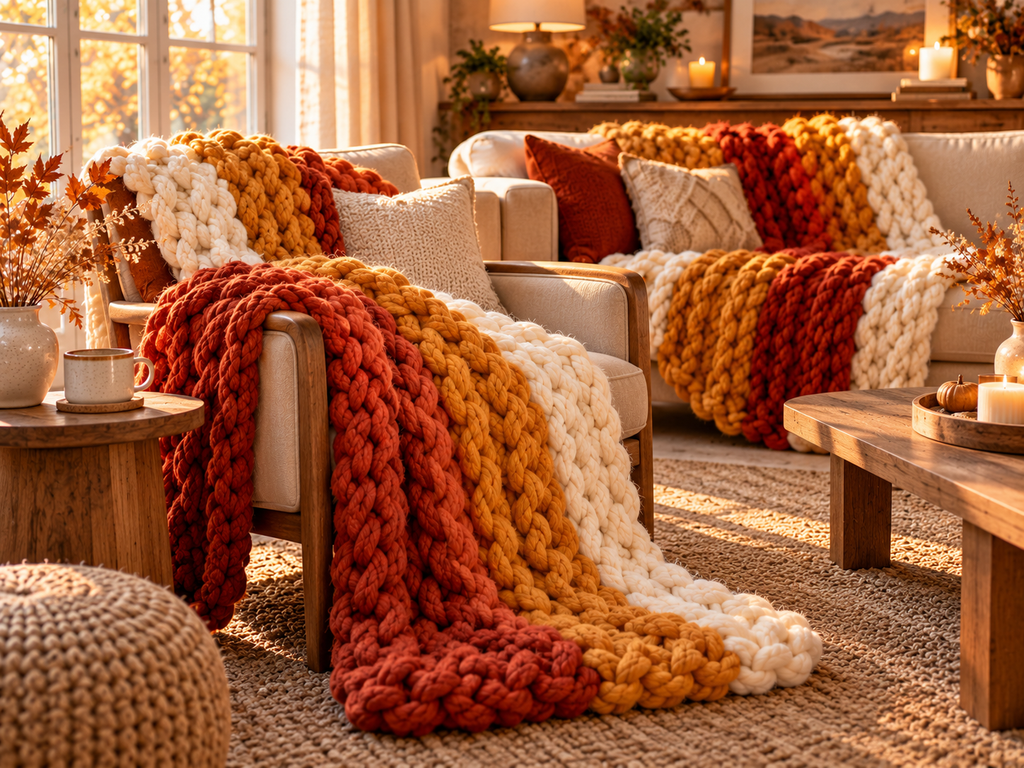
Color Ideas for Different Home Styles
You don’t have to use traditional autumn colors.
Warm autumn palette
Try:
- Cream
- Mustard
- Honey
- Terracotta
- Rust
This combination creates a warm seasonal atmosphere.
Neutral palette
Use:
- Ivory
- Beige
- Taupe
- Oatmeal
- Soft brown
This works well with minimalist and Scandinavian-inspired interiors.
Cool palette
Try:
- Cream
- Dusty blue
- Navy
- Soft gray
This gives the blanket a completely different feel while keeping the same chunky construction.
Soft pastel palette
Combine:
- Ivory
- Lavender
- Blush
- Lilac
- Pale gray
This is a nice option for bedrooms and softer interiors.
How to Make Your Blanket Look More Expensive
The simplest way to create a polished appearance is to focus on consistency.
Choose a limited color palette rather than using too many shades. Keep your stitches relatively even and make sure the edges are finished neatly.
Styling also matters.
Pairing the blanket with neutral furniture, textured cushions, natural wood, woven baskets, and soft lighting can make even a simple handmade project look like a carefully designed home décor piece.
Care Tips for a Chunky Blanket
Always check the care instructions for your specific yarn before washing.
Some chunky yarns can stretch significantly when wet.
General precautions include:
- Avoid aggressive washing.
- Don’t wring the blanket.
- Support the blanket when moving it while wet.
- Allow it to dry according to the yarn manufacturer’s instructions.
- Store it somewhere dry and clean.
- Keep oversized loops away from sharp objects that could snag them.
Frequently Asked Questions
Is finger crochet easy for beginners?
Yes, the basic technique can be approachable for beginners because you use your fingers instead of coordinating a crochet hook with thick yarn. The main skill to practice is maintaining consistent loop size and tension.
Can I make a blanket without a crochet hook?
Yes. Finger crochet is specifically designed around using your fingers to manipulate the yarn.
What yarn is best for a chunky finger crochet blanket?
A thick, soft yarn that is flexible enough to pull through large loops is generally easier to work with. Always test your chosen yarn before starting the full blanket.
How long does a chunky finger crochet blanket take?
The time varies according to the blanket size, yarn thickness, stitch size, and your experience. Because the stitches are large, a chunky blanket can progress relatively quickly compared with projects made with thinner yarn.
Can I use multiple colors?
Absolutely. Broad stripes, color blocks, and simple repeating sequences all work especially well with oversized stitches.
Can I make a smaller blanket?
Yes. You can make a smaller version for a baby, lap, chair, or decorative throw simply by adjusting the starting width and finished length.
Final Thoughts
A chunky finger crochet blanket is a simple way to create something both useful and decorative. The oversized stitches give it plenty of visual impact, while the finger-crochet technique keeps the process approachable.
Start with a manageable size, choose yarn you enjoy working with, and focus on keeping your loops reasonably consistent. Once you’re comfortable with the basic technique, experiment with stripes, color combinations, and different ways of styling the finished blanket.
Whether you choose warm autumn shades, soft neutrals, cool blues, or pastel colors, a handmade chunky blanket can add texture and warmth to almost any room.