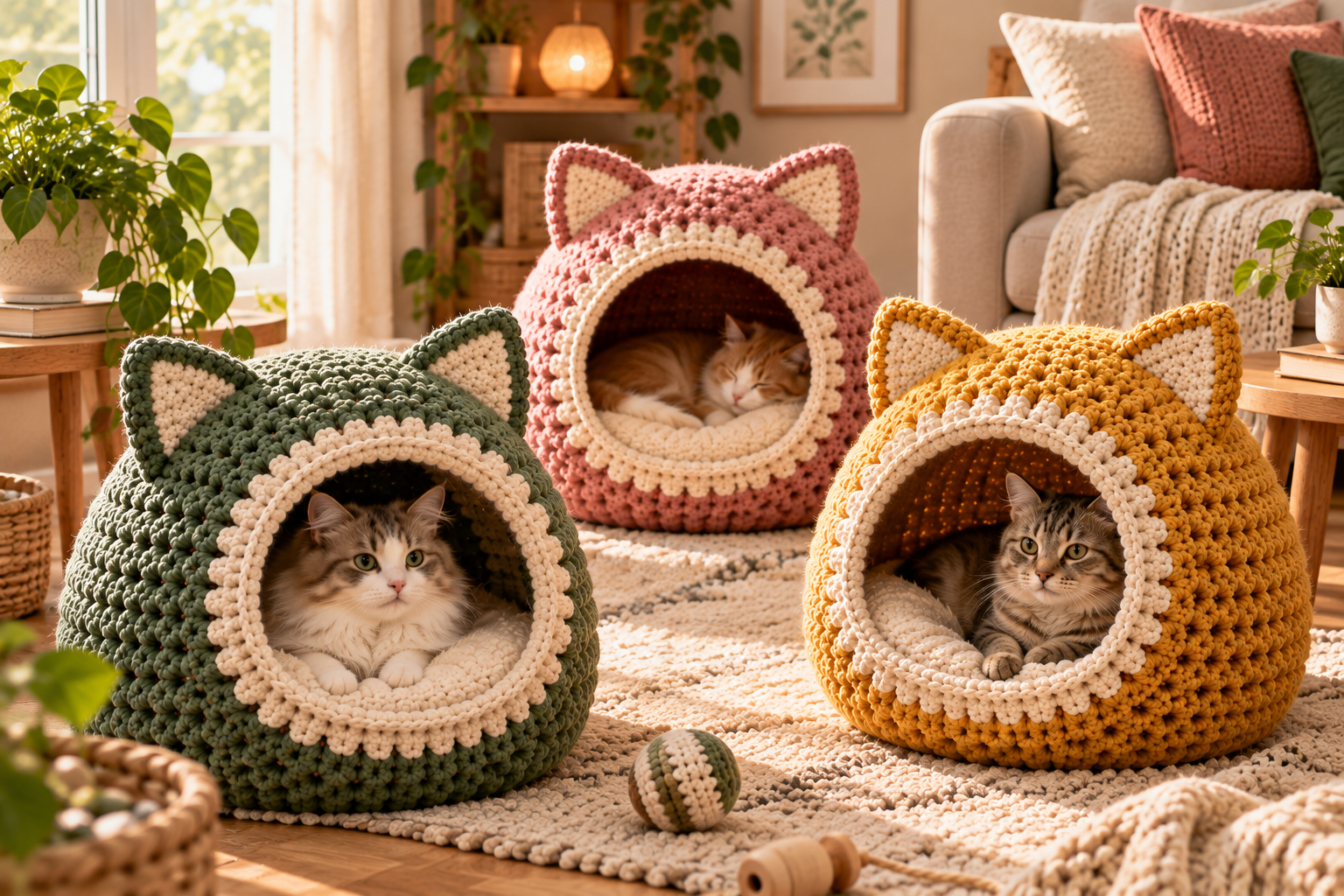
If your cat loves curling up somewhere warm, quiet, and comfortable, a handmade crochet cat bed or cat cave can be a lovely project to make at home. Crochet gives you plenty of freedom to choose the size, colors, shape, and texture, so you can create something that suits both your cat and your home.
From simple open nests to enclosed crochet cat caves, there are many styles to explore. Some designs are perfect for cats who like to hide, while others work better for cats who prefer stretching out in an open bed.
This guide covers different crochet cat bed and cat cave patterns, useful design ideas, construction details, and practical tips for making a comfortable finished piece.
What Is a Crochet Cat Cave?
A crochet cat cave is an enclosed or semi-enclosed sleeping space made with yarn. Unlike a traditional open cat bed, a cave gives your cat a small private area where it can curl up and relax.
A typical crochet cave can include:
- A rounded or oval base
- Curved crochet walls
- A large entrance
- A soft removable cushion
- Reinforced edging around the opening
- Decorative details such as ears, flowers, stripes, or contrasting trim
The shape can be adjusted depending on the size of the cat and the type of yarn being used.
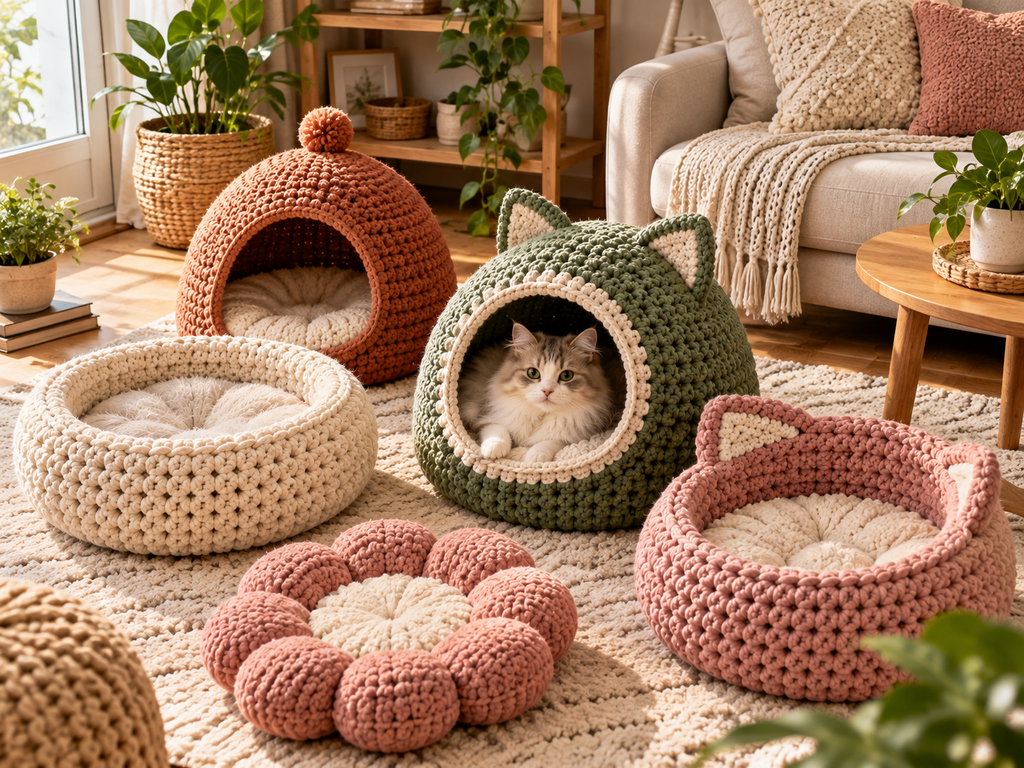
Crochet Cat Bed vs. Crochet Cat Cave
Although the terms are sometimes used interchangeably, the two designs are slightly different.
| Feature | Crochet Cat Bed | Crochet Cat Cave |
|---|---|---|
| Structure | Mostly open | Partially or mostly enclosed |
| Entrance | No entrance required | Usually has a defined opening |
| Best for | Cats that like open spaces | Cats that enjoy enclosed spaces |
| Construction | Usually simpler | Requires curved or structured walls |
| Interior | Fully visible | Partially hidden |
| Design options | Nest, basket, donut, cushion | Dome, pod, house, cat-ear cave |
An open bed can be a good starting point if you are new to crochet. Once you are comfortable creating a sturdy base and shaping the sides, you can move on to a more structured cave.
Popular Crochet Cat Bed Patterns
There are several styles you can adapt into your own crochet project.
1. Round Crochet Cat Nest
A round nest-style bed has a circular base with raised sides. It is relatively simple in appearance and can be made in one color or with contrasting rows.
This style works well for cats that like to curl into a ball while sleeping.
2. Donut-Style Cat Bed
A donut bed has a raised outer edge and a softer center. The raised edge gives the cat something to lean against while sleeping.
You can make the center removable so it can be cleaned separately.
3. Basket-Style Crochet Bed
A basket-style bed has taller walls and a more structured appearance. It can be made with dense stitches to help it maintain its shape.
Adding a separate cushion to the bottom can make the bed more comfortable.
4. Partially Enclosed Cat Bed
This design combines features of an open bed and a cave. One section may have a higher wall or canopy while the front remains open.
It is useful for cats that like some privacy without being completely enclosed.
Crochet Cat Cave Design Ideas
A cat cave can be much more than a simple dome. Small design changes can give the finished piece a completely different appearance.
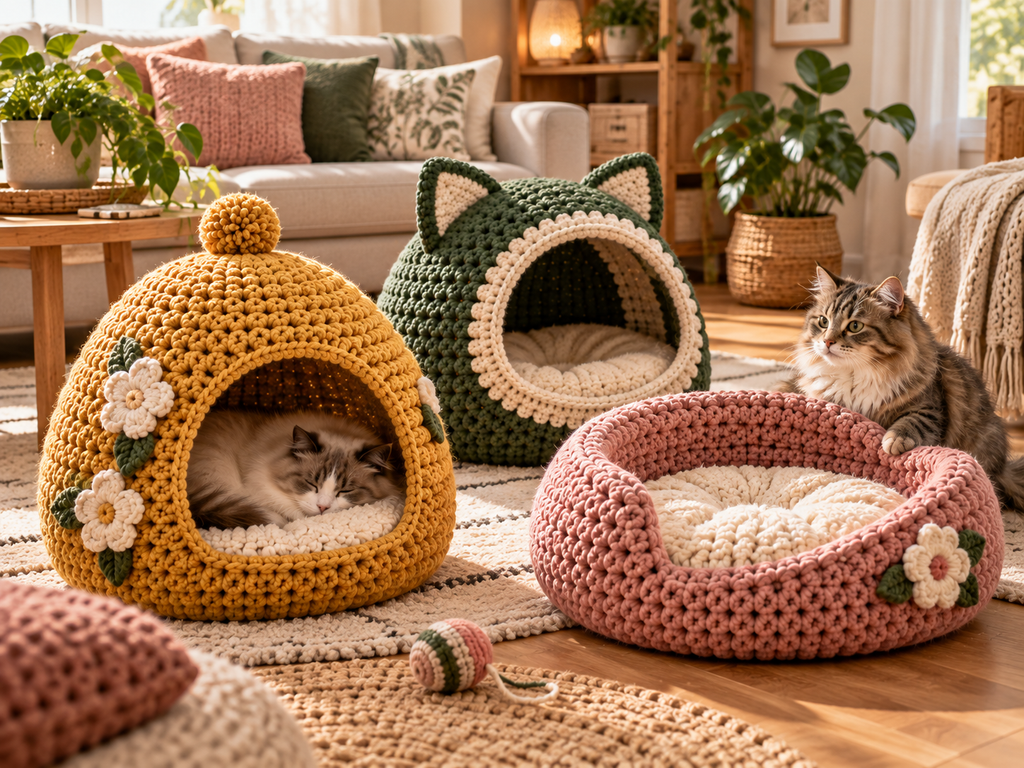
Rounded Dome Cave
The classic dome shape has curved walls that rise from a circular or oval base. A wide entrance makes it easier for the cat to enter and exit.
This design can be made in neutral colors for a minimalist home or brighter colors for a playful look.
Cat-Ear Cave
A cat-ear cave adds two pointed ear shapes to the top of the structure. The ears can be made separately and attached after the main cave is finished.
Using a contrasting color inside the ears creates extra definition.
Simple Enclosed Pod
For a cleaner appearance, skip decorative ears and focus on a smooth rounded pod. This can work particularly well with neutral yarn colors such as cream, beige, gray, or sage green.
Open Nest Cave
A lower-profile cave can combine an open nest with a partially enclosed back section. This gives the cat a sheltered sleeping area while keeping more of the interior visible.
Choosing the Right Yarn
The yarn you choose affects the appearance, strength, flexibility, and comfort of the finished cat bed.
For a structured cave, look for yarn that creates firm, dense stitches without becoming excessively stiff.
Important factors include:
- Thickness
- Fiber content
- Washability
- Stitch definition
- Durability
- Comfort
- Ability to hold its shape
Chunkier yarn can produce a substantial-looking cave with fewer stitches, while medium-weight yarn allows more detailed stitch patterns.
For a pet bed, practical care matters as much as appearance. A washable material and removable cushion can make the finished project easier to maintain.
Building the Crochet Cat Cave
A structured cave is easier to plan when you think of it as several connected components rather than one complicated shape.
A typical pattern can be divided into:
- Base
- Lower walls
- Curved upper walls
- Entrance opening
- Entrance edging
- Cushion
- Decorative details
- Optional reinforcement
The base determines much of the final size. The walls then build upward from the base and gradually create the enclosed shape.
Creating a Strong Base
The base needs to be large enough for the cat to sit, curl, and change position comfortably.
Start by deciding the approximate finished diameter or width. The exact dimensions will depend on the cat’s size and the yarn and hook combination.
A dense stitch pattern can help create a stable foundation.
If the base becomes too flexible, possible solutions include:
- Using a slightly smaller hook
- Increasing stitch density
- Adding a separate insert
- Using a washable structural layer
- Reinforcing the lower edge
The finished base should remain comfortable rather than becoming hard or rigid.
Shaping the Cave Walls
The walls are what turn an ordinary crochet bed into a cave.
Instead of increasing outward indefinitely, the pattern needs to transition from the base into upward-growing sides. The amount of shaping controls whether the finished cave looks wide and low or tall and enclosed.
Pay attention to:
- Stitch counts
- Increase placement
- Round-to-round transitions
- Wall height
- Entrance width
- Overall symmetry
A wide entrance creates a more open appearance, while a smaller entrance produces a more enclosed hideaway.
Making the Entrance
The entrance is one of the most noticeable parts of a crochet cat cave.
A rounded entrance can be created by shaping the surrounding stitches so the opening has a smooth curve. Once the opening is established, a contrasting border can be added.
A cream border against a darker outer color is particularly effective because it visually defines the entrance.
The opening should be large enough for the intended cat to enter and leave comfortably. Avoid making the entrance unnecessarily narrow.
Adding a Removable Cushion
A removable cushion is a useful addition because it can be taken out for cleaning.
The cushion can be:
- Round
- Oval
- Rectangular
- Donut-shaped
- Slightly contoured to the cave
Use a soft but supportive filling and make sure the finished cushion fits inside the cave without bunching excessively.
A contrasting cushion can also give the finished project a more polished appearance.
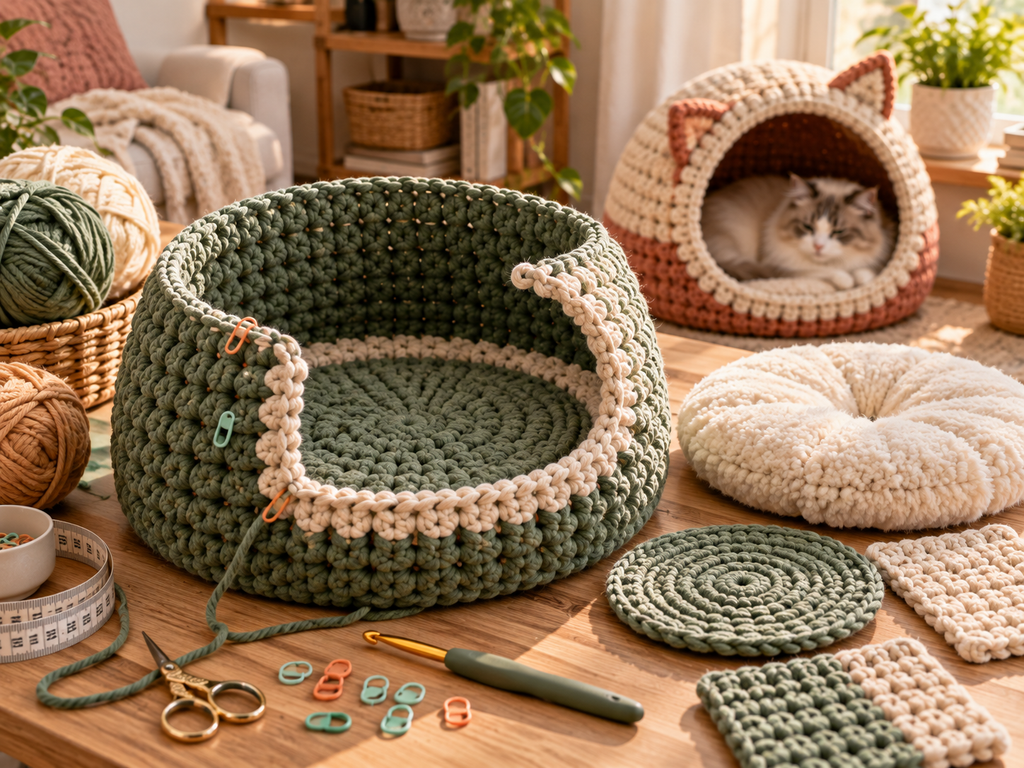
Helpful Crochet Construction Tips
Before starting a complete cat cave pattern, it helps to make a small sample with your chosen yarn and hook.
Check Your Gauge
Even when a pattern does not require a strict gauge, a small sample can help you understand how tightly the stitches behave.
A looser tension may produce a softer but less structured cave. A tighter tension can create firmer walls.
Keep Track of Stitch Counts
When shaping a cave, small stitch-count mistakes can accumulate over several rounds.
Keep track of:
- Beginning-of-round position
- Increase rounds
- Decrease rounds
- Opening boundaries
- Total stitches
This is especially important when creating symmetrical features such as cat ears.
Reinforce High-Use Areas
The entrance receives repeated contact as the cat enters and exits. A sturdy edging can help maintain the opening’s shape.
The lower edge and base should also have enough structure to prevent excessive stretching.
Choosing Colors for a Crochet Cat Cave
Color is one of the easiest ways to customize a crochet cat bed.
Neutral Palette
Cream, beige, oatmeal, taupe, and soft gray create a subtle design that blends easily into most interiors.
Natural Palette
Sage green, terracotta, mustard, brown, and ivory create a warm handmade appearance.
Soft Pastels
Dusty pink, pale blue, lavender, and cream can give the cave a softer decorative look.
Two-Color Design
Using one main color with a contrasting entrance border is an easy way to make the shape stand out without adding complicated decoration.
How to Make a Crochet Cat Cave Fit Your Home
A cat bed does not have to look out of place among your furniture.
Think about the room where you plan to keep it. If the room already has warm wood and neutral fabrics, a cream, beige, sage, or terracotta cave may blend naturally.
For a brighter room, a dusty pink or mustard design can become a small accent piece.
Placement matters too. A quiet corner near a window, reading chair, or low-traffic part of the living room can make the bed feel like a natural part of the space.
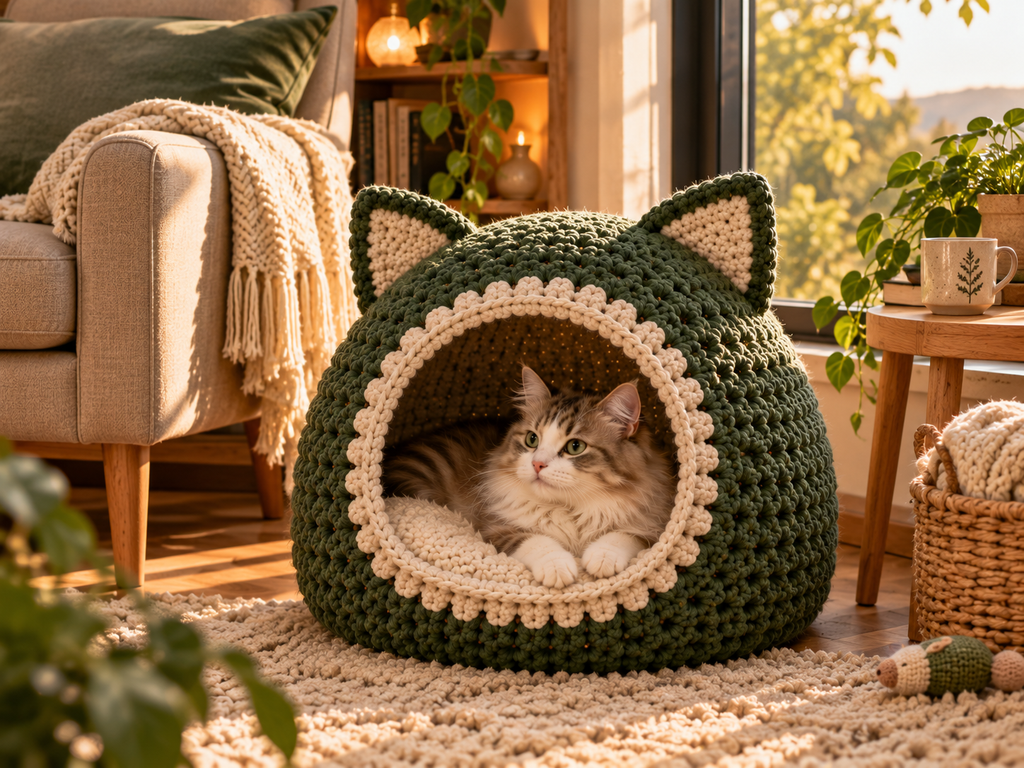
Making the Pattern Practical for Your Cat
A beautiful design is only useful if your cat can comfortably use it.
Before finalizing the dimensions, consider:
- Your cat’s body length
- Sleeping position
- Entry and exit space
- Interior height
- Base width
- Cushion thickness
- Stability of the finished cave
Some cats prefer open beds, while others enjoy enclosed spaces. If you are making the cave for a particular cat, observe where and how that cat normally sleeps.
This can help you choose the right design.
Keeping a Crochet Cat Bed Clean
Pet beds naturally collect fur and dust, so cleaning should be considered during the design stage.
A removable cushion is particularly convenient because it can be cleaned separately.
For the main crochet structure, follow the care instructions appropriate for the yarn used. Avoid assuming that every yarn can be washed or dried in the same way.
Before washing the complete project, check the yarn manufacturer’s care recommendations.
Common Mistakes to Avoid
Making the Entrance Too Small
A small opening can make the cave difficult to use. Always consider the cat’s size when determining the entrance dimensions.
Making the Walls Too Soft
If the cave collapses easily, the yarn, stitch density, shaping, or construction may need adjustment.
Skipping the Cushion
A cave with a firm base can still benefit from a soft removable cushion.
Ignoring the Finished Dimensions
Crochet can change in size depending on yarn, hook, stitch tension, and construction method. Keep finished measurements in mind rather than relying only on the number of stitches.
Adding Too Many Decorations
Flowers, ears, stripes, and appliqués can be attractive, but too many details can make the design harder to maintain. Simple decorative elements often have a cleaner finished appearance.
Frequently Asked Questions
Are crochet cat caves suitable for all cats?
Cats have different sleeping preferences. Some enjoy enclosed spaces, while others prefer open beds. Watching where your cat naturally chooses to sleep can help you decide which design is appropriate.
What is the easiest crochet cat bed to make?
An open round nest or simple basket-style bed is generally easier to construct than a fully enclosed cave because it requires less shaping.
How much yarn does a crochet cat cave need?
The amount depends on the finished size, yarn weight, hook size, stitch pattern, and construction. A larger cave made with thick yarn will generally require more material than a small open bed.
Can I make a crochet cat cave in different sizes?
Yes. The base diameter, wall height, entrance size, and overall proportions can be adjusted when developing a pattern. It is important to keep the proportions consistent so the finished cave remains stable.
Can the cushion be removable?
Yes. A separate cushion is often a practical choice because it can be removed for cleaning or replaced independently.
What colors work well for crochet cat caves?
Cream, beige, sage green, terracotta, mustard, dusty pink, gray, and other earthy or muted colors work well in handmade pet décor. The best choice depends on your home and personal style.
Final Thoughts
Crochet cat beds and cat caves offer plenty of room for creativity. You can start with a simple open nest and gradually explore more structured designs such as rounded caves, cat-ear hideaways, and partially enclosed beds.
The most important things to consider are your cat’s comfort, the stability of the finished structure, the size of the entrance, and how easy the finished piece will be to clean.
Once those practical details are right, you can have fun with colors, trims, stitch patterns, cushions, and decorative details to create a handmade cat bed that feels special and fits beautifully into your home.