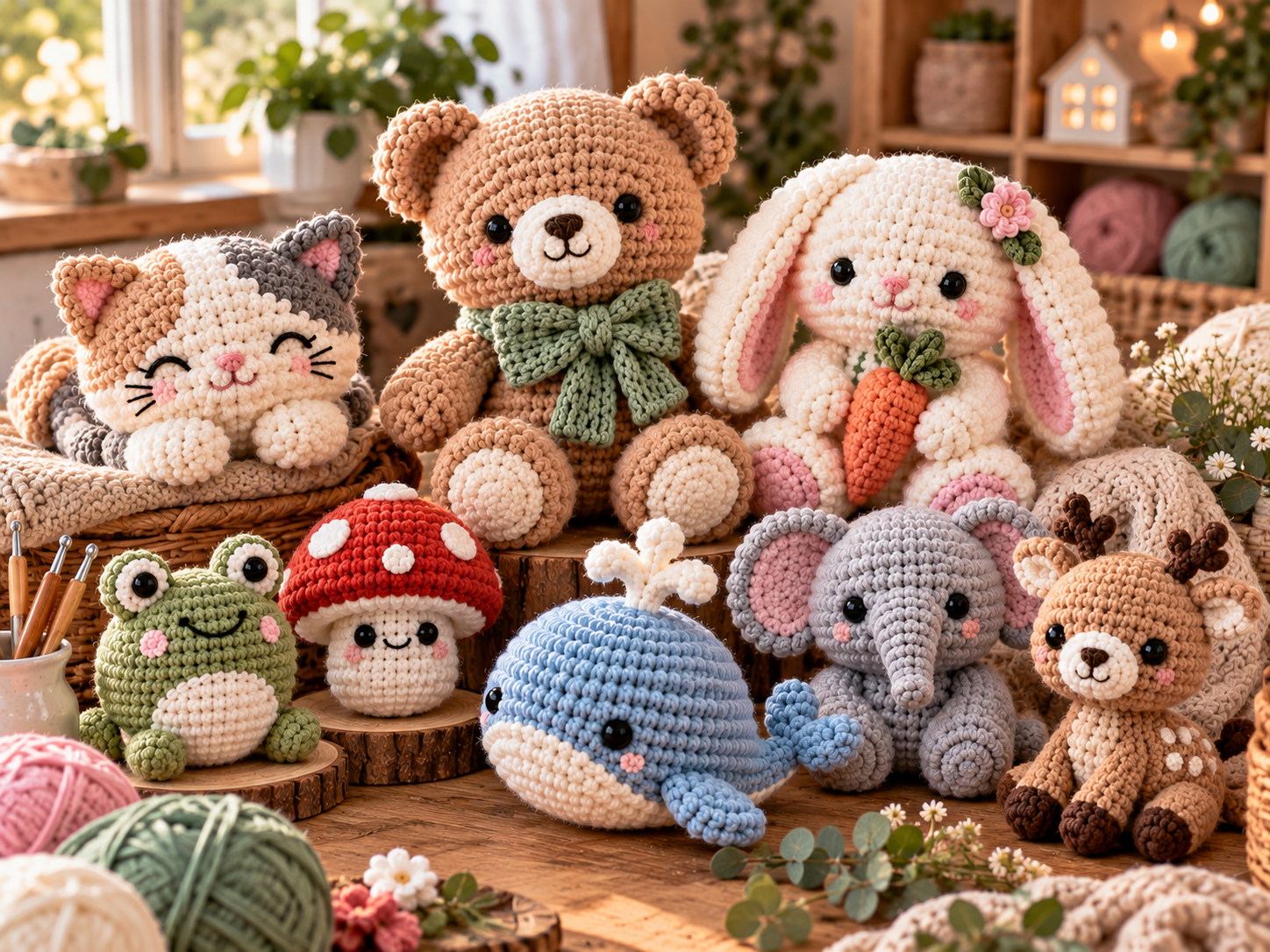
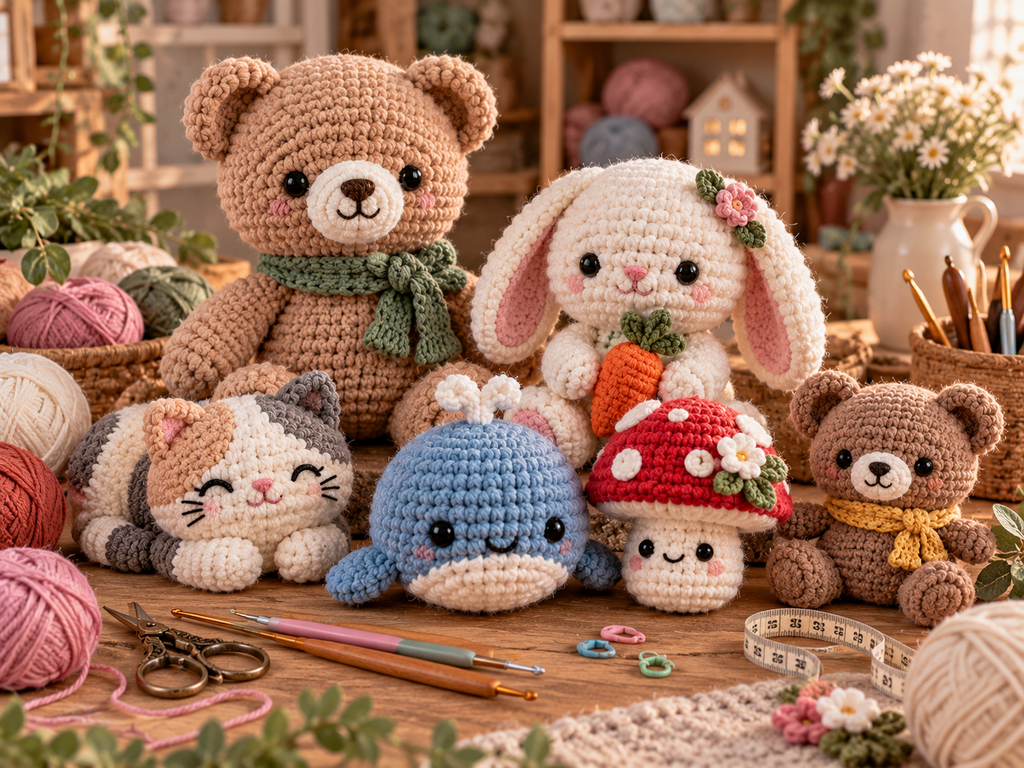
If you love making soft, cute, handmade toys, crochet plush patterns are a great place to start. From tiny teddy bears and sleepy cats to bunnies, whales, frogs, and mushrooms, there are so many fun designs to try.
The best part is that you can take a basic plush pattern and make it your own with different yarn colors, facial details, accessories, and sizes. A simple pattern can become a completely different-looking toy just by changing the color palette or adding a few handmade details.
Whether you’re new to amigurumi or already have a basket full of crochet projects, these ideas can help you choose your next plushie.
What Are Crochet Plush Patterns?
Crochet plush patterns are instructions for making stuffed toys with yarn and a crochet hook. Most plush patterns are worked in small sections that are crocheted separately and then stuffed and sewn together.
Common pieces include:
- Head
- Body
- Arms
- Legs
- Ears
- Tails
- Small accessories
- Decorative details
Many plush patterns use amigurumi techniques, where the pieces are worked tightly so the stuffing stays inside.
The finished result can be tiny enough to fit in your hand or large enough to become a decorative pillow or cuddly toy.
Cute Crochet Plush Ideas to Try
There are plenty of designs to choose from, but some shapes are especially fun because they can be customized in many ways.
1. Crochet Teddy Bear
A teddy bear is a classic choice for a plush project.
You can make a simple brown bear with a cream muzzle, or experiment with colors such as beige, dusty pink, sage green, or soft blue.
Small accessories can make each bear unique. Try adding:
- A tiny scarf
- Crochet bow
- Little sweater
- Flower
- Heart
- Mini backpack
A teddy bear is also a lovely handmade gift because the design works for many ages.
2. Crochet Bunny
Bunnies are another popular choice for crochet plush projects.
The ears give you plenty of room for customization. You can make long floppy ears, short upright ears, or even add a contrasting inner-ear color.
A cream bunny with pink details has a soft, classic appearance, while pastel colors can create a more playful look.
3. Crochet Cat
A crochet cat can be surprisingly simple to personalize.
Change the colors to create a gray tabby, orange cat, black-and-white cat, or soft calico-style design.
You can also change the facial expression. Embroidered sleepy eyes create a completely different personality from large open safety eyes.
4. Crochet Whale
A whale is a great option if you want something with a simple rounded body.
Blue and cream are natural choices, but you can also experiment with lavender, dusty pink, mint, or gray.
Because the whale doesn’t require complicated limbs, it can also be a nice project for someone who wants to practice shaping.
5. Crochet Mushroom
Mushrooms are perfect if you enjoy woodland-inspired designs.
A rounded mushroom cap can be decorated with contrasting spots, while small leaves, berries, and flowers can be added around the base.
Try a forest-green cap for a cozy woodland style, red and cream for a classic mushroom look, or pastel colors for something more playful.
6. Crochet Frog
A round crochet frog is another fun plush idea.
Use sage or olive green for a natural appearance, or choose a brighter green for a more cartoon-like character.
Large eyes and a simple embroidered smile can give the frog plenty of personality without requiring complicated details.
Choosing Yarn for Crochet Plushies
Yarn choice can change the entire appearance of a finished plush.
For many amigurumi-style projects, cotton or cotton-blend yarn is popular because it creates clear, defined stitches.
If you want an extra soft and fluffy toy, plush or chenille yarn can give you a different texture.
Before choosing your yarn, think about the finished look you want.
| Yarn Type | Best For | Appearance |
|---|---|---|
| Cotton | Detailed amigurumi | Defined stitches |
| Cotton blend | Everyday plushies | Soft and structured |
| Chenille | Cuddly plush toys | Very soft and fluffy |
| Velvet yarn | Decorative plushies | Smooth and plush |
| Acrylic | Budget-friendly projects | Lightweight and colorful |
Always check the specific pattern instructions before changing yarn weight because a different yarn can significantly change the size of your finished plush.
How to Choose a Crochet Plush Pattern
Not every pattern is suitable for every crocheter.
Before starting, look at the pattern carefully and consider your experience level.
Beginners
Start with a design that has:
- Simple shapes
- Minimal color changes
- Basic increases and decreases
- Fewer separate pieces
- Straightforward assembly
A round whale, simple bear, or basic frog can be easier than a highly detailed character.
Intermediate Crocheters
Once you’re comfortable with basic amigurumi, try designs with:
- Multiple body parts
- Color changes
- Embroidered details
- Small accessories
- More detailed shaping
Bunnies, cats, mushrooms, and dressed teddy bears are good examples.
Advanced Crocheters
If you enjoy more challenging projects, look for patterns with detailed shaping, unusual construction, layered decorations, clothing, or multiple accessories.
Understanding the Basic Crochet Plush Construction
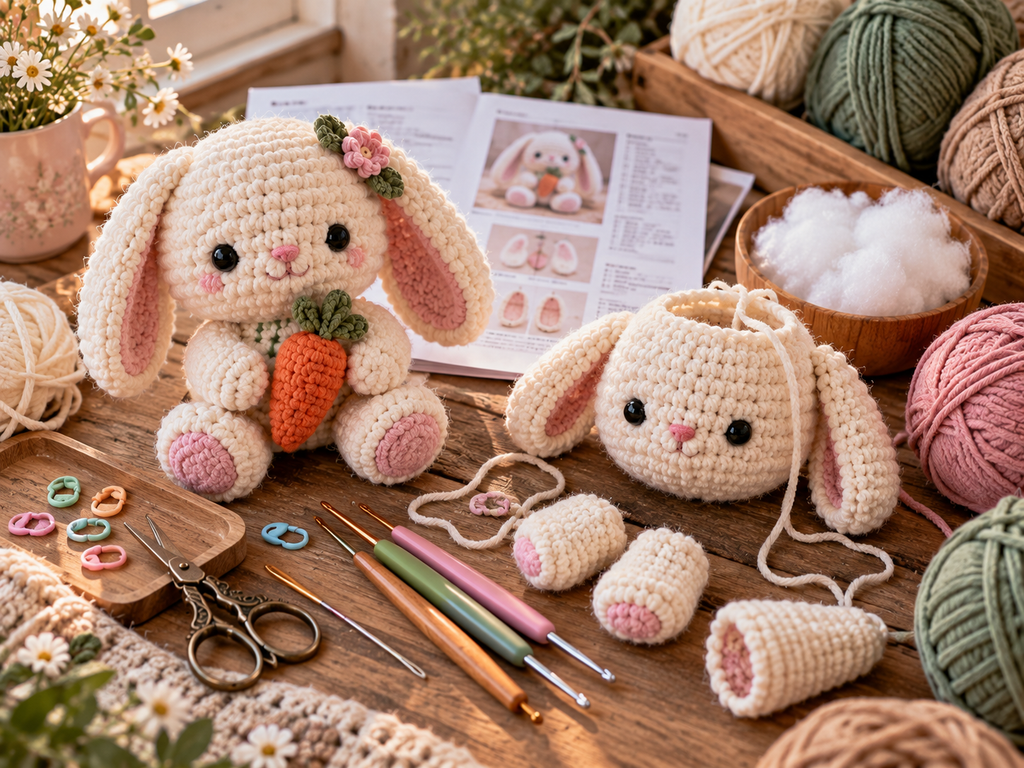
Most plushies follow a fairly simple construction process.
Step 1: Crochet the Pieces
The head, body, arms, legs, ears, or other pieces are usually crocheted separately.
Depending on the design, some parts may be worked in continuous rounds while others may use joined rounds.
Step 2: Add the Face
Facial details can be added before or after stuffing.
Safety eyes are commonly used for amigurumi, while embroidered eyes are another option.
For baby or toddler toys, consider the intended use carefully and follow appropriate safety guidance when choosing small components.
Step 3: Stuff the Pieces
Stuffing should be added gradually.
Adding too much at once can make the stitches stretch and create an uneven shape.
For a smooth finish, add small amounts and distribute the stuffing evenly.
Step 4: Assemble Everything
Once the individual pieces are complete, sew them onto the main body.
Take your time with placement. Small changes in the position of the ears, arms, or eyes can completely change the character’s expression.
Creating Different Looks With the Same Pattern
One of the biggest advantages of crochet plush patterns is that you don’t necessarily have to make every project look identical.
The same pattern can create several different designs.
For example, imagine using one teddy bear pattern five times:
- Brown yarn + green scarf = woodland bear
- Cream yarn + pink bow = sweet cottage bear
- Gray yarn + blue scarf = winter bear
- Sage yarn + cream details = minimalist bear
- Pink yarn + floral accessories = playful bear
The construction stays the same, but the finished plush looks completely different.
How to Make Crochet Plushies Look More Professional
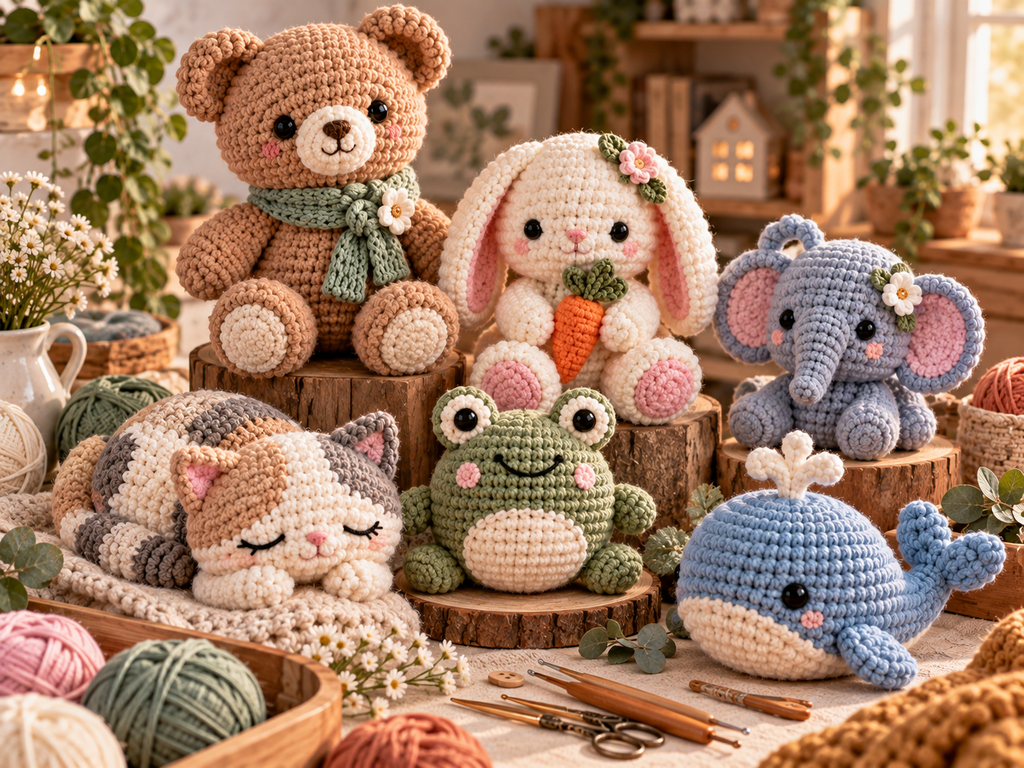
Small finishing details can make a big difference.
Keep Your Tension Consistent
Uneven tension can make some parts of a plush look larger or smaller than expected.
Try to keep your stitches consistent throughout the project.
Stuff Gradually
Don’t wait until the very end to add stuffing. Add it as you close each piece so you can control the shape.
Pay Attention to Symmetry
When attaching ears, arms, and legs, compare both sides before sewing them permanently.
A small difference in placement can be noticeable on a small plush.
Hide Yarn Ends Carefully
Loose yarn tails can make an otherwise beautiful project look unfinished.
Weave them into the inside of the piece and trim them neatly.
Take Your Time With the Face
The face is usually the first thing people notice.
Measure the position of the eyes and muzzle before securing them. If you’re embroidering facial details, lightly mark the placement first.
Fun Ways to Use Finished Crochet Plush Toys
You don’t have to keep your finished plushies on a shelf.
They can be used in many ways around the home.
Nursery Decor
Soft pastel bunnies, bears, whales, and elephants can work beautifully in a nursery or child’s room.
Shelf Decorations
Create a small collection of animals and arrange them beside books, plants, or wooden decorations.
Handmade Gifts
A crochet plush makes a thoughtful gift because you can choose the animal and colors specifically for the recipient.
Seasonal Decorations
Certain designs can easily become seasonal decorations.
For example:
- Mushroom for autumn
- Bunny for Easter
- Bear for winter
- Ghost for Halloween
- Reindeer for Christmas
Craft Fair Displays
If you sell handmade items, small plushies can be displayed together as a coordinated collection.
Different sizes and colors help create an eye-catching table.
Crochet Plushies Make Great Handmade Gifts
A handmade plush doesn’t need to be complicated to feel special.
Think about the person you’re making it for. A child might love a colorful animal, while an adult could prefer a neutral teddy bear or woodland-inspired mushroom.
You can also personalize the gift by adding:
- Their favorite color
- A small embroidered heart
- A scarf
- A flower
- A tiny accessory
- A handmade gift tag
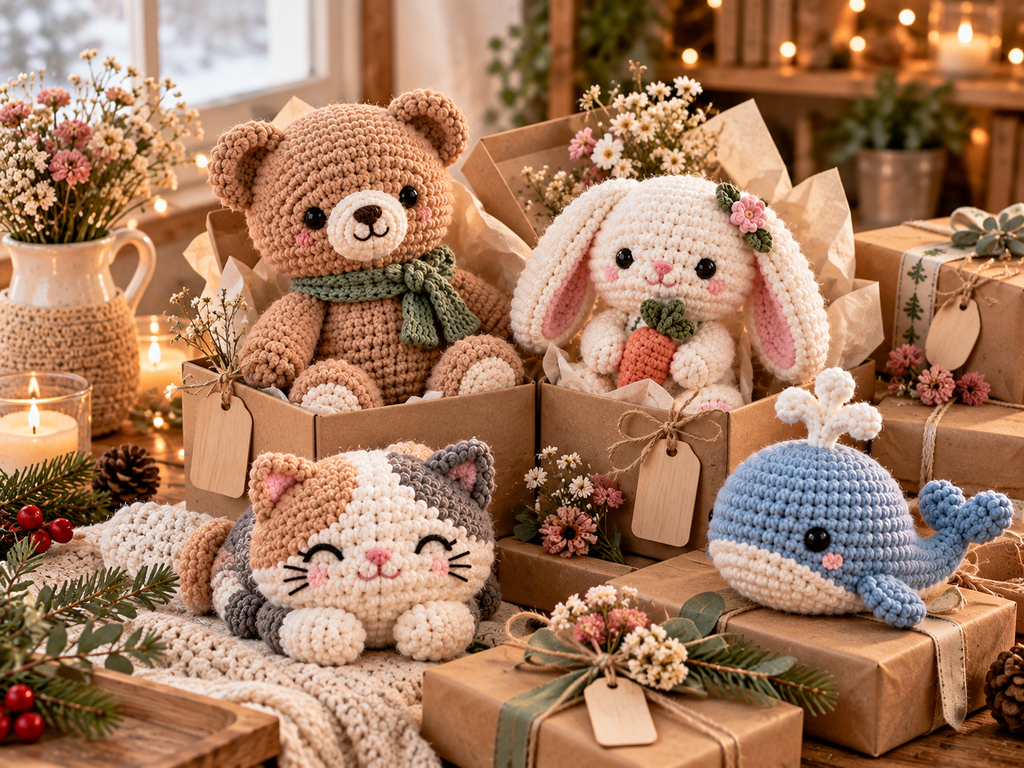
For a polished presentation, place the finished plush inside a kraft box or gift bag with tissue paper.
Easy Tips for Your Next Crochet Plush Project
Before starting your next pattern, keep these tips in mind:
- Read the entire pattern first. Make sure you understand the construction before beginning.
- Check your gauge or finished measurements. This is especially important when size matters.
- Use the recommended yarn weight when possible.
- Count your stitches regularly. A missed increase or decrease can change the shape.
- Mark your rounds. A stitch marker can make continuous-round patterns much easier to follow.
- Don’t overstuff. The plush should be firm but still soft.
- Lay pieces out before sewing. This helps you check proportions.
- Take your time with facial features. They can change the entire personality of the plush.
- Save leftover yarn. Small amounts are useful for noses, flowers, bows, and other details.
- Experiment with colors. Your finished plush doesn’t have to look exactly like the sample.
Frequently Asked Questions
What are the easiest crochet plush patterns for beginners?
Simple teddy bears, round whales, basic frogs, and other designs made from simple shapes are often easier starting points. Look for patterns with fewer separate pieces and straightforward shaping.
What yarn is best for crochet plushies?
Cotton yarn is useful when you want clearly defined stitches, while chenille and plush yarn create a softer, fluffier appearance. Follow the pattern’s recommended yarn weight whenever possible.
Are crochet plush toys difficult to make?
They can range from very simple to quite detailed. A basic plush made from a few rounded pieces can be beginner-friendly, while detailed animals with accessories and colorwork may require more experience.
Can I change the colors in a crochet plush pattern?
Yes. Changing colors is one of the easiest ways to personalize a pattern. Just make sure your new yarn has a similar weight if you want to maintain approximately the same size.
What can I use crochet plushies for?
They can be used as handmade gifts, shelf decorations, nursery décor, seasonal decorations, craft-fair products, or small collectible toys.
How do I make crochet plushies softer?
The yarn has the biggest effect on softness. Plush, chenille, and velvet-style yarns can create a very soft finish, although they can sometimes make individual stitches harder to see while crocheting.
Final Thoughts
Crochet plush patterns give you plenty of room to be creative. You can follow a simple pattern exactly, or use it as a starting point for your own colors, accessories, and character ideas.
Start with a design that matches your current skill level, choose yarn you enjoy working with, and focus on the little finishing details. A simple teddy bear, bunny, cat, whale, frog, or mushroom can become something completely unique with the right colors and personality.
And once you’ve finished one plush, you may find yourself wanting to make an entire little collection.