Looking for crochet dog sweater patterns that are cute, practical, and fun to make? A handmade sweater can be a great little project for your pup, especially when the weather gets chilly.
The best part is that you don’t have to stick to one color. A simple sweater design can look completely different when you switch the yarn palette. Think cream and rust for an autumn look, sage and cream for something softer, or dusty pink for a sweet everyday style.
Before you pick up your hook, though, there are a few things worth considering — especially your dog’s measurements, yarn choice, fit, and how the sweater will be used.
Why Crochet Dog Sweaters Are So Fun to Make
A dog sweater is a relatively small wearable project compared with a full-size human sweater, which makes it a satisfying crochet project.
You can also personalize almost every part of it.
Change the:
- Main color
- Stripe colors
- Collar style
- Sleeve length
- Sweater length
- Stitch texture
- Colorwork pattern
- Overall fit
A basic pattern can become several completely different sweaters simply by changing the yarn colors.
That’s especially useful if you’re making sweaters for more than one dog.
15 Crochet Dog Sweater Pattern Ideas
Here are some ideas to inspire your next project.
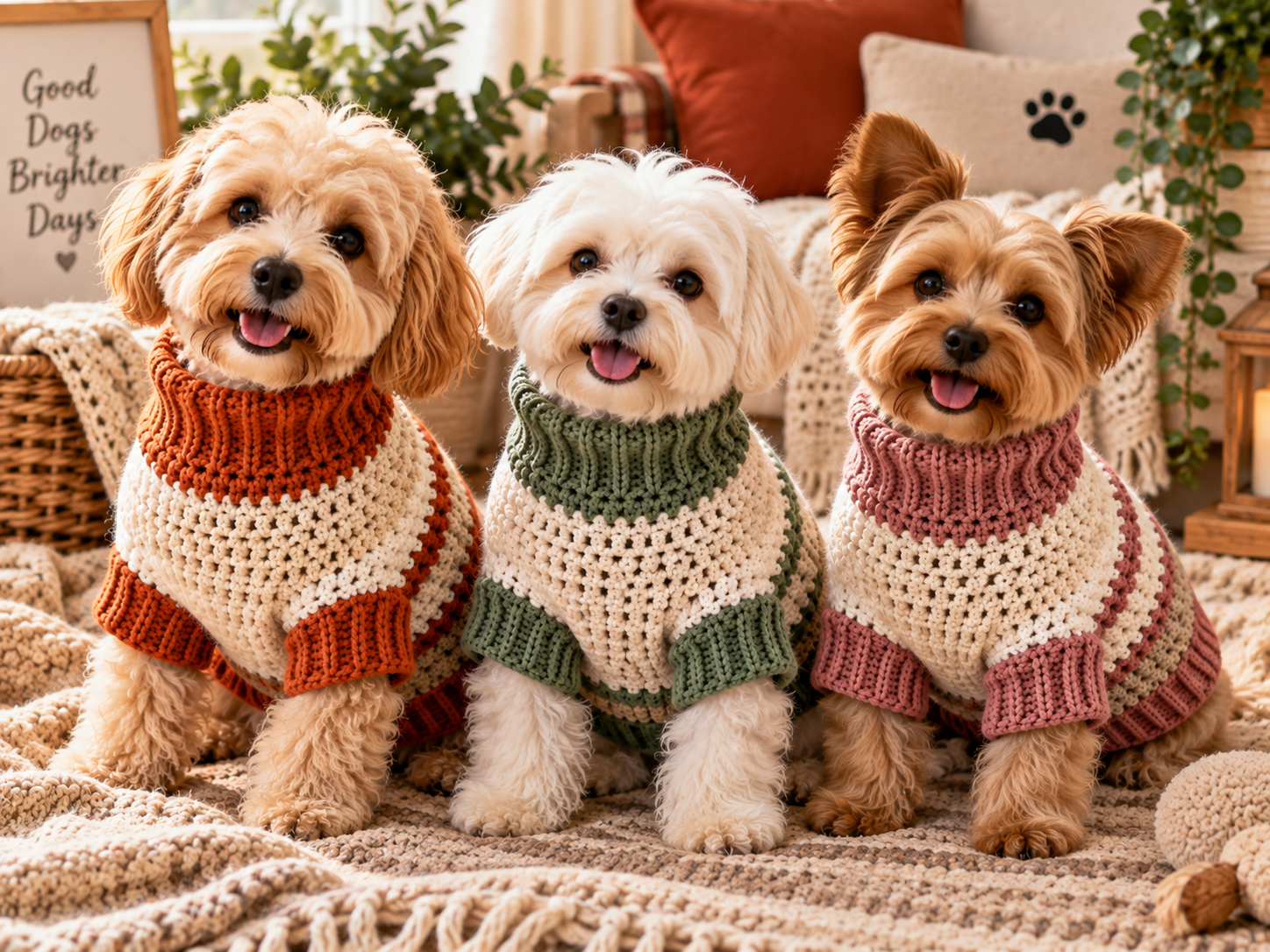
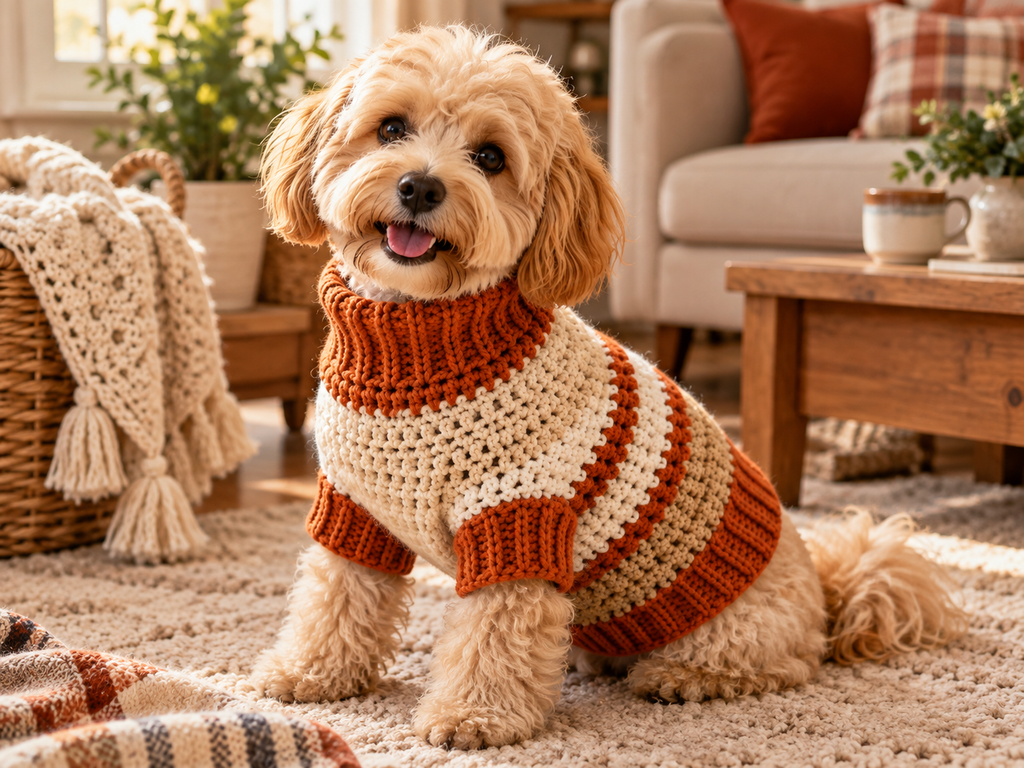
1. Classic Cream and Rust Sweater
A cream body with burnt-orange ribbing gives this sweater a warm autumn feel.
Use the orange around the collar, cuffs, hem, and a few horizontal sections across the body. The neutral base keeps the design simple while the rust color gives it personality.
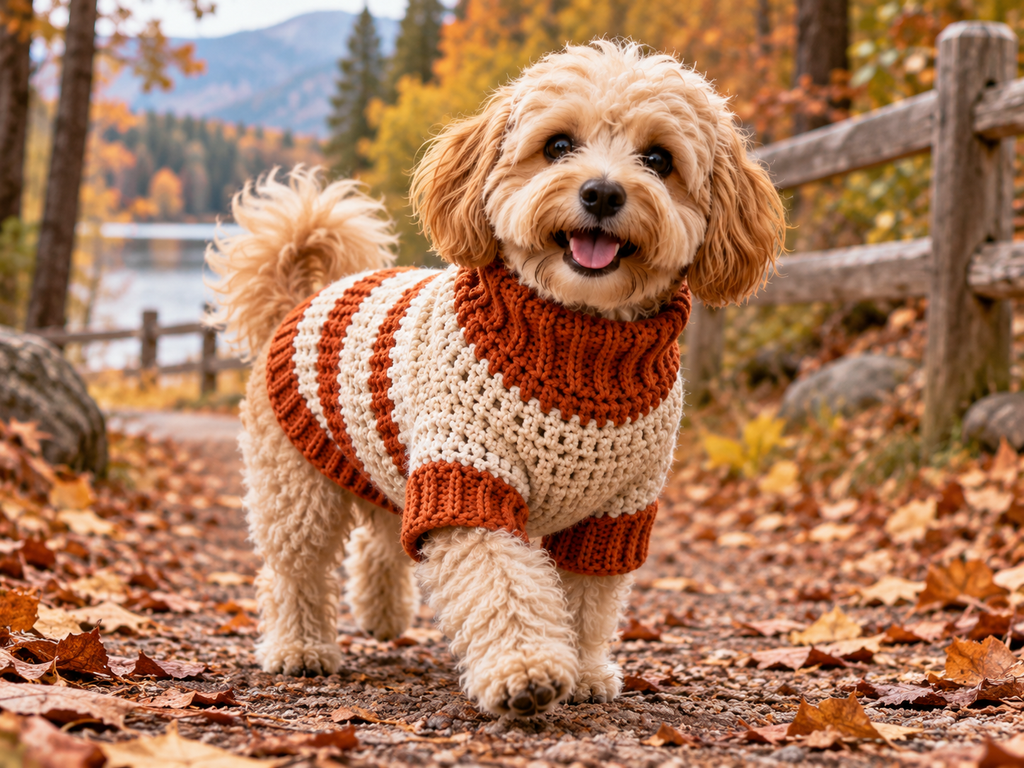
This is a particularly nice combination for fall and winter photos.
2. Sage Green and Cream Dog Sweater
For a softer, more natural look, replace the rust with muted sage green.
Keep the same basic construction:
- Cream body
- Sage collar
- Sage cuffs
- Sage hem
- Simple horizontal accents
This color combination works beautifully with dogs of almost any coat color.
3. Dusty Pink Crochet Sweater
Dusty pink gives the same sweater design a completely different personality.
Pair it with cream rather than using pink throughout the garment. This keeps the finished sweater from looking too bright while still giving it a soft, playful appearance.
4. Chunky Turtleneck Dog Sweater
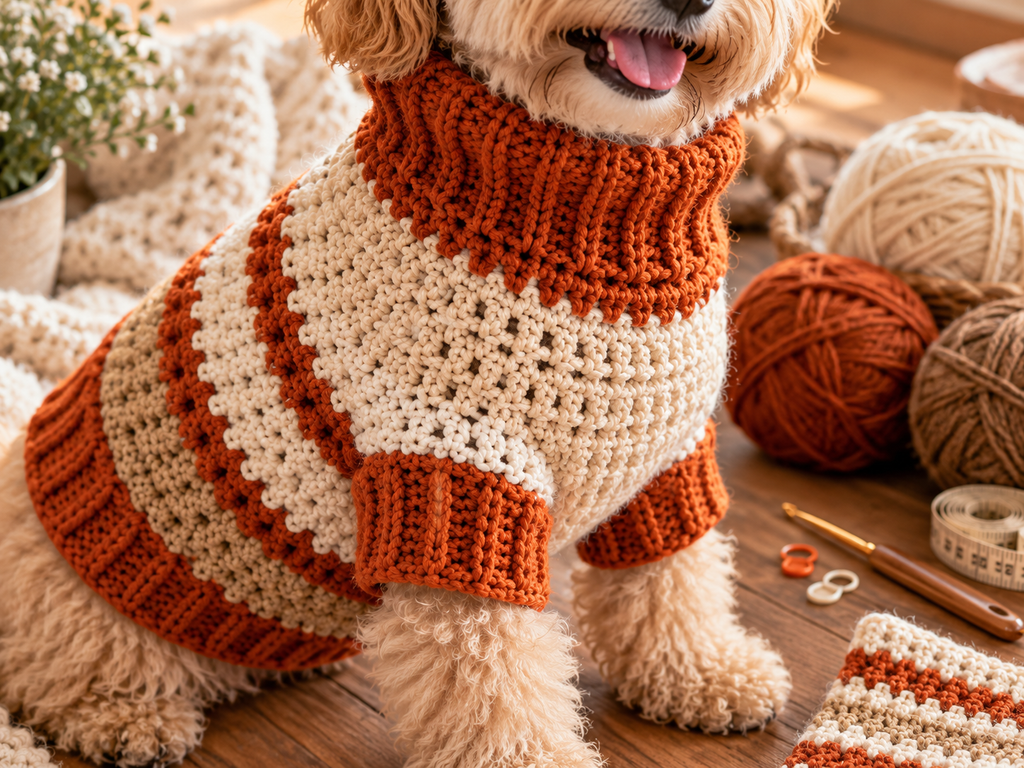
A high ribbed collar adds extra visual interest and gives the sweater a cozy winter appearance.
The collar should sit comfortably around the dog’s neck without restricting movement or breathing. Always check the fit before allowing your dog to wear the finished sweater for an extended period.
5. Striped Crochet Dog Sweater
If you’re still learning colorwork, horizontal stripes are a great place to start.
You can make:
- Two-color stripes
- Thin alternating stripes
- Wide stripes
- Uneven stripe sections
- One accent stripe between solid sections
The possibilities are almost endless.
6. Minimalist Neutral Sweater
Not every crochet dog sweater needs lots of color.
Try a single shade such as:
- Oatmeal
- Beige
- Cream
- Taupe
- Light gray
Use texture rather than color to make the sweater interesting.
A chunky stitch combined with ribbed edges can create a beautiful handmade look without complicated color changes.
7. Rustic Cabin-Inspired Sweater
For a cozy woodland look, combine cream with rust, brown, forest green, or navy.
Add simple stripes or small geometric motifs for extra character.
This style pairs especially well with autumn or winter photography.
8. Color-Block Dog Sweater
Instead of narrow stripes, divide the sweater into larger blocks of color.
For example:
Upper section: Rust
Middle section: Cream
Lower section: Sage
This can make a simple crochet construction look much more modern.
9. Matching Dog and Owner Sweaters
If you’re making crochet clothes for yourself too, consider creating a smaller dog version using the same colors.
The sweaters don’t need to be identical.
Simply repeating the same color palette can create a coordinated look.
10. Simple Beginner Dog Sweater
If you’re new to crocheting garments, start with a simple design.
Look for a pattern that uses familiar stitches and straightforward shaping.
Avoid choosing an extremely complicated colorwork pattern for your first wearable project. Once you understand how the sweater fits together, you can move on to more decorative designs.
11. Ribbed Dog Sweater
A heavily textured ribbed stitch can create a stretchy, cozy fabric.
Use ribbing around the:
- Neck
- Chest
- Sleeves
- Bottom edge
The rest of the sweater can remain relatively simple.
12. Festive Winter Sweater
Use traditional winter colors such as:
- Cream
- Red
- Deep green
- Navy
Add small stars, snowflake-inspired motifs, or simple stripes.
Keep the decorations securely crocheted or embroidered rather than adding loose pieces that your dog might chew.
13. Earth-Tone Crochet Sweater
For an understated look, try:
- Warm beige
- Terracotta
- Olive
- Chocolate brown
These colors work especially well with rustic crochet textures.
14. Pastel Dog Sweater
For spring or indoor wear, try a softer palette.
Lavender, pale blue, blush pink, butter yellow, and cream can make a chunky sweater feel lighter and more playful.
15. Same Design, Different Colors
This is one of the easiest ways to create variety.
Use the same pattern but make three versions:
- Rust + cream
- Sage + cream
- Dusty pink + cream
The construction stays the same, but each sweater has its own personality.
How to Choose Yarn for a Dog Sweater
Yarn selection matters more than simply choosing a pretty color.
Your dog will be moving, sitting, lying down, and possibly getting the sweater dirty, so practicality matters.
Look for yarn that is:
- Comfortable against fur and skin
- Not excessively heavy
- Easy to clean
- Durable enough for regular use
- Appropriate for the pattern’s gauge
- Soft enough around the neck and legs
A medium-weight yarn can be a useful choice for many dog sweater projects, but always follow the yarn weight and gauge recommended by the particular pattern.
How to Measure Your Dog
Never rely only on your dog’s breed or weight when choosing a sweater size.
Dogs of the same breed can have very different body shapes.
Take measurements while your dog is standing naturally.
Chest measurement
Measure around the widest part of the chest, usually just behind the front legs.
Neck measurement
Measure around the area where the collar naturally sits.
Don’t pull the measuring tape tightly.
Back length
Measure from the base of the neck toward the base of the tail.
This helps determine how long the sweater should be.
Leg measurements
If your design includes sleeves or leg openings, measure the appropriate areas carefully.
Leave enough room for normal movement.
Why Gauge Matters in Crochet Dog Sweaters
Gauge isn’t just important for large crochet garments.
A small difference in tension can make a noticeable difference when you’re making something that needs to fit a dog’s body.
For example, if your stitches are significantly tighter than the pattern gauge, the sweater may end up too small.
If your stitches are looser, it may become too large or lose its intended shape.
Make a small gauge swatch before starting the actual sweater.
If your gauge doesn’t match the pattern, adjust your hook size as needed rather than simply guessing your stitch count.
How to Make a Crochet Dog Sweater More Comfortable
A cute sweater isn’t useful if your dog doesn’t enjoy wearing it.
Avoid a tight neckline
The neck should sit comfortably without putting pressure around the throat.
Leave room around the legs
Your dog needs to walk, run, sit, and lie down naturally.
Don’t make the body excessively long
A sweater that extends too far underneath the dog’s body can become uncomfortable or get in the way.
Keep the fabric flexible
Extremely thick or stiff crochet fabric may restrict movement, especially for smaller dogs.
Check for loose ends
Make sure all yarn tails are properly secured before letting your dog wear the sweater.
Crochet Colorwork Ideas for Dog Sweaters
Colorwork doesn’t have to be complicated.
A few simple techniques can completely change the look of a basic sweater.
Horizontal stripes
The easiest option is alternating rows or sections of two colors.
Contrast collar and cuffs
Keep the body one color and use a second color around the edges.
Small repeated motifs
Add small hearts, diamonds, stars, dots, or geometric shapes.
Two-tone color blocking
Use larger sections of contrasting colors for a modern appearance.
Neutral base with one bold color
A cream or beige body with rust, burgundy, sage, or navy accents can create a polished handmade look.
Basic Crochet Dog Sweater Construction
The exact construction depends on the pattern, but many dog sweaters can be broken into a few manageable sections.
Step 1: Make the neckline
Begin with the neck section according to the pattern.
If you’re using ribbing, check the stretch before moving forward.
Step 2: Build the chest and body
Continue into the main body section.
This is where you can introduce your stripes, color blocks, or motifs.
Step 3: Shape the leg openings
Follow the pattern carefully around the front-leg areas.
This section needs enough room for movement without leaving large gaps.
Step 4: Complete the body
Continue until you reach your desired back length.
Try the sweater on your dog periodically if the pattern allows it.
Step 5: Add cuffs and hem
Finish the edges with ribbing or another suitable border.
Step 6: Weave in the ends
Secure all yarn tails neatly.
Give the sweater a final inspection before your dog wears it.
How to Choose the Right Size
When comparing your measurements with a crochet pattern, pay particular attention to the chest measurement.
That’s often more useful than choosing a size based on small, medium, or large labels alone.
If your dog falls between sizes, don’t immediately choose the larger size.
Instead, look at the actual finished measurements provided by the pattern and compare them with your dog’s measurements.
The right amount of ease will depend on the sweater design and the type of fabric it creates.
Safety Tips for Crochet Dog Sweaters
A handmade sweater should always be treated as clothing, not as a toy.
Keep these points in mind:
- Supervise your dog the first few times they wear it.
- Check that the sweater doesn’t restrict movement.
- Make sure the neck isn’t too tight.
- Avoid loose buttons or decorations that could be chewed off.
- Check the sweater regularly for loose yarn.
- Remove the sweater if your dog appears uncomfortable.
- Don’t leave a sweater on your dog for long periods without checking them.
- Keep the garment clean and dry.
If your dog has skin sensitivities or a medical condition, choose materials and clothing accordingly and ask your veterinarian if you’re unsure.
Tips for Making Your First Dog Sweater
If this is your first crochet garment, don’t rush.
Start by making a gauge swatch and taking accurate measurements.
Then read through the entire pattern before beginning.
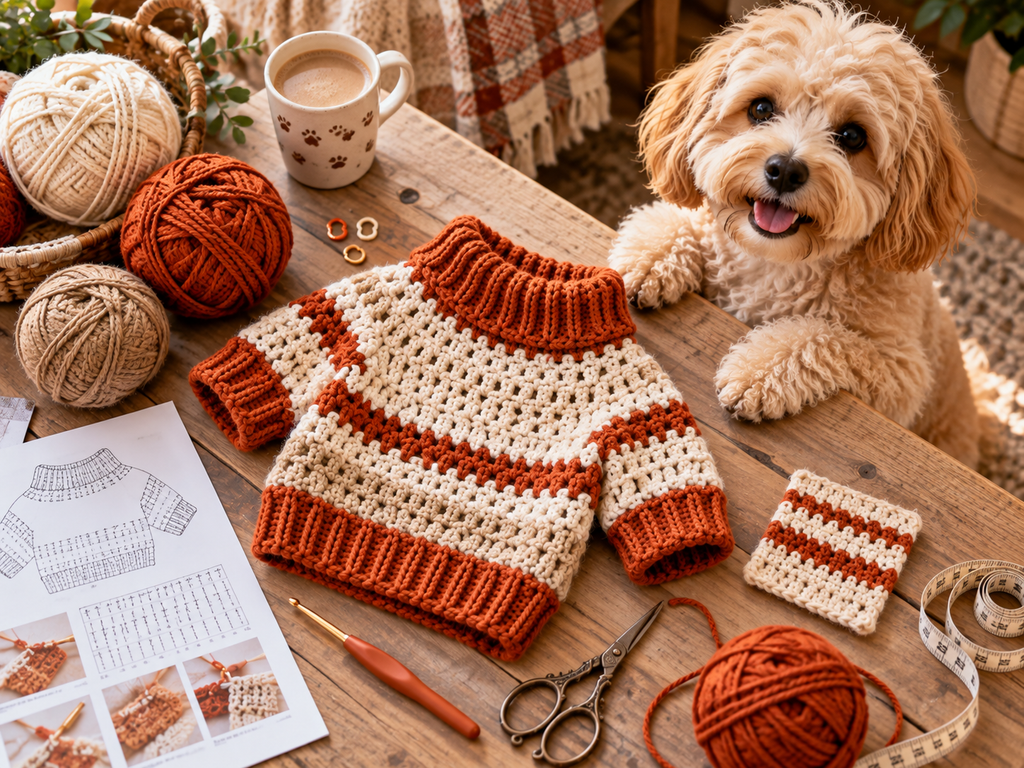
It’s also helpful to have:
- Your crochet hook
- Correct yarn
- Measuring tape
- Stitch markers
- Scissors
- Yarn needle
- Pattern instructions
Keep your colors organized if you’re working with multiple shades.
And remember that you don’t have to finish the entire sweater in one sitting. Break it into sections and check your progress as you go.
Frequently Asked Questions
What is the easiest crochet dog sweater pattern for beginners?
A simple sweater using basic stitches, minimal shaping, and straightforward color changes is usually the easiest place to start. Look for a pattern with clear measurements and uncomplicated construction.
How much yarn do I need for a crochet dog sweater?
The amount depends on your dog’s size, the yarn weight, the stitch pattern, and the sweater’s design. Smaller dogs generally require less yarn than larger dogs, but check the specific pattern’s yarn requirements before purchasing supplies.
Can I change the colors in a dog sweater pattern?
Yes. Changing colors is one of the easiest ways to personalize a crochet dog sweater. Keep the same stitch counts and construction while substituting colors that provide similar contrast.
What yarn is best for dog sweaters?
Choose a yarn that is comfortable, durable, washable when appropriate, and suitable for the pattern’s gauge. Avoid choosing yarn solely because it looks attractive in the skein.
How do I know if a crochet dog sweater fits correctly?
Your dog should be able to walk, sit, lie down, and move their front legs naturally. The neckline should not be tight, and the sweater shouldn’t pull across the chest or restrict movement.
Can I make one pattern for different-sized dogs?
You may be able to resize a pattern by adjusting stitch counts and length, but the safest approach is to use a pattern that provides multiple finished sizes or clear instructions for customization.
Final Thoughts
The best crochet dog sweater patterns give you plenty of room to personalize the finished piece.
Start with a comfortable construction and accurate measurements, then have fun with the colors. A cream-and-rust sweater can feel warm and rustic, while the exact same design in sage or dusty pink can look completely different.
Most importantly, focus on comfort and fit. Your dog should be able to move naturally and wear the sweater without feeling restricted.
Once you’ve made one successful sweater, you may find yourself wanting to make another — and that’s where experimenting with different colors, stripes, textures, and seasonal designs becomes even more fun.