If you love handmade clothes, a cozy crochet sweater pattern is one of those projects that is worth taking your time with. A good sweater gives you something practical to wear while also letting you play with colors, texture, and your own style.
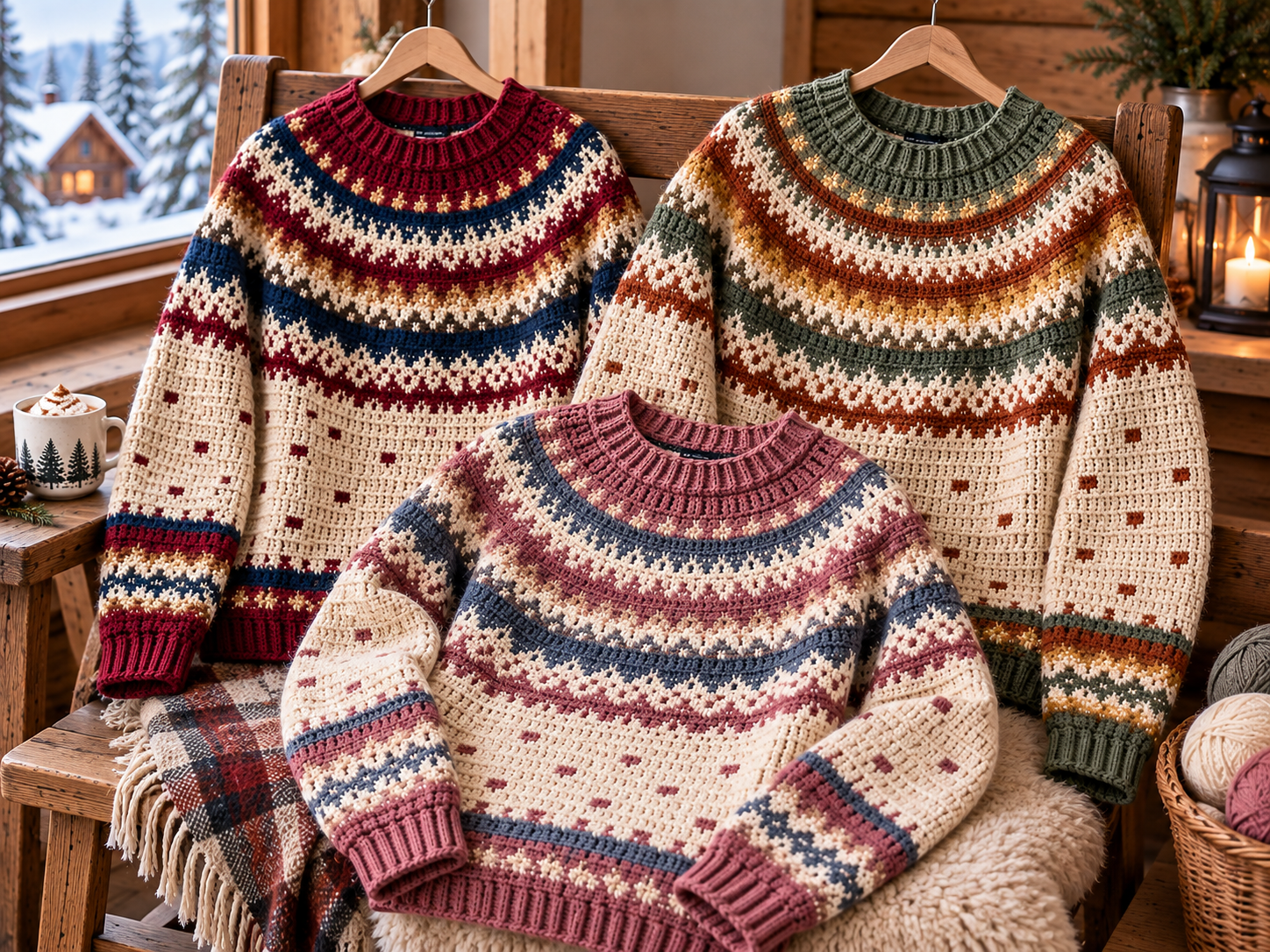
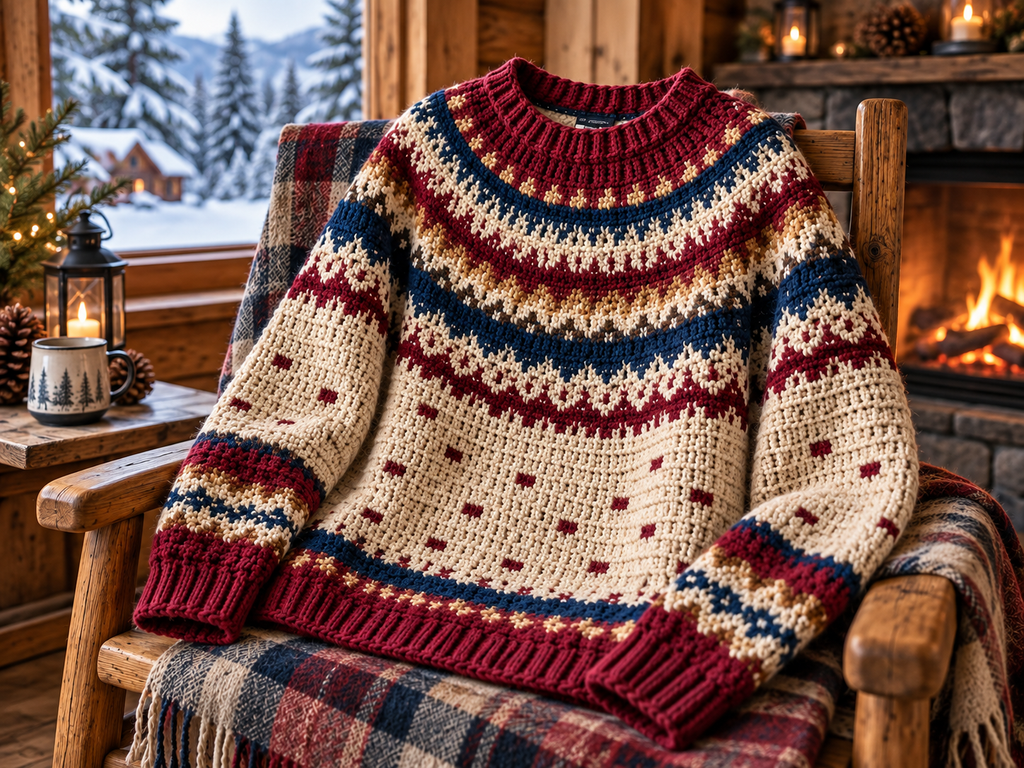
The design featured here uses a warm cream base with bold colorwork in burgundy, navy, and soft neutral shades. The result feels rustic and wintery without looking old-fashioned.
The best part is that you can keep the same basic design and completely change the look just by choosing different yarn colors.
What Makes a Cozy Crochet Sweater Special?
A handmade sweater has a different feel from a mass-produced one. You can choose the colors, adjust the fit, and add details that make the finished piece feel personal.
This style works especially well for cold-weather wardrobes because of its chunky texture and relaxed shape.
The main design features include:
- A comfortable crew neckline
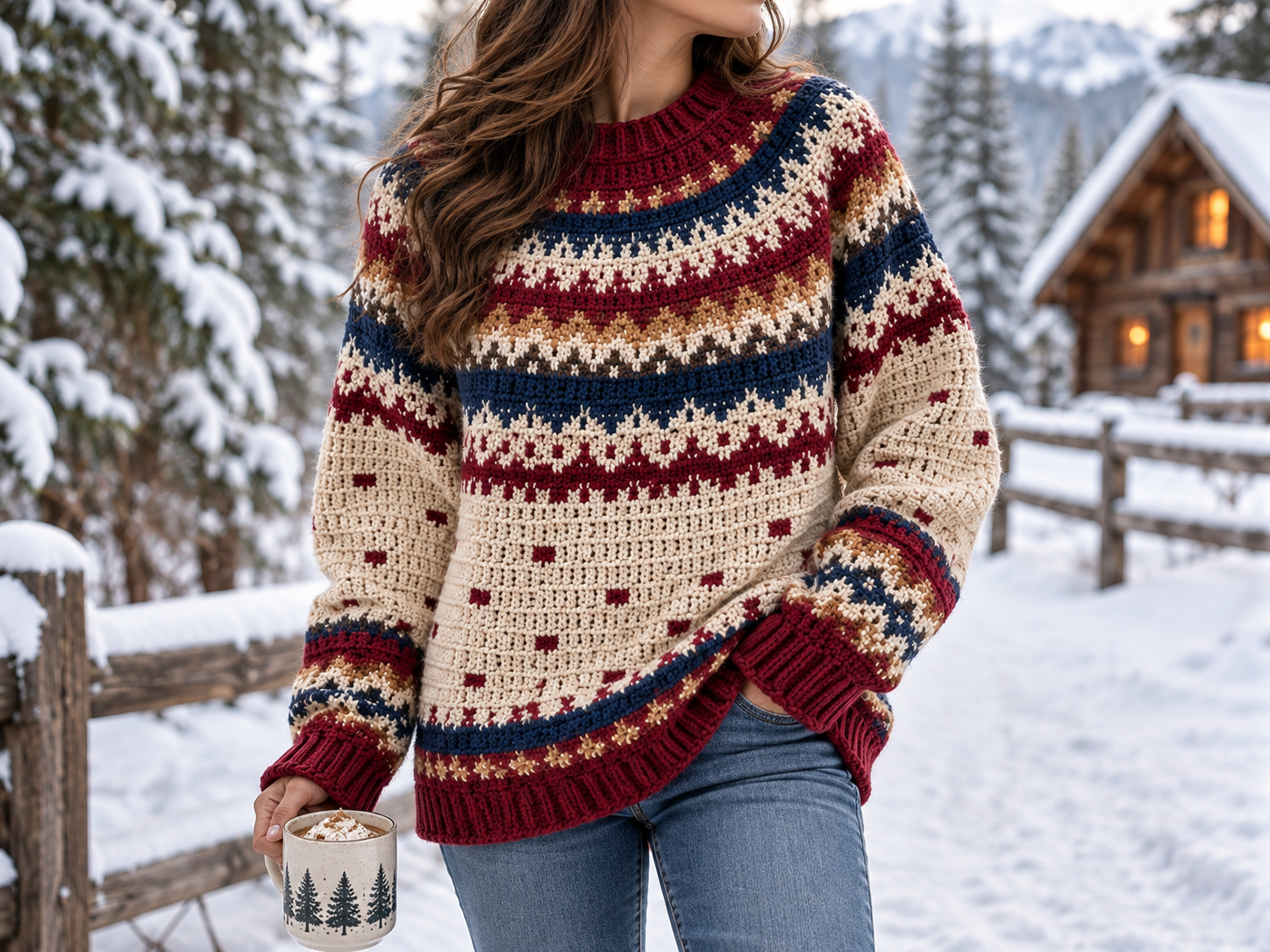
- Long, slightly oversized sleeves
- Ribbed cuffs and hem
- A soft cream or neutral base
- Horizontal colorwork bands
- Small geometric motifs
- A simple relaxed silhouette
- Chunky, textured crochet stitches
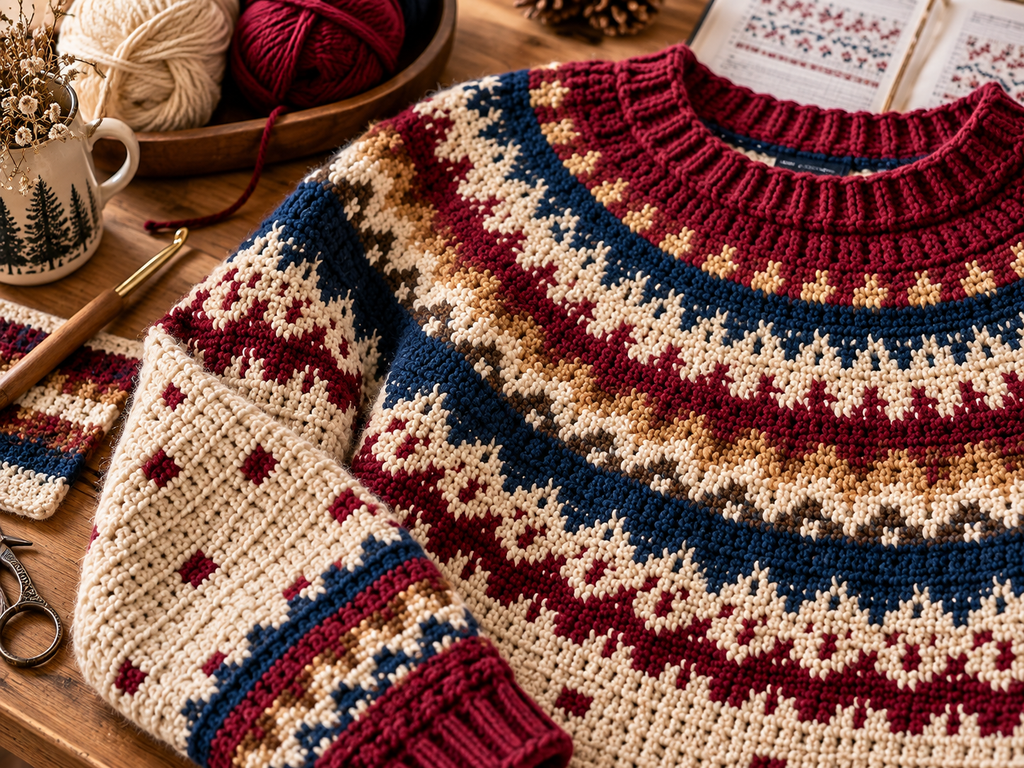
The colorwork is what really gives the sweater its personality. Instead of covering the entire sweater with a complicated pattern, the design uses wider sections of color with smaller motifs between them.
That makes the sweater interesting without making it look too busy.
Choosing Yarn for Your Crochet Sweater
Yarn choice can make a big difference in how your sweater looks and feels.
For a cozy winter sweater, look for a yarn that has enough body to create a warm fabric without becoming extremely heavy.
Good yarn qualities to look for
Consider:
- Soft texture
- Good stitch definition
- Comfortable against the skin
- Consistent thickness
- Easy washing and care
- Enough yardage for your chosen size
A worsted-weight or similar medium-weight yarn can be a practical starting point for this type of project, although the exact yarn weight should always match your individual pattern and gauge.
If you’re making a sweater for everyday wear, softness matters. A yarn that looks beautiful but feels scratchy around the neck and wrists may end up spending more time in the closet than on you.
Picking the Right Color Combination
You don’t have to copy the original colors to get the same cozy effect.
Cream works beautifully as the main color because it gives the sweater a soft winter base. From there, you can choose two or three contrasting shades.
Some combinations to try are:
| Main Color | Accent 1 | Accent 2 | Style |
|---|---|---|---|
| Cream | Burgundy | Navy | Classic winter |
| Cream | Sage | Rust | Rustic |
| Oatmeal | Dusty Rose | Slate Blue | Soft and modern |
| Beige | Forest Green | Mustard | Autumn-inspired |
| Ivory | Chocolate Brown | Terracotta | Warm and earthy |
You can even make several versions of the same sweater design using completely different palettes.
Understanding the Colorwork
The easiest way to approach a patterned crochet sweater is to think of the design as a collection of sections rather than one giant pattern.
For example, you might have:
- A solid ribbed neckline
- A decorative yoke section
- A wider horizontal color band
- A small geometric motif section
- A larger plain body section
- A decorative hem
- Matching sleeve details
This approach makes the design easier to understand while you’re working.
It also gives you plenty of opportunities to change the colors without changing the overall shape of the sweater.
Keep your color changes organized
When working with multiple colors, it helps to prepare your yarn before starting a complicated section.
Keep each color separated and make sure you know which shade belongs to each part of the chart or written instructions.
For repeating motifs, count your stitches carefully. A small mistake at the beginning of a colorwork section can become much more noticeable several rows later.
Getting the Right Sweater Fit
A beautiful crochet sweater can still be uncomfortable if the fit isn’t right.
Before beginning, take a few basic measurements instead of relying only on your usual clothing size.
Useful measurements include:
- Bust or chest circumference
- Shoulder width
- Arm length
- Upper arm circumference
- Desired sweater length
- Neck opening
- Wrist circumference
If you prefer a relaxed winter sweater, you may want some extra ease around the body.
However, don’t automatically make the sweater several sizes larger. Crochet fabric can have plenty of natural drape, and too much extra width can make the finished sweater look bulky.
Make a gauge swatch first
This is one step that’s easy to skip and often causes problems later.
Make a small swatch using the same yarn, hook, and stitch pattern you’ll use for the sweater.
Measure it after allowing the fabric to settle.
If your gauge doesn’t match the pattern, you may need to change your hook size or adjust your stitch count.
How to Approach the Sweater Construction
The exact construction will depend on the pattern you are following, but a sweater like this can generally be broken into manageable sections.
1. Start with the neckline
The ribbed neckline creates the finished opening around the neck.
Work carefully here because the neckline affects how the rest of the sweater sits.
Check that it isn’t too tight before continuing.
2. Build the upper section
The upper part of the sweater is where you can introduce your main colorwork.
This is a good place for stripes, small motifs, and repeating geometric patterns.
Keep checking your stitch count as you go.
3. Continue into the body
Once the upper section is complete, continue with the body pattern.
A mostly neutral body with small repeated motifs can give you a nice balance between decorative and simple sections.
4. Work the sleeves
Try to keep the sleeve colorwork visually connected to the body.
You don’t necessarily need to copy every stripe exactly. Repeating the most recognizable colors and one or two motifs is often enough to make the whole sweater look coordinated.
5. Finish the cuffs and hem
A ribbed cuff and hem give the sweater a more finished appearance.
They also help frame the colorwork and give the garment a clean edge.
Small Details That Make a Big Difference
The overall sweater design may be fairly simple, but small finishing details can make it look much more polished.
Keep the tension consistent
Uneven tension can make one section look tighter or looser than another.
Try to maintain a comfortable, consistent grip throughout the project.
Check your colorwork regularly
Don’t wait until the end of a section to discover that a motif has shifted.
Look at your work every few rows and compare it with your pattern.
Weave in ends carefully
Colorwork can leave you with quite a few yarn tails.
Secure and weave them in properly as you go instead of leaving everything until the final day.
Block when appropriate
Depending on the yarn and construction, gentle blocking can help even out stitches and improve the finished shape.
Always follow the care recommendations for your specific yarn.
Creating Your Own Version
Once you’ve made one sweater, you can start experimenting.
You might change:
- The main sweater color
- The number of colorwork bands
- Sleeve length
- Hem length
- Neckline style
- Motif colors
- Overall fit
- Yarn texture
For example, a cream, burgundy, and navy sweater gives a traditional winter-cabin feeling.
Switch those colors to sage green, rust, mustard, and cream, and the same design suddenly feels more earthy and autumn-inspired.
That is one of the advantages of working from a strong basic sweater design: the color palette can completely change the personality of the finished piece.
Tips for Making a Sweater Without Feeling Overwhelmed
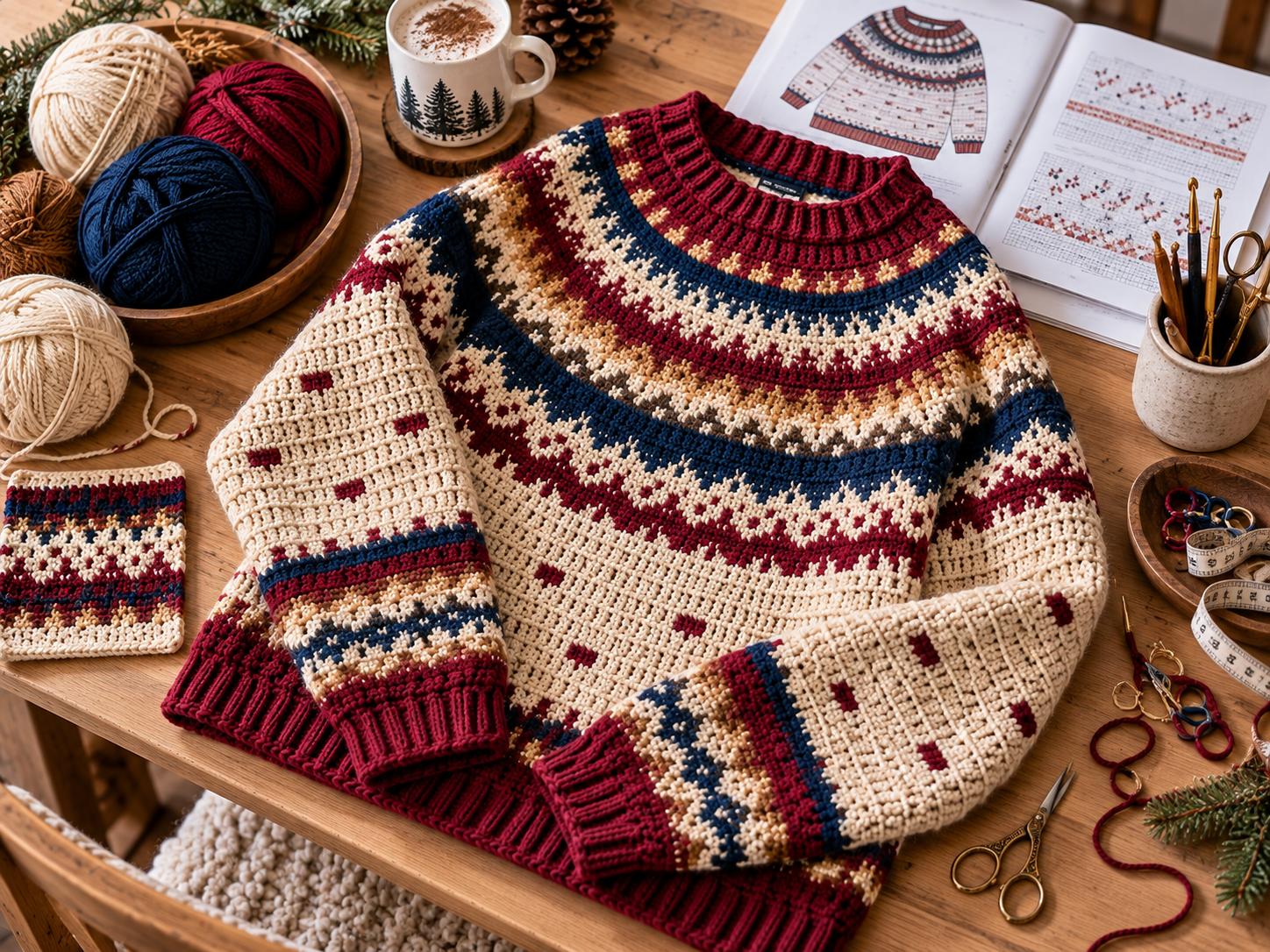
A sweater can look like a huge project when you first see it laid out.
The easiest way to make it manageable is to divide it into smaller goals.
Instead of thinking:
“I have to crochet an entire sweater.”
Think:
- Finish the neckline.
- Complete the upper section.
- Finish the body.
- Make the first sleeve.
- Make the second sleeve.
- Add the cuffs and hem.
- Finish the ends.
- Block and check the fit.
This makes the project feel much more achievable.
It also gives you natural stopping points if you only have a little time to crochet each day.
Common Mistakes to Avoid
Skipping the gauge swatch
This is probably the easiest mistake to prevent.
Even if you have used the same yarn brand before, your personal tension can change the finished measurements.
Changing yarn thickness without adjusting the pattern
A different yarn weight can dramatically change the size and drape of the sweater.
If you want to substitute yarn, check the gauge and make adjustments where necessary.
Losing track of color changes
With several colors, it is easy to accidentally place a motif in the wrong row.
Keep your pattern nearby and mark your progress.
Making the sleeves too short
Remember that sweater sleeves can sit differently once the garment is worn.
Measure the sleeve against the intended fit rather than guessing.
Ignoring the finishing stage
Don’t rush the final details.
Neatly woven ends, even edges, and proper blocking can make a handmade sweater look much more finished.
How to Style a Cozy Crochet Sweater
A colorful crochet sweater can become the main piece of a winter outfit.
For a simple everyday look, pair it with:
- Straight-leg jeans
- Brown ankle boots
- A neutral wool coat
- A simple scarf
- Minimal jewelry
For a more relaxed cabin look, wear it with comfortable trousers, warm socks, and winter boots.
Because the sweater already contains several colors, neutral bottoms usually work well and allow the crochet pattern to stand out.
Can You Make the Same Sweater in Different Colors?
Absolutely.
In fact, making the same design in different palettes can be a fun way to create completely different looks.
A burgundy and navy version feels traditional and festive, while sage, rust, and mustard create a more natural woodland look.
You could even make one version in soft pastels for a lighter spring sweater.
The important thing is to keep enough contrast between your colors so that the crochet motifs remain visible.
Frequently Asked Questions
Is a crochet sweater difficult for beginners?
A sweater is usually more involved than a small crochet project, but it becomes much easier when you understand the construction and follow the pattern section by section. Beginners who are comfortable with basic stitches, counting, increases, decreases, and working in the round or rows can often work toward a sweater project.
What yarn is best for a cozy crochet sweater?
Choose a yarn that matches the pattern’s recommended weight and gauge. For winter sweaters, a soft medium-weight yarn is often a practical choice because it provides warmth without making the garment unnecessarily heavy.
How long does it take to crochet a sweater?
It depends on the pattern, yarn weight, size, stitch complexity, and how often you crochet. A simple sweater may progress fairly quickly, while detailed colorwork can take considerably longer.
Can I change the colors in a crochet sweater pattern?
Yes. Color changes are one of the easiest ways to personalize a sweater. Just make sure your replacement colors have enough contrast for the motifs to remain visible.
Should I wash a crochet sweater before wearing it?
Follow the care instructions for the yarn used in your project. If the yarn allows washing and the pattern recommends blocking, gently washing and shaping the finished sweater can help settle the stitches and improve its appearance.
Final Thoughts
A cozy crochet sweater pattern is more than just a winter crochet project. It’s a chance to create something that fits your style, your favorite colors, and the way you actually like to dress.
Start with a comfortable yarn, make a gauge swatch, take your measurements, and break the project into small sections. Once you have the basic structure down, you can have fun experimenting with different color combinations and motifs.
And if you love the design but don’t want to make it in the original burgundy and navy palette, try sage and rust, dusty rose and slate, or another combination that feels like you.