A handmade crochet baby blanket is one of those projects that feels special from the first stitch. It can be simple enough for a beginner, quick enough for a weekend project, or detailed enough to become a beautiful keepsake.
If you’re looking for crochet baby blanket patterns, there are plenty of styles to choose from. You can make a classic granny-style blanket, a soft striped design, a textured blanket, or something more decorative with a pretty border.
The best part is that you can change the yarn color, blanket size, stitch pattern, and edging to make the finished piece your own.
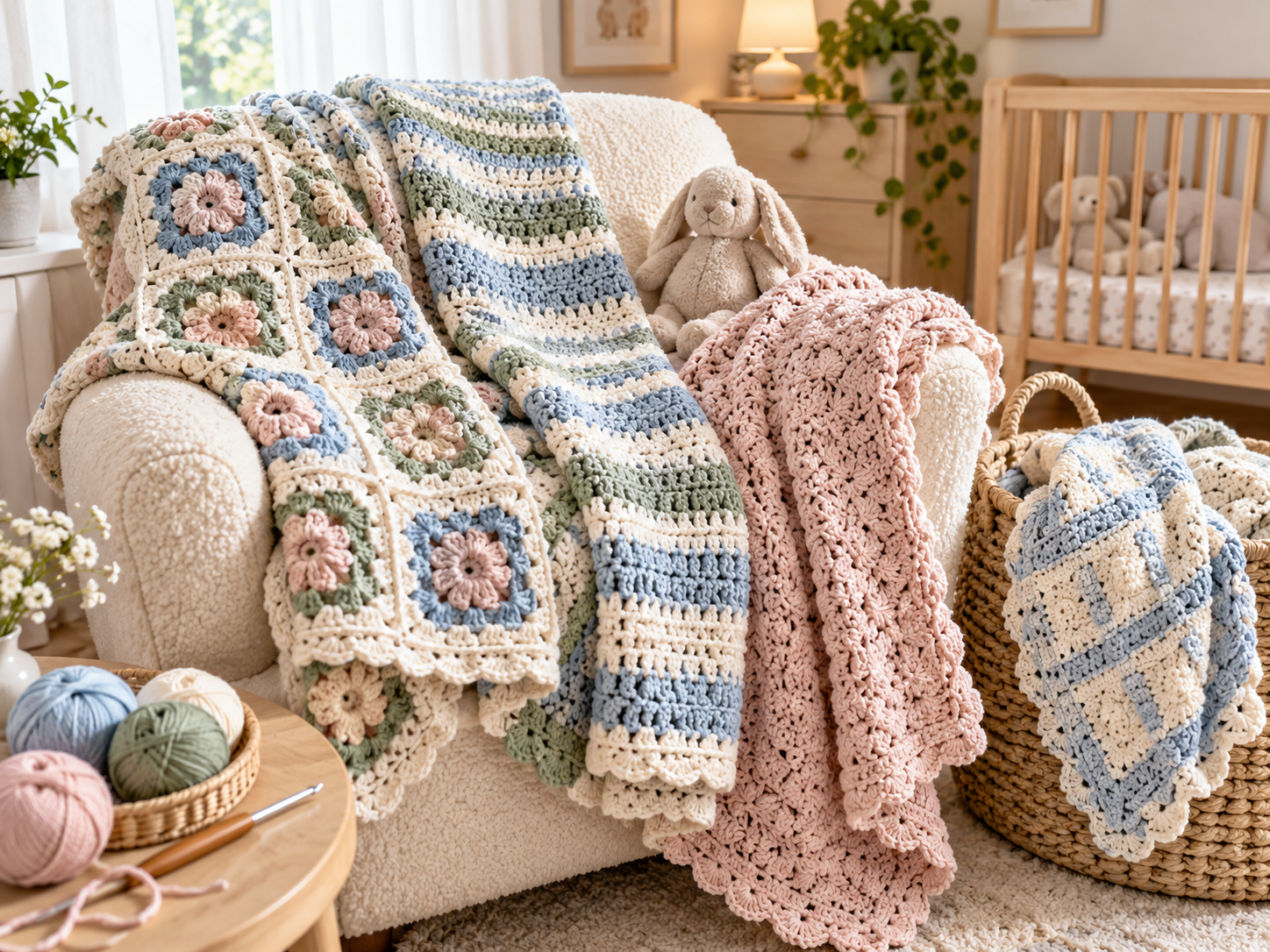
1. Classic Granny Stitch Baby Blanket
The granny stitch is one of the easiest crochet patterns to recognize, and it works beautifully for baby blankets.
You can make it in one color for a simple look or alternate several soft shades throughout the blanket. Cream, pale blue, sage, dusty pink, and beige are especially nice for a soft nursery-inspired design.
A granny-style blanket is also a great choice if you have leftover yarn because small amounts of different colors can easily be worked into the design.
Good for: Beginners, colorful blankets, handmade gifts.
2. Simple Striped Crochet Baby Blanket
If you prefer a clean and classic look, try a striped baby blanket.
You can use two colors for a simple repeating pattern or combine several shades for a more playful design. Keeping the stripes fairly wide can make the blanket look modern without requiring complicated stitches.
For a softer appearance, pair a neutral shade such as ivory or oatmeal with muted blue, sage, peach, or blush.
Good for: Beginners, quick projects, modern nurseries.
3. Ripple Baby Blanket
Ripple and chevron blankets have a gentle wave pattern that adds movement without making the project overly complicated.
The pattern can look particularly pretty when worked in several related shades. For example, you could move from cream to pale blue, dusty blue, and sage before returning to cream.
The key is keeping your stitch count consistent so the waves stay even from one row to the next.
Good for: Intermediate beginners, colorful designs, textured blankets.
4. Shell Stitch Baby Blanket
Shell stitches create a soft, slightly raised texture that looks delicate without being too fussy.
A single-color shell stitch blanket can have a beautiful classic appearance. If you want something more playful, change colors every few rows.
A simple border around the finished blanket can also help frame the shell pattern and give the edges a neat finish.
Good for: Gifts, classic nursery styles, textured blankets.
5. Basketweave Crochet Baby Blanket
Basketweave is a great option when you want a blanket with noticeable texture.
The stitches create blocks that resemble a woven basket, giving the finished blanket a thick and cozy appearance. It can look especially elegant in a single neutral shade such as cream, oatmeal, or light beige.
Because the texture is already the main feature, you don’t need a complicated color combination.
Good for: Cozy blankets, neutral nurseries, experienced crocheters.
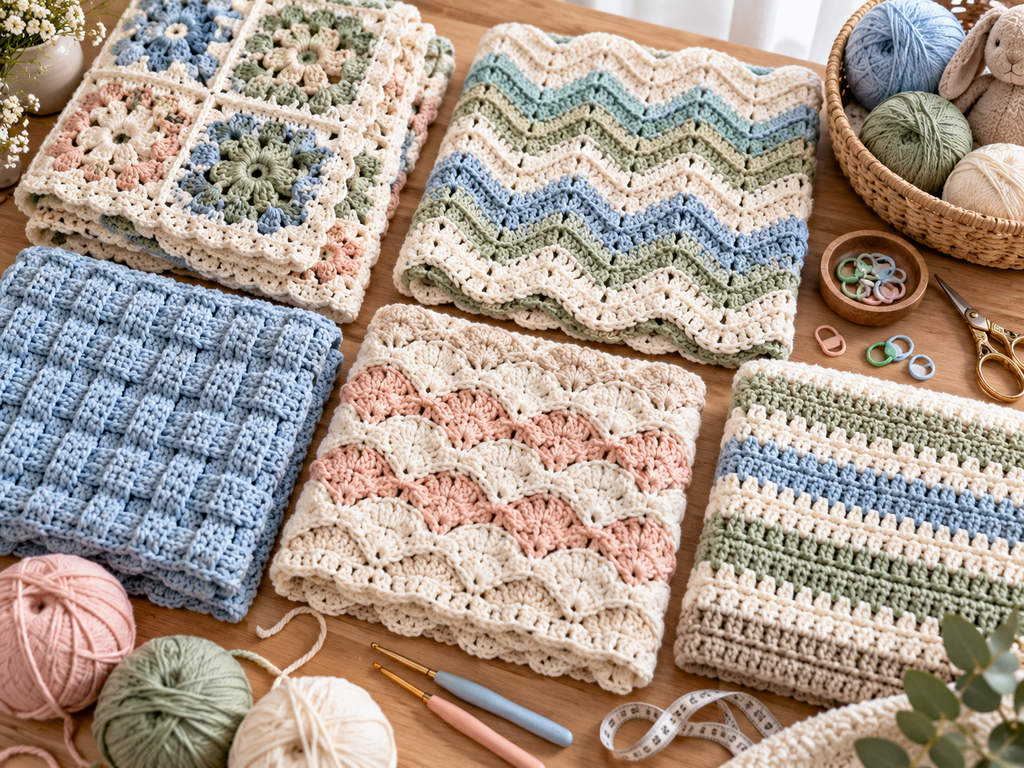
6. Granny Square Baby Blanket
Instead of crocheting one large piece, you can make individual granny squares and join them together.
This gives you more freedom with colors and makes the project easy to work on in smaller sections. You can create traditional squares, floral centers, geometric combinations, or a simple two-color arrangement.
One useful advantage is that you can make the squares gradually rather than needing a large workspace for the entire blanket.
7. Textured Geometric Blanket
For a more modern look, consider using raised stitches to create simple geometric shapes.
Blocks, diamonds, ridges, and repeating textured sections can make a plain-colored blanket much more interesting. Cream or oatmeal yarn works particularly well for this style because the texture becomes the main focus.
You can also add a contrasting border around the outside.
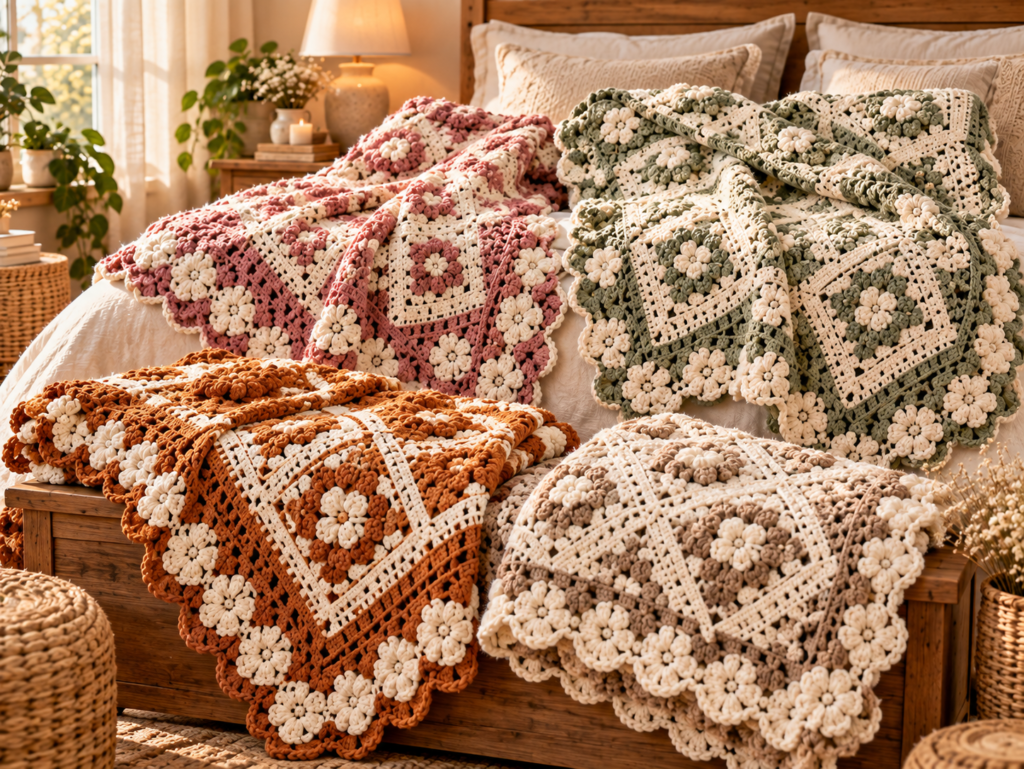
8. Floral Crochet Baby Blanket
Floral motifs are perfect if you want something decorative and memorable.
You could crochet individual flower motifs and join them together, or work small flowers directly into a larger blanket design.
Keep the flowers in muted shades if you want a calm nursery look. Soft sage, cream, blush, pale blue, and peach work well together without making the blanket feel too bright.
9. Corner-to-Corner Baby Blanket
Corner-to-corner crochet, often called C2C, allows you to build a blanket diagonally from one corner to the other.
It’s particularly useful when you want to create simple pictures, initials, hearts, stars, or geometric designs.
For a baby blanket, you don’t have to make a complicated picture. Even a simple heart or star motif can turn a basic blanket into something personal.
Good for: Personalized gifts, graphic designs, intermediate crocheters.
10. Moss Stitch Baby Blanket
Moss stitch creates a small, even texture and has a lovely drape.
It’s one of those patterns that looks more complicated than it actually is. The finished fabric has a subtle woven appearance, making it suitable for both modern and traditional baby blankets.
Try using one neutral color for a minimalist blanket or add gentle stripes for more visual interest.
11. Color-Block Crochet Blanket
Color blocking is an easy way to create a modern baby blanket without complicated stitch work.
Instead of small repeating stripes, use larger sections of different colors. For example, you might use cream across the top, pale blue in the center, and sage toward the bottom.
This approach works particularly well when you want the blanket to coordinate with a nursery color scheme.
Choosing the Right Crochet Stitch
The stitch you choose will affect the look, texture, weight, and amount of yarn your blanket uses.
Before starting, think about what you want the finished blanket to feel like.
For a beginner
Start with relatively simple stitches such as:
- Single crochet
- Half double crochet
- Double crochet
- Granny stitch
- Moss stitch
- Simple stripes
These allow you to concentrate on keeping your rows even rather than managing a complicated stitch pattern.
For more texture
Try:
- Basketweave
- Shell stitch
- Bobble stitch
- Raised geometric patterns
- Ripple stitch
Textured stitches can make a blanket feel more substantial and visually interesting.
For a decorative blanket
Consider:
- Granny squares
- Floral motifs
- C2C designs
- Color blocks
- Chevron patterns
These options give you more room to play with colors and design.
Choosing Yarn for a Baby Blanket
Yarn choice matters just as much as the pattern.
For baby projects, look for yarn that is soft, comfortable, washable, and suitable for repeated use. A yarn that feels scratchy in your hand probably isn’t the best choice for a blanket.
Machine-washable yarn can also be practical because baby blankets may need frequent cleaning.
When shopping for yarn, check the label for:
- Fiber content
- Recommended hook size
- Washing instructions
- Care instructions
- Yarn weight
- Yardage
It’s also a good idea to buy enough yarn from the same dye lot when possible, especially if you’re making a large blanket.
How Big Should a Crochet Baby Blanket Be?
There isn’t one required size for every baby blanket. The best dimensions depend on how you plan to use it.
Here are some common starting points:
| Blanket Type | Approximate Size |
|---|---|
| Small security blanket | 24 × 24 inches |
| Baby stroller blanket | 30 × 36 inches |
| General baby blanket | 30 × 40 inches |
| Crib blanket | 36 × 50 inches |
| Larger nursery blanket | 40 × 50 inches |
These are only general starting points. Always consider the intended use before choosing your final dimensions.
For a gift, a versatile size around 30 × 40 inches is a practical option because it can be used for cuddling, stroller outings, or as a nursery blanket.
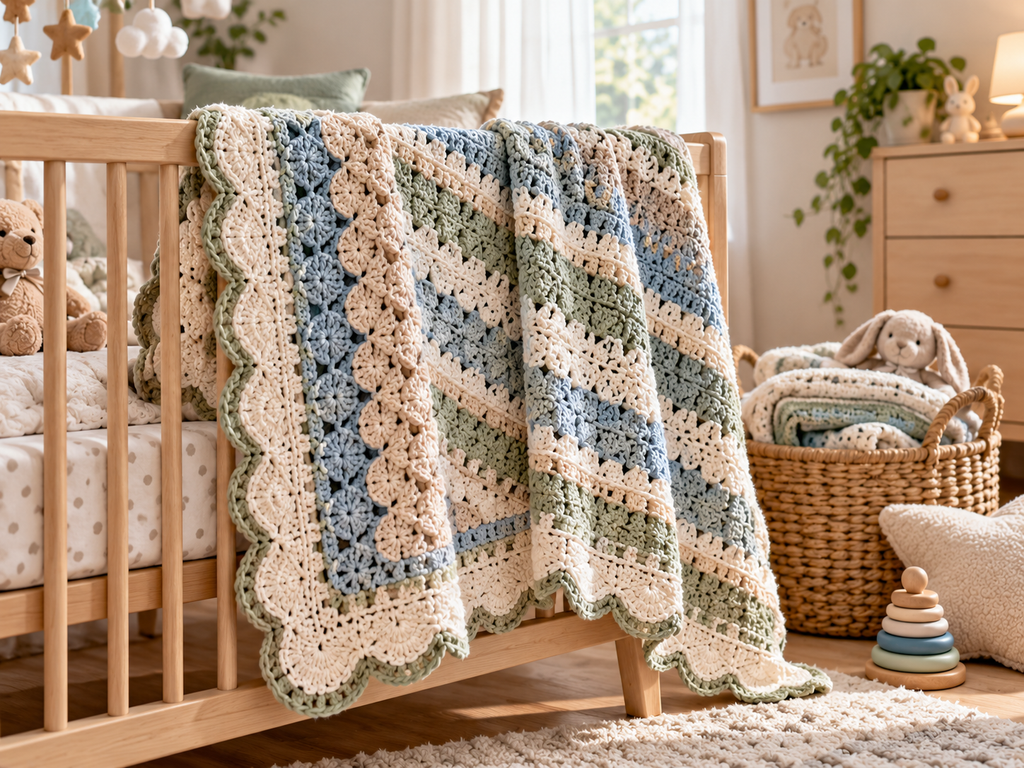
How to Choose Baby Blanket Colors
Color can completely change the personality of a crochet blanket.
For a soft and traditional look, try:
- Ivory + beige
- Cream + pale blue
- Blush + cream
- Sage + oatmeal
- Dusty blue + white
For something more playful, combine several pastel colors.
You don’t necessarily need many colors. Sometimes two or three carefully chosen shades look more polished than a blanket with too many contrasting colors.
A useful trick is to choose one main color, one secondary color, and one accent shade. This keeps the finished blanket coordinated.
Adding a Pretty Crochet Border
A border can make even a simple blanket look finished and intentional.
Some easy border ideas include:
Simple single crochet border
This is one of the easiest options and works with almost any blanket pattern.
Shell border
A shell border adds a delicate decorative edge and works particularly well with baby blankets.
Scalloped border
Scallops give the blanket a soft, classic appearance without requiring a complicated design.
Contrasting border
Use a different color around the outside to frame the blanket. Cream around a blue or sage blanket is a simple combination that works beautifully.
Before starting the border, check that the blanket edges are reasonably straight. If necessary, adjust your stitches slightly in the first border round.
Tips for Making a Better Crochet Baby Blanket
A few small decisions can make the crocheting process much easier.
1. Make a gauge swatch
If the final size matters, make a small sample first. Your tension can change the size of the finished blanket considerably.
2. Keep your edges straight
Count your stitches regularly, especially if you’re still learning. Losing or adding one stitch can gradually make the blanket wider or narrower.
3. Don’t make the pattern too complicated
A baby blanket doesn’t need dozens of different stitches. A simple stitch combined with beautiful colors can make a much more attractive finished project.
4. Weave in ends as you go
If you’re changing colors frequently, don’t leave every loose end until the very last day. Weaving them in along the way makes finishing much less overwhelming.
5. Block when appropriate
Blocking can help even out stitches and straighten the finished blanket. Follow the care instructions for your particular yarn before choosing a blocking method.
6. Check the finished blanket carefully
Before gifting it, look for loose ends, uneven joins, or missed stitches. A quick final inspection can make a big difference.
Making a Crochet Baby Blanket as a Gift
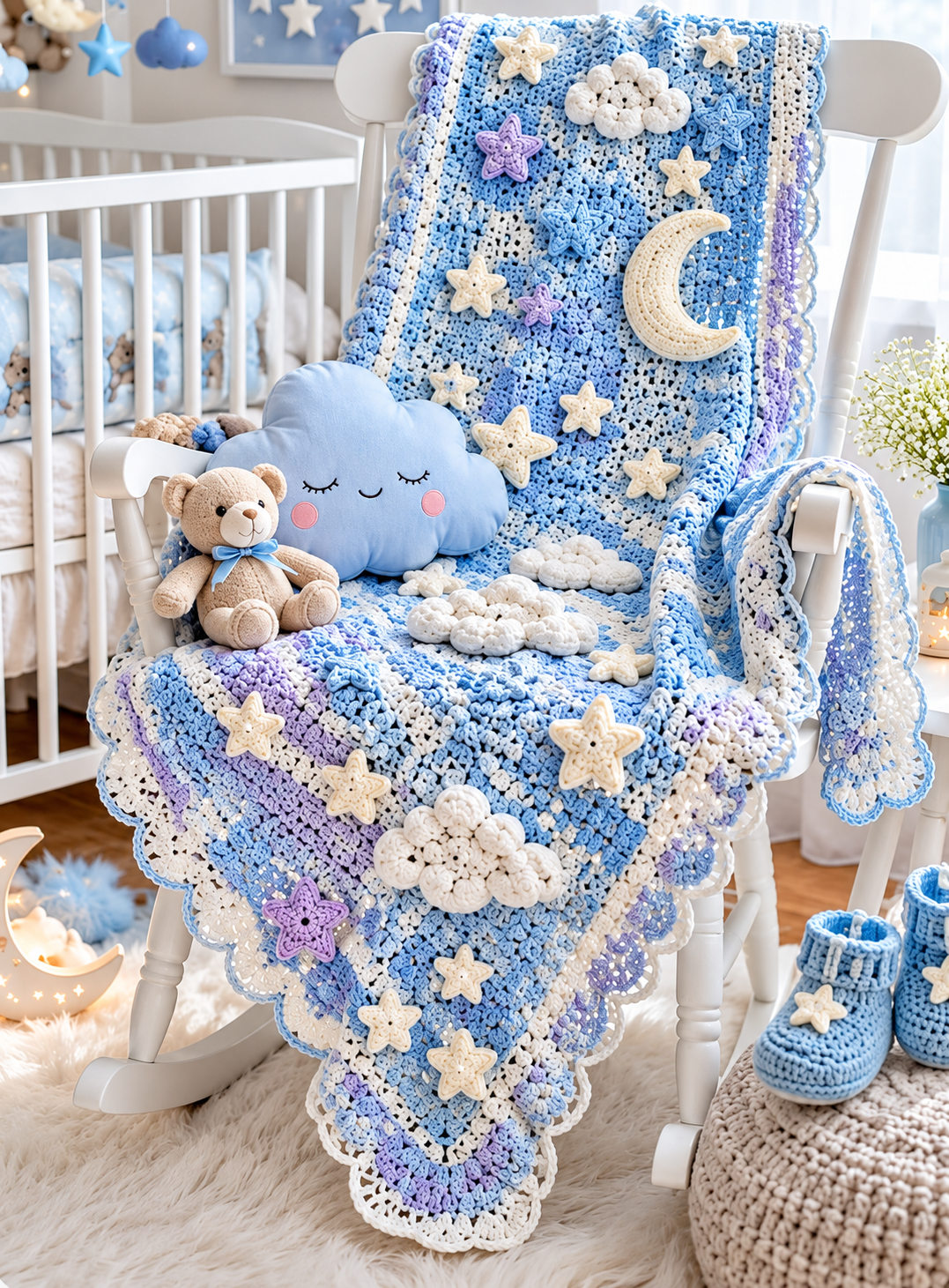
A handmade blanket makes a thoughtful baby shower or newborn gift because you can personalize it to suit the recipient.
You might choose colors based on the nursery, use a favorite color combination, or add a simple crocheted motif such as a flower, heart, star, or animal.
For presentation, fold the blanket neatly and tie it with a simple ribbon. You can also pair it with another handmade item, such as crochet baby booties or a small matching accessory.
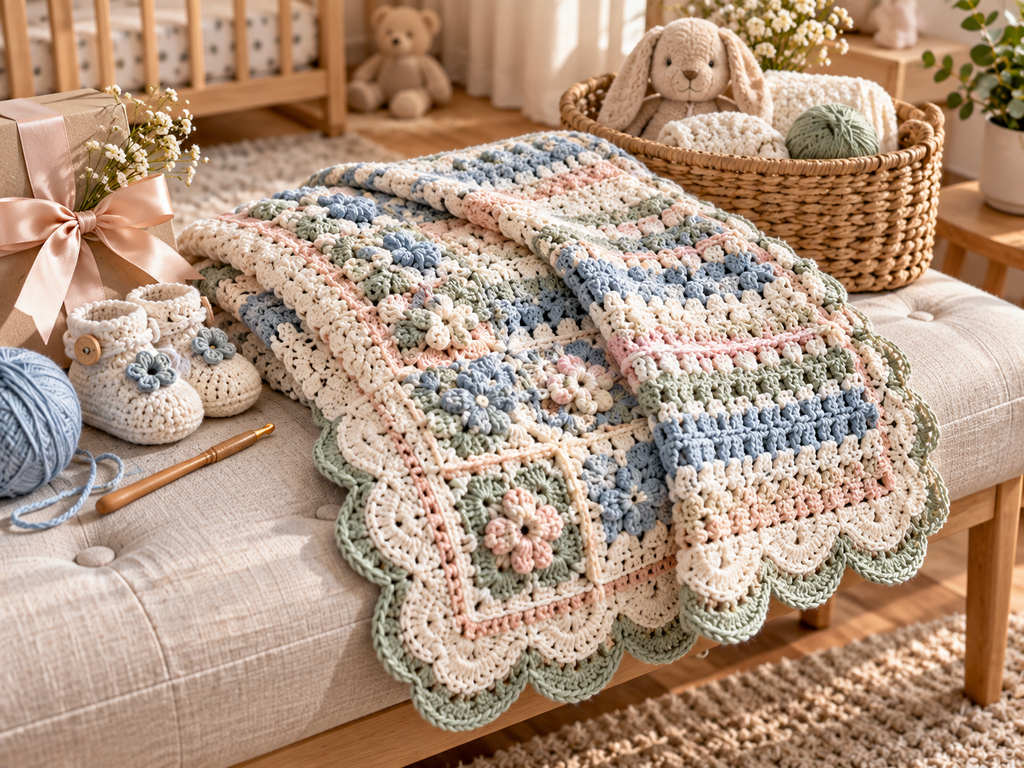
[IMAGE 4 — INSERT HERE]
Placement: Add this before the care and FAQ sections because the gift presentation naturally supports the discussion about finishing, gifting, and caring for a completed blanket.
How to Care for a Crochet Baby Blanket
Always follow the washing instructions on the yarn label because different fibers require different care.
For washable yarn, gentle washing and careful drying can help preserve the shape and texture of the blanket.
Avoid assuming that every crochet blanket can be placed in a dryer. Some yarns may shrink, stretch, or lose their shape with heat.
When storing the blanket, keep it clean and completely dry before folding it away.
Frequently Asked Questions
What is the easiest crochet baby blanket pattern?
Simple granny stitch, double crochet, single crochet, moss stitch, and basic striped blankets are good places to start if you’re new to crochet.
How much yarn do I need for a baby blanket?
The amount depends on the blanket’s size, stitch pattern, yarn weight, and crochet tension. Always check the specific pattern’s yarn requirements and consider buying a little extra if you’re using a particular color.
What crochet hook size is best for a baby blanket?
There isn’t one universal hook size. Use the hook recommended for your chosen yarn and adjust according to your gauge and desired fabric.
What is the best yarn for crochet baby blankets?
A soft, washable yarn that feels comfortable against the skin is generally a practical choice. Check the yarn label for fiber, care, and washing information.
Can beginners crochet a baby blanket?
Absolutely. Choose a simple repeating stitch, keep the color scheme manageable, and start with a smaller blanket if a full-size project feels intimidating.
What size should a crochet baby blanket be?
A versatile baby blanket can be around 30 × 40 inches, but the ideal size depends on whether you want a stroller blanket, crib blanket, security blanket, or larger nursery throw.
Final Thoughts
The best crochet baby blanket patterns don’t have to be complicated. A simple stitch, soft yarn, and thoughtful color combination can create something beautiful and useful.
If you’re a beginner, start with stripes, granny stitch, or moss stitch. If you have more experience, try ripple patterns, textured designs, granny squares, floral motifs, or personalized C2C blankets.
Most importantly, choose a pattern you will enjoy making. A handmade baby blanket takes time, and that’s exactly what makes the finished piece feel so special.